Part 1
My name is Calvin Draper. I’m thirty-four, and I’m a doctor in a quiet Tennessee town near the Appalachian foothills. It’s the kind of place where roads wind through green hills, old trucks sit in gravel driveways, and people still know each other by name.
I love this town because it became my real home. But it was also the place where I finally understood how badly my own family had failed the woman who had loved me more than anyone.
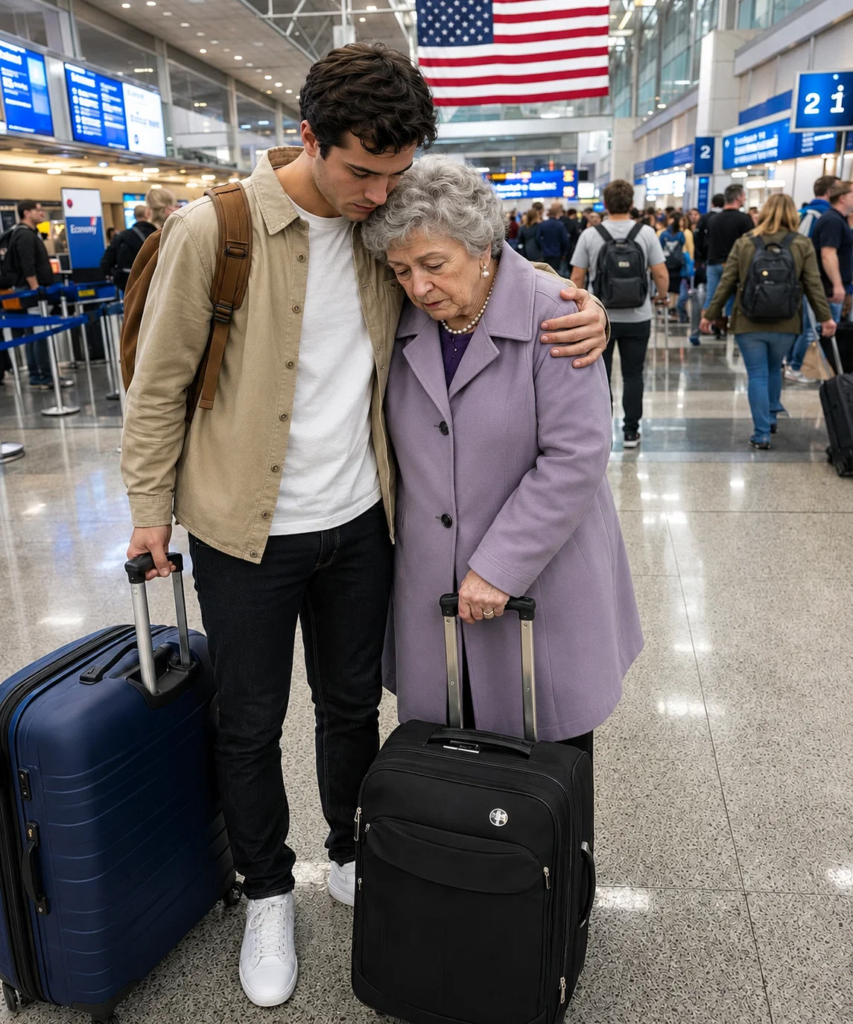
One afternoon, a Facebook memory appeared on my phone: “On this day, 16 years ago.” When I opened it, I saw a photo of me and my grandmother, Hazel Draper, standing at the Atlanta airport. I was eighteen, awkward and excited, with my arm around her shoulders. She stood beside me in her cardigan and walking shoes, smiling like the world had finally opened for us.
But that photo still hurts.
Because that was the day I learned that blood does not always mean love.
I grew up in Greenville, South Carolina. My father was an engineer, my mother an accountant. Our house was stable, clean, and quiet, but it never felt warm. My parents cared about grades, rankings, and future plans. They rarely asked if I was happy.
The only place I ever felt truly loved was my grandmother’s small wooden house in Tuloma, Tennessee. Every summer, I stayed with her. Her home smelled like cookies, old wood, and the faint hospital scent that clung to her clothes from years of working as a nurse.
Grandma Hazel had raised my father and aunt alone after her divorce. She worked long shifts, skipped comforts, and saved every dollar she could. Yet both of her children moved away and barely came back.
My father built his life in Greenville. My Aunt Paula married a wealthy real estate developer and moved to Georgia. They left Grandma behind with her porch, her marigolds, and her memories.
When I was eighteen, my parents announced a grand family trip to Europe: Paris, Rome, London. They said everyone was going, including Grandma. I imagined her under the Eiffel Tower, smiling the way she did on her porch.
Then I overheard my mother say Grandma could help pay because she had savings.
Soon after, my father and aunt suddenly began calling Grandma more often. They visited, acted loving, and convinced her this trip would bring the family together again.
Grandma hesitated. She said she was old and worried about traveling so far.
Then she looked at me and said, “If Calvin wants me to go, then I’ll go.”
I hugged her and promised I would take care of her.
I didn’t know I was helping lead her into a betrayal.
The next day, I heard my mother say Grandma had transferred the money.
All of it.
More than thirty thousand dollars.
Part 2
Departure day finally came. We drove from Greenville to Atlanta, my parents talking excitedly about restaurants and sightseeing while I sat in the back holding Grandma’s hand.
At the airport, Aunt Paula’s family was already waiting. Everyone looked polished and ready for vacation. We joined the check-in line, and I felt nervous in the best possible way.
Then Grandma whispered, “Calvin, where’s my ticket?”
My father stood at the counter, looking tense. When he came back, he said there was a problem with the booking system and Grandma’s ticket had not been confirmed.
Grandma looked straight at him and asked, “Did you ever book a ticket for me?”
He hesitated.
Then he said she was too old, the flight would be hard on her health, and she should stay home. They would take her somewhere closer “next time.”
That was when I understood everything.
They had used her money to pay for their dream vacation, but they had never planned to take her.
I turned to Aunt Paula, waiting for her to object. She looked away. Uncle Leon stared at his phone. Nobody defended Grandma.
I was furious.
“She paid for this trip,” I said. “How can you leave her here?”
My mother told me to calm down, saying it was “adult business.”
But it wasn’t adult business. It was cruelty.
I looked at Grandma and said, “I’m not going. I’m staying with you.”
She begged me not to miss the trip because of her, but I refused. I could not sit on a plane knowing my family had stolen from her and abandoned her in an airport.
My father told me if I wanted to stay, I could figure things out myself. Then they all walked toward security without an apology.
Grandma and I stood there in the middle of the crowded terminal, watching her children disappear.
I took her home.
During the ride back to Tuloma, she quietly asked if they had done it because she was poor, old, or no longer fit into their world.
I told her no. I told her they didn’t deserve her.
The next morning, I searched for help and found Adult Protective Services. What my family had done was not just cruel. It was financial abuse.
I called and spoke to a man named Dorian Hail. He listened carefully and told us to come into the office with proof.
Grandma was scared. She didn’t want to make trouble because they were still her children.
But I told her, “They don’t deserve your protection anymore.”
With bank statements and testimony from the airport employee, APS opened an investigation.
Three weeks later, when my parents and aunt returned from Europe, Dorian met them at the airport with summons. Their smiles vanished when he told them they were being investigated for elder financial abuse.
I stepped forward and said, “Grandma didn’t report you. I did.”
They called me foolish, ungrateful, and disloyal.
But I saw no regret in their faces.
Only anger that they had been caught.
Part 3
The case went to court in Tuloma. Grandma refused to attend because she couldn’t bear to face them. She trusted me to tell the truth for her.
In court, Dorian presented the evidence: Grandma had transferred her savings for a family Europe trip, but she had been deliberately excluded and left at the airport.
My family’s lawyer tried to claim the money was a voluntary gift. But the bank records, witness statement, and Grandma’s sworn account told the real story.
When I testified, I told the judge everything: the secret conversations, the sudden affection, the pressure, the airport lie, and the moment they walked away from Grandma.
The judge ruled that financial abuse had occurred. My parents, Aunt Paula, and Uncle Leon were ordered to repay the full amount. They were also stripped of inheritance rights and any future ability to seek control over Grandma’s estate.
I didn’t feel happy.
I only felt sad that justice had required a courtroom.
After that, Grandma and I began rebuilding our lives. I stayed in Tuloma and enrolled in a pre-med program. Her stories about nursing had inspired me, and now I knew what I wanted to become.
We also took painting classes together. At first, she joked that her art looked childish, but soon she was painting hills, hospitals, marigolds, and sunsets. I watched laughter return to her face.
Years passed. I studied hard, volunteered at the hospital where she had once worked, and eventually got into medical school.
Grandma was proud beyond words.
But during my second year, she became ill. The diagnosis was advanced lung cancer. Treatment was possible, but she chose to spend her remaining time at home.
I wanted to fight it. She told me I had to keep studying.
“You are not my burden,” she said. “You are my legacy.”
I spent every moment I could with her. She painted, baked with me, told me old stories, and taught me everything she could before time ran out.
On the day I graduated medical school, she was too weak to attend. I drove home in my cap and gown and told her, “Grandma, I did it. I’m a doctor.”
She smiled and whispered, “You’re my doctor.”
That night, she passed away peacefully in her sleep.
Her funeral was held in the small church she loved. The room was full of neighbors, former patients, hospital coworkers, painting classmates, and people whose lives she had touched.
My parents and aunt never came.
I stayed in Tuloma for good and became a doctor at the same hospital where Grandma had once worked. Her marigold painting hangs in my office.
Sometimes patients tell me it looks cheerful.
I smile and say it belonged to someone very special.
I never contacted my parents again. I don’t hate them. I simply understand now that love is shown through actions, not words.
My grandmother taught me that family is not always the people who share your blood. Family is the person who stays when everyone else walks away.
And Grandma Hazel stayed for me.
So when it became my turn, I stayed for her.