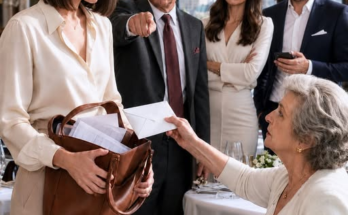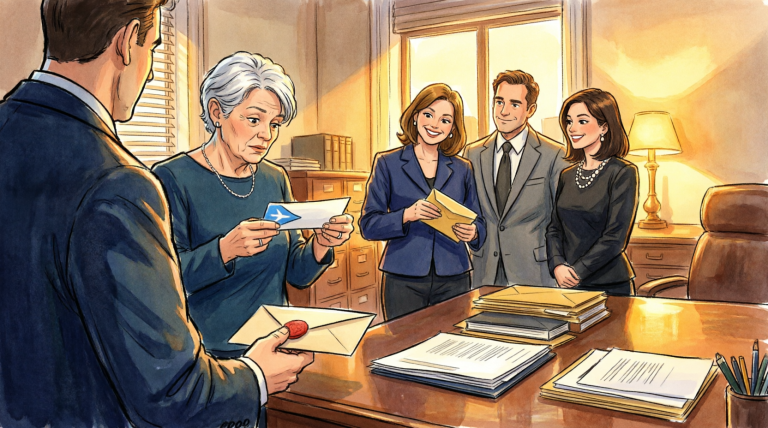
The kind that arrives late, after grief has already exhausted a person.
The kind that feels almost cold.
She sat in the back seat of the dark sedan, her small suitcase beside her, and watched San José thin into winding roads and climbing hills.
Tropical green spread on every side.
The sky looked lower here, as if the clouds had decided not to stay above the mountains but to rest inside them.
Teresa pressed her purse to her lap and tried to steady her breathing.
For forty-five years she had believed she knew the shape of her marriage.
Not every secret, perhaps.
Nobody knows every private corner of another person.
But the shape of it.
The essential truth of it.
The ways they had suffered.
The sacrifices they had made.
The small humiliations of getting older without money and with too much illness.
Now there was a lawyer in Costa Rica telling her that none of what had happened at the funeral was accidental.
Moisés drove carefully, as if he understood that she had not merely crossed a country.
She had crossed into a version of her life she had never been shown.
For the first twenty minutes, he spoke only enough to guide her through the silence.
Roberto had updated his will twice in the last year.
The plane ticket had been purchased months before his death.
Instructions had been left with dates, names, signatures, and contingencies.
If Teresa refused to travel, Moisés said, he had been instructed to wait thirty days and try again.
If her children attempted to interfere, there were additional documents prepared.
If Teresa arrived, he was to bring her directly to a property outside the city and place in her hands something Roberto had written only for her.
Teresa turned to the window so Moisés would not see how her mouth trembled.
Only for her.
All those nights she had changed bed linens, measured pills, washed damp cloths in the sink, and rubbed her husband’s shoulders while he apologized for being a burden—during all that time he had been making plans she knew nothing about.
At last she asked the question that had been burning under everything else.
“Who is Tadeo?”
Moisés glanced at her in the mirror.
“You found the photograph.”
“Yes.”
“He is the reason you are here,” he said.
That answer only made the silence heavier.
The road narrowed and rose.
The city disappeared behind them.
The car passed gates, scattered houses, and long stretches of steep green land planted in careful rows.
Teresa began to recognize coffee shrubs even though she had never seen so many at once.
Finally they turned onto a private road lined with old jacaranda trees.
Purple blossoms lay scattered across the gravel like scraps of torn fabric.
At the top of the hill stood a wide white house with a red-tiled roof and a deep veranda facing the valley.
It was not ostentatious.
It was not the kind of place built to announce money.
It was worse than that.
It was the kind of place built to last.
The kind of place people kept when they intended to hand it down.
Moisés parked in front of the
👉 PART 2: The House He Hid… And The Truth He Never Told
Teresa stepped out of the car slowly, her shoes sinking slightly into the soft gravel as she stared at the house in front of her.
It didn’t feel real.
For forty-five years, she had lived in a home where every bill mattered, where every coin had a purpose, where illness had slowly eaten away at comfort until survival became routine.
And now—
This.
A house that looked like it had never known struggle.
A house that had never needed to be held together by sacrifice.
Her fingers tightened around her purse.
“Are you certain this is the right place?” she asked quietly.
Moisés gave a small, respectful nod.
“This property has been in your husband’s name for over forty years.”
Forty years.
The number hit her harder than grief.
Forty years… meant before their marriage had even fully begun.
Teresa’s breath caught.
“He never told me,” she whispered.
“I know,” Moisés replied.
And somehow, the way he said it made it worse.
Inside, the house was silent.
Not abandoned.
Not empty.
Just… waiting.
The air carried a faint scent of wood and something older—like memories that had settled into the walls and refused to leave.
Teresa walked slowly across the polished floor, her hand brushing lightly against the furniture as if she needed to confirm it was real.
Everything was clean. Maintained. Preserved.
Not like a forgotten place.
Like a place someone had been protecting.
“For who?” she asked.
Moisés didn’t answer immediately.
Instead, he walked toward a wooden desk near the window.
On it sat a single envelope.
Thicker than the one she had received at the funeral.
Her name was written on the front.
Not printed.
Written.
In Roberto’s handwriting.
Her hands began to tremble.
For a moment, she didn’t move.
Because something deep inside her already knew—
Whatever was inside that envelope…
would not comfort her.
It would change everything.
“Take your time,” Moisés said gently, stepping back.
Teresa sat down.
The chair creaked softly beneath her weight as she stared at her name.
Forty-five years of marriage.
And still… this felt like the first real message he had ever left her.
She opened it.
Inside was a letter.
And a key.
She unfolded the paper slowly, her eyes scanning the first line.
And then—
She stopped breathing.
“Teresa,
If you are reading this, it means I have finally done the one thing I feared most… I have left you with the truth.”
Her chest tightened.
The words blurred for a second before she forced herself to continue.
“Everything you believed about our life… was only half of it.
And the half I showed you… was the one I was most ashamed of.”
“No…” she whispered under her breath.
Her fingers tightened around the paper.
“I was never poor, Teresa.”
The room felt smaller.
Colder.
Like the walls had leaned closer just to hear her break.
“The struggle you lived… was real.
But it was not the only life I had.”
Her eyes moved faster now, desperate, shaking.
“Tadeo was my brother.
My twin.”
Teresa’s hand slipped from the table.
The letter nearly fell.
Twin.
All those years.
All those nights.
All those conversations—
And never once had he said that word.
“We were separated when we were young.
He stayed. I left.
He built this life. I built another.”
Her heartbeat pounded in her ears.
“Everything here—this land, this house, this life—was meant to be mine as much as his.
But I chose to walk away from it.”
“Why…” she whispered, her voice breaking.
“Because I wanted to be someone who earned love… not inherited it.”
Tears slid down her face silently now.
“And I believed that if I gave you everything easily… you would never truly choose me.”
That line hit harder than anything before it.
Not money.
Not secrets.
Not betrayal.
But doubt.
“So I gave you the life I thought would prove your love was real.”
Teresa shook her head slowly, her lips trembling.
“No… no, Roberto… that wasn’t love…”
“But I was wrong.”
Her breath caught again.
“Because you loved me even when I gave you nothing.
You stayed when you had every reason to leave.
You carried me when I had nothing left to give you in return.”
Her vision blurred completely now.
“And that is why everything here… is yours.”
Her hands froze.
“Not the house.
Not the land.
Not the money.”
Silence filled the room.
“The truth.”
Teresa’s heart dropped.
“Because there is one more thing you need to understand before you decide what to do next.”
The letter trembled in her hands.
“Tadeo is still alive.”
The room went completely still.
Behind her—
A floorboard creaked.
Slowly… Teresa turned.
And there, standing in the doorway…
Was a man.
Older.
Worn.
But with a face she knew instantly.
Not because she had seen him before.
But because she had lived beside that face for forty-five years.
Her voice barely came out.
“…Roberto?”
The man didn’t smile.
Didn’t move closer.
Didn’t soften.
“I’m not him,” he said quietly.
A pause.
Heavy.
Cold.
Unforgiving.
“I’m the life he never told you about.”
👉 PART 3: The Man Who Shared His Face… And The Secret That Could Destroy Everything
Teresa couldn’t move.
Her body felt frozen in place, as if the air itself had thickened around her.
That face.
That exact face.
The same eyes that had once softened when Roberto looked at her across the dinner table…
The same jawline she had traced with her fingers in quiet nights…
The same presence she had buried just days ago.
And yet—
This man stood alive in front of her.
Watching her.
Not with love.
But with something colder.
“…This isn’t possible,” she whispered.
The man stepped forward slowly, his shoes making a quiet sound against the wooden floor.
“It is,” he said.
His voice was similar.
But not the same.
Where Roberto’s voice carried warmth… hesitation… apology—
This one carried certainty.
And distance.
“I’m Tadeo.”
The name landed like a stone in her chest.
Teresa’s grip tightened on the letter.
“No… no, that’s not… you look exactly like him…”
“We were born minutes apart,” he replied calmly. “That tends to happen.”
Silence filled the room.
Heavy.
Uncomfortable.
Almost suffocating.
Teresa shook her head, trying to piece everything together.
“You’re alive… all this time… and he never told me?”
Tadeo didn’t answer immediately.
Instead, he walked past her and poured himself a glass of water from a crystal pitcher on the table, as if this moment—this impossible moment—was nothing more than routine.
“He told you what he wanted you to know,” Tadeo said finally.
That sentence hurt more than she expected.
“What does that mean?” Teresa demanded, her voice rising for the first time.
Tadeo turned to face her again.
And for the first time—
There was something sharp in his eyes.
“It means,” he said slowly, “that the life you lived with my brother… was not the life he lived with me.”
Her breath caught.
“He came here,” Tadeo continued.
“Every year. Sometimes twice.”
Teresa’s heart dropped.
“No… that’s not true. He was sick. He could barely travel—”
“He wasn’t always sick.”
The words cut through her like a blade.
Tadeo stepped closer now, close enough that she could see the small differences—the harder lines in his face, the lack of softness in his expression.
“My brother wasn’t the man you think he was,” he said.
Teresa’s hands trembled.
“You’re lying.”
Tadeo didn’t react.
Didn’t defend himself.
Didn’t argue.
He simply walked back to the desk… and opened a drawer.
From inside, he pulled out a stack of photographs.
Old.
Worn.
But clear.
He placed them on the table in front of her.
One by one.
Teresa stared.
And then—
Her world cracked open.
Roberto.
Laughing.
Standing beside this same house.
Healthy.
Strong.
Alive in a way she hadn’t seen in years.
Another photo.
Roberto sitting at a long table filled with people she had never met.
Wine.
Food.
Celebration.
Another.
Roberto walking through rows of coffee plants, sleeves rolled up, smiling like a man who had never known exhaustion.
Her knees weakened.
“No…” she whispered, shaking her head slowly.
“No, he wouldn’t… he couldn’t…”
“He could,” Tadeo said quietly.
“And he did.”
The room spun slightly.
“All those nights…” Teresa’s voice broke.
“All those years I stayed up sewing, trying to pay for medicine… trying to keep us alive…”
Tadeo’s expression didn’t change.
“He knew,” he said.
That was the moment something inside her shifted.
Not grief.
Not confusion.
Something sharper.
Betrayal.
“He knew?” she repeated, her voice dangerously low.
“Yes.”
Teresa looked up at him, her eyes no longer soft with pain—but burning with something new.
“Then why?” she demanded.
“Why would he do that to me?”
Tadeo was quiet for a long moment.
Then—
He said something that made everything worse.
“Because you were never meant to be part of this life.”
Silence.
“What?” Teresa whispered.
Tadeo took a slow breath.
“My brother made a choice a long time ago,” he said.
“To separate his worlds.”
He gestured around them.
“This… was his real life.”
Then his eyes met hers.
“And you… were his escape.”
The words didn’t just hurt.
They shattered.
Teresa staggered back slightly, gripping the edge of the table to steady herself.
“Escape?” she repeated.
“I was his wife.”
Tadeo’s gaze didn’t soften.
“You were the life he chose when he wanted to feel… ordinary.”
Her chest tightened painfully.
“He didn’t trust this life,” Tadeo continued.
“He didn’t trust the people in it. The money. The expectations. The power.”
A pause.
“So he built another one.”
Another pause.
Longer this time.
“With you.”
Tears rolled down Teresa’s face again.
But this time—
They weren’t soft.
They weren’t quiet.
“They weren’t real to him?” she asked.
Tadeo looked at her for a long moment.
And for the first time—
There was something close to honesty in his voice.
“You were real,” he said.
A breath.
“But you were not his whole truth.”
The room fell silent again.
Teresa looked down at the photographs.
At the life she had never seen.
At the man she had loved.
At the man she had buried.
And suddenly—
The letter in her hand felt heavier.
Because she hadn’t finished it.
Slowly… her fingers unfolded the remaining page.
And her eyes landed on the final lines.
“There is one last truth you must face, Teresa.”
Her heart pounded.
“The life I gave you… was not the greatest thing I left behind.”
Her breath slowed.
“What I left behind… is something they will come for.”
Teresa froze.
“They?” she whispered.
Before she could ask—
The sound of a car engine echoed from outside.
Tadeo’s head turned sharply toward the window.
For the first time—
His expression changed.
Not calm.
Not distant.
Alert.
“They’re early,” he said.
Teresa’s stomach dropped.
“Who is—”
Tadeo didn’t answer.
Instead, he reached into his pocket…
and pulled out a small, metallic object.
Not a weapon.
Not money.
A key.
He looked at her.
Directly.
Seriously.
“If you want to know who your husband really was…”
A pause.
“…you need to decide right now who you’re going to trust.”
The sound of car doors slamming echoed outside.
Footsteps.
Coming closer.
👉 PART 4: The People Who Came for the Secret… And The Choice That Could Destroy Her Children
The sound of footsteps echoed through the house.
Slow.
Controlled.
Not rushed.
Not confused.
Whoever was outside…
They already knew where they were going.
Teresa’s heart slammed against her chest.
“Tadeo… who are they?” she whispered.
Tadeo didn’t answer immediately.
His eyes stayed locked on the front door.
Watching.
Calculating.
“People who don’t care about your grief,” he said quietly.
“Or your age.”
The handle of the front door moved.
Teresa’s breath stopped.
The door opened.
Three men stepped inside.
Well-dressed.
Clean.
But something about them felt wrong.
Not loud.
Not aggressive.
Cold.
The man in front smiled politely.
But his eyes didn’t.
“Mr. Tadeo,” he said calmly.
“We were hoping you’d cooperate… without making this complicated.”
Teresa’s fingers tightened around the letter.
Tadeo stepped slightly in front of her.
Subtle.
Protective.
“You’re early,” he said.
The man shrugged.
“Time is expensive.”
His gaze shifted to Teresa.
Slow.
Careful.
“And this must be… the wife.”
Not widow.
Not Mrs. Morales.
Just—
The wife.
Teresa felt something dark rise in her chest.
“What do you want?” she asked, her voice steady despite the fear crawling through her body.
The man smiled again.
“What your husband left behind.”
Silence.
Teresa’s grip on the envelope tightened.
“I don’t have anything,” she said.
The man tilted his head slightly.
“That’s not true.”
A pause.
“Your husband was very careful,” he continued.
“He divided his life… very precisely.”
His eyes flicked to Tadeo.
“But he made one mistake.”
Another pause.
“He trusted the wrong people.”
Tadeo’s jaw tightened.
“Say what you came to say,” he replied coldly.
The man’s smile faded just enough to reveal something underneath.
Something sharper.
“Fine,” he said.
He reached into his coat…
and pulled out a folder.
Inside—
Documents.
He placed them slowly on the table.
Teresa looked down.
And her world shifted again.
Names.
Numbers.
Signatures.
Her children’s names.
Rebecca.
Diego.
Her breath caught.
“What is this…” she whispered.
The man’s voice stayed calm.
“Debt,” he said.
The word echoed.
“No…” Teresa shook her head.
“They inherited everything—”
“They inherited what your husband wanted them to see,” the man interrupted.
Silence.
“Your husband moved money,” he continued.
“Quietly. Carefully. Over many years.”
Teresa’s chest tightened.
“Not to them,” he added.
Her eyes lifted slowly.
“To where?” she asked.
The man looked directly at her.
“To something they don’t even know exists.”
Her heart pounded.
“And now,” he said softly,
“they’ve signed papers… they didn’t understand.”
The room went cold.
“What papers?” Teresa demanded.
The man tapped the folder lightly.
“Agreements tied to what they inherited.”
A pause.
“Agreements that make them responsible… for what your husband left unfinished.”
Teresa’s hands began to shake.
“They didn’t know…” she whispered.
“No,” the man agreed.
Another pause.
“But you can fix it.”
Silence filled the room.
Teresa’s voice came out barely above a whisper.
“How?”
The man’s eyes flicked to the small metallic key in Tadeo’s hand.
“That,” he said.
Tadeo didn’t move.
Teresa looked at the key.
Then at the letter.
Then back at the men.
“What does it open?” she asked.
Tadeo finally spoke.
“It’s not what it opens,” he said quietly.
A pause.
“It’s what it proves.”
The man smiled again.
“Exactly.”
Teresa’s heart pounded harder.
“If we get that key,” the man continued,
“your children walk away free.”
A breath.
“No debt.”
“No consequences.”
“No questions.”
Her chest tightened painfully.
“And if I don’t?” she asked.
The man’s smile disappeared completely.
“Then everything your children just inherited…”
A pause.
“…becomes the reason they lose everything.”
Silence.
Heavy.
Crushing.
Teresa felt the weight of it all collapse onto her shoulders.
Her children.
The same ones who smiled at the funeral.
The same ones who pushed her away.
The same ones who gave her a ticket… instead of love.
And yet—
They were still her children.
Tadeo stepped closer to her.
His voice low.
Serious.
“Listen to me,” he said.
She looked at him.
“If you give them that key…”
A pause.
“You will never know the truth your husband died to protect.”
Her breath caught.
“And it’s bigger than money,” he added.
Bigger than money.
Teresa’s eyes slowly closed.
For the first time—
This wasn’t about grief.
Or betrayal.
Or the past.
This was a choice.
Her children’s future.
Or the truth.
Behind her—
The men waited.
Silent.
Confident.
In front of her—
Tadeo held the key.
And somewhere between them—
Lay everything Roberto had never told her.
Teresa opened her eyes.
“…If I choose the truth,” she said slowly,
“what happens to my children?”
Tadeo didn’t answer immediately.
Because he knew—
She already understood.
The man answered instead.
“They fall.”
Silence.
Teresa looked down at her shaking hands.
Then—
Slowly—
She lifted her head.
And for the first time since the funeral…
There was no weakness left in her eyes.
Only decision.
FINAL PART: The Truth He Died For… And The Revenge No One Saw Coming
The room held its breath.
Three men waiting.
Tadeo watching.
And Teresa—
Standing in the middle of everything her life had never been.
“…I’ll do it,” she said.
Silence.
The man in the suit smiled slowly.
“I knew you would make the right—”
“But not for them,” Teresa added.
The smile stopped.
Tadeo’s eyes sharpened.
Teresa stepped forward.
Slow.
Calm.
Different.
“For forty-five years,” she said quietly,
“I lived a life I thought was built on truth.”
Her fingers tightened slightly around the letter.
“I gave everything to a man who gave me only half of himself.”
She looked at the men.
“And now you want me to give up the only thing he left that’s real?”
A pause.
“No.”
The air shifted.
The man’s voice dropped.
“You don’t understand the consequences.”
Teresa nodded slightly.
“Oh, I do,” she said.
Then—
She turned to Tadeo.
“The key.”
Tadeo hesitated for the first time.
“Are you sure?” he asked quietly.
Teresa held his gaze.
“For the first time in my life…” she said,
“I want the truth more than I want comfort.”
Silence.
Slowly—
Tadeo placed the key in her hand.
Cold.
Heavy.
Final.
The men stepped forward slightly.
Watching.
Waiting.
“Good,” the man said.
“Now give it to—”
Teresa didn’t move toward them.
Instead—
She walked past them.
Straight to the back of the house.
“Tadeo,” she said, without turning,
“show me.”
The man’s voice sharpened.
“Mrs. Morales—”
She stopped.
Then looked back at him.
And for the first time—
She smiled.
Not softly.
Not kindly.
But knowingly.
“You said my children signed papers they didn’t understand,” she said.
The man’s jaw tightened.
“Yes.”
Teresa nodded slowly.
“Then you should know something too.”
A pause.
“I may be old…”
Her fingers closed around the key.
“But I’m not stupid.”
Silence.
The man’s expression changed.
Just slightly.
But enough.
Tadeo opened a door hidden behind a tall bookshelf.
The wall moved.
Revealing a narrow staircase leading downward.
The air that came from below was cool.
Still.
Heavy with time.
Teresa stepped forward.
The men moved instinctively—
But Tadeo raised his hand.
“If you follow,” he said calmly,
“you break the agreement.”
Silence.
The man’s eyes narrowed.
“You think she can protect it alone?”
Tadeo didn’t answer.
Because Teresa already had.
She walked down.
Step.
By step.
By step.
Until she reached the bottom.
A small room.
Simple.
Stone walls.
A single table.
And on it—
A metal box.
Teresa approached slowly.
Her heart steady now.
Not racing.
Not afraid.
Because somehow—
She already knew.
She placed the key into the lock.
Turned it.
And opened it.
Inside—
Was not money.
Not gold.
Not documents.
But a second envelope.
Her name.
Again.
Her hands didn’t shake this time.
She opened it.
And read.
“Teresa,
If you made it here… then for the first time, you chose yourself.”
Her eyes softened.
“Everything above—the house, the land, the business—was never the real inheritance.”
She looked up slowly.
“The real inheritance… is control.”
Her breath slowed.
She continued.
“The accounts tied to this property… are not in my name.”
A pause.
“They are in yours.”
Teresa froze.
“Always were.”
The room went completely still.
“I built this life in secret… not to hide it from you…”
Her chest tightened.
“…but to protect it from them.”
Her mind raced.
“Because I knew what they would become.”
Rebecca.
Diego.
Their smiles at the funeral.
“Everything they inherited… is temporary.”
Her breath caught.
“Everything here… is permanent.”
Tears slid down her face.
But not from pain.
From understanding.
“If they lose everything… it will not be because of you.”
A pause.
“It will be because of who they chose to be.”
Silence.
Teresa closed her eyes.
Upstairs—
The men were waiting.
Thinking they had already won.
Slowly—
She folded the letter.
Then turned.
And walked back upstairs.
The moment she stepped into the room—
All eyes locked on her.
“Well?” the man asked.
Teresa looked at him calmly.
“There’s nothing down there for you,” she said.
His expression hardened.
“You expect me to believe that?”
Teresa smiled.
“I don’t expect anything from you.”
A pause.
“But I can tell you this.”
She stepped closer.
“My children?”
Her voice softened slightly.
“They’ll survive.”
Another step.
“But you?”
Her eyes locked onto his.
“You just lost everything you thought you were about to take.”
Silence.
The man stared at her.
Trying to read her.
Trying to break her.
But he couldn’t.
Because she wasn’t the same woman who stood at that funeral anymore.
She wasn’t the woman who was given a ticket.
She was the woman who chose the truth.
And won.
The men left.
Slowly.
Silently.
When the door closed—
The house felt different.
Tadeo looked at her.
“You knew,” he said quietly.
Teresa shook her head.
“No,” she replied.
A small smile.
“I trusted.”
She looked out at the mountains.
The land.
The life she had never seen.
And for the first time in years—
She felt something she thought she had buried with her husband.
Peace.
Not because everything had been good.
But because now—
She finally knew the truth.
💬 LESSON LEARNED (for your website 🔥)
👉 Sometimes, the biggest betrayal is not what someone takes from you…
…but what they hide while you’re giving everything.
👉 And sometimes…
the smallest envelope carries the biggest truth.
PART 5: The Morning After the Storm
The silence that returned to the villa after the men left was not the heavy, suffocating kind that had followed Teresa from New York. It was a clear, ringing silence. It felt like the air right after a lightning strike—sharp, ionized, and utterly transformed.
Tadeo remained standing by the heavy bookshelf, his calloused hand still resting on the wood where the secret door had closed. He looked at Teresa not with the calculating gaze of a stranger, or the apologetic sorrow she had spent forty-five years decoding in Roberto’s eyes, but with something resembling awe.
“You didn’t flinch,” he observed quietly.
Teresa walked over to the wide glass doors that led to the veranda. She looked down at her hands. They were the hands of a woman who had spent decades scrubbing linoleum, sewing torn hems, and counting out exact change at the grocery store. They were old hands, dry and lined with the quiet geometry of a hard life.
But they were no longer shaking.
“I spent half my life waiting for the other shoe to drop, Tadeo,” she said, her voice steady as she watched the mist lift off the coffee fields below. “When you spend that long expecting ruin, you learn that the monsters don’t look like monsters. They look like utility bills. They look like a doctor entering a waiting room with a clipboard. Those men? They were just businessmen with dirty hands. I’ve managed worse.”
Tadeo moved toward the table, picking up the photographs he had laid out earlier. He began to stack them with slow, methodical precision. “They will not come back here. The legal framework Roberto built with Moisés is watertight. By choosing to open that box yourself, you activated the primary clause of the offshore trust. Legally, the estate is an unassailable fortress now. But your children…”
He paused, leaving the sentence hanging in the cool mountain air.
“My children made their choices when they bought me a one-way ticket to a funeral they didn’t want to attend,” Teresa said, her voice devoid of bitterness. It was simply a statement of fact. “They wanted the inheritance to be clean, quick, and liquid. They didn’t want the burden of an old father’s history. They just wanted the numbers in their bank accounts to grow.”
She turned to face him. “Tell me about the debt they signed.”
Tadeo sighed, a sound that seemed to come from the very roots of the mountain. He sat down in the heavy leather chair, looking every bit like the ghost of the man she had buried two weeks ago, yet fundamentally distinct.
“Roberto knew that Rebecca and Diego had grown entitled,” Tadeo explained. “He saw how they looked at his illness—not as a tragedy, but as an expensive inconvenience. So, he set a trap. He left them a portion of his apparent estate in New York, but he tied it to a dummy corporation here in San José. If they had come to Costa Rica with you, if they had shown even a shred of respect for his memory or his homeland, the legal contingencies would have absorbed that debt safely. The system would have protected them.”
He looked directly into Teresa’s eyes.
“But they didn’t come. They signed the execution documents remotely via their lawyers, greedy for a quick payout from the dummy fund. By doing that, they triggered the acceleration clauses. They willingly entered into an agreement with lenders who look at people as assets to be stripped.”
Teresa leaned against the doorframe, absorbing the cold calculus of her late husband’s mind. Roberto had spent forty-five years playing the fool, playing the victim of a system he couldn’t beat, all while secretly building a balance sheet of cosmic justice.
“He didn’t just protect me,” she whispered. “He judged them.”
“He knew you would be the only one who could save them, if you chose to,” Tadeo countered gently. “And he knew that if you did save them, you would destroy yourself in the process. He gave you the ultimate weapon, Teresa: the power to do nothing.”
PART 6: The Long-Distance Call
The phone rang at three o’clock that afternoon.
Teresa was sitting on the veranda, a cup of Marta’s black coffee cooling beside her. The device in her purse felt alien, a plastic tether to a world that felt thousands of miles and several lifetimes away. She pulled it out and looked at the screen.
Rebecca.
She slid her thumb across the glass and brought the phone to her ear. She didn’t say hello. She simply waited.
“Mom? Oh my god, Mom, finally,” Rebecca’s voice exploded through the line, sharp, fast, and frayed with a panic that Teresa had never heard from her daughter before. “Where have you been? We’ve been trying to reach you for hours. Your phone was completely out of range.”
“I’m in the mountains, Rebecca,” Teresa said smoothly. “The reception here is selective.”
“Listen to me, something insane is happening,” Rebecca stammered, her words tripping over each other. “Diego and I just got a notice from the estate lawyers in New York. There’s a freeze on the accounts. Some firm out of Central America has filed a lien against the house in Queens and our personal accounts. They’re saying Dad owed millions in unhedged agricultural futures. Mom, they’re threatening to seize everything. Diego is losing his mind. He’s talking about filing for emergency bankruptcy.”
Teresa listened to the frantic breathing of her firstborn. She waited for the familiar surge of maternal panic—the instinctual urge to say, It’s going to be okay, let me see what I can do, let me fix it.
But the surge didn’t come.
Inside her chest, there was only the vast, cool space of the valley.
“Did you read the documents before you signed them last week, Rebecca?” Teresa asked quietly.
A sharp intake of breath on the other end. “What? Mom, we had to sign them to clear the probate. The lawyers said it was standard procedure for foreign assets. We didn’t think—I mean, Dad was an accountant, we assumed everything was taken care of!”
“Your father was an accountant,” Teresa agreed, looking out over the emerald green hills. “He understood exactly what happens when you sign a contract without reading the fine print. He spent forty-five years tracking every cent because he knew that a single misplaced signature could cost a person their entire life.”
“Mom, why do you sound like this?” Rebecca’s voice shifted from panic to a sudden, ugly suspicion. “What’s going on down there? Did you find something? The lawyer said Dad had a property. Is it worth anything? Can we sell it to clear this lien? You have to help us, Mom. It’s our future.”
Teresa closed her eyes. She remembered the nights she had spent staying up until dawn, her eyes strained under a dim bulb, altering old clothes so Rebecca could go to her high school dances looking like she belonged. She remembered the sacrifices she had made without a second thought, believing that poverty was a shared family burden.
And now, her daughter wasn’t asking if she was safe. She wasn’t asking how she was coping with the death of her husband of nearly five decades.
She was looking for an asset to strip.
“The property here is beautiful, Rebecca,” Teresa said, her tone almost conversational. “There are jacaranda trees. The blossoms look like purple lace on the ground. And the house is built to last.”
“Mom, I don’t care about the trees!” Rebecca yelled. “Is there money or not?”
“There is,” Teresa said. “More than you or Diego could spend in two lifetimes.”
A stunned, greedy silence echoed across the continental divide. Teresa could practically hear her daughter’s mind recalculating, the panic instantly melting into avarice.
“Oh thank God,” Rebecca breathed. “Okay. Okay, look. You need to get the lawyer there to transfer the funds to our accounts immediately. We can pay off this foreign lien and then we can look into putting the estate into a proper management firm. Diego knows some guys in Manhattan who—”
“You didn’t let me finish,” Teresa interrupted.
The cold authority in her voice was so absolute that Rebecca went completely silent.
“The money is here. The house is here. The land is here,” Teresa said, her voice dropping to a register that made her sound less like the mother they had dismissed and more like the ancient mountains surrounding her. “But none of it belongs to Roberto’s estate. It belongs to me. It has always belonged to me. Your father put everything in my name forty years ago, held in a private trust that can never be touched by his debts, his children, or his past.”
“Mom… what are you saying?”
“I am saying that I am not transferring a single dollar,” Teresa said. “The lien against your inheritance is your own responsibility. You signed for it because you wanted the money without the work. Now you have the consequences.”
“You can’t do this to us!” Rebecca shrieked, the veneer of civility dropping entirely. “We’re your children! You’re going to let us ruin ourselves over some stupid mistake Dad made?”
“Your father didn’t make a mistake, Rebecca,” Teresa said, looking at Tadeo, who was watching her from the doorway with a slow, respectful nod. “He gave you exactly what you asked for. He gave you his absence. Now you have to live with it.”
Without waiting for a reply, Teresa pressed the end-call button. She held the phone in her hand for a moment longer, then placed it face down on the wicker table.
She took a sip of her coffee. It was perfectly bitter.
PART 7: The Roots of the Jacaranda
Later that evening, as the shadows long-stretched across the courtyard, Tadeo brought out a bottle of dark, aged rum and two small glasses. He poured a finger of the amber liquid into each and handed one to her.
“Marta told me you didn’t eat much lunch,” he said, pulling up a chair beside her.
“My appetite seems to have stayed in New York,” Teresa replied, taking a small sip. The alcohol burned its way down her throat, leaving behind a taste of molasses and toasted oak. “Tell me the truth, Tadeo. Why did he do it? Not the legal reasons. Not the money. Why did he choose to live like a ghost in Queens when he had all of this?”
Tadeo looked out toward the horizon, where the sun was dipping beneath the edge of the world, bleeding a deep, fiery orange into the twilight.
“Guilt is a strange kind of architecture, Teresa,” Tadeo said softly. “It builds walls where there should be doors. When Roberto left this country in the eighties, he didn’t just leave a failing farm. He left a version of himself that he despised. He thought he was a coward because he survived while our family’s name collapsed under the weight of political and financial ruin.”
He took a drink, his chest rising and falling slowly.
“When I rebuilt this place with the money from the restoration courts, I begged him to come back. I told him the soil didn’t remember his debts. But he told me that if he lived here, he would always be looking at his own reflection in the luxury. He felt that the only way to pay for his survival was to live a life defined by effort. By scarcity. He wanted to feel the weight of every dollar he earned because he felt he had stolen his first life.”
Teresa shook her head, a tear finally escaping her eye, catching the amber light of the setting sun. “But he made me live that life too. That’s what I can’t clean out of my mind. He let me worry. He let me skimp. He let me cry over the cost of his insulin.”
“He did,” Tadeo agreed, his voice heavy with an old sorrow. “And that was his truest sin. He wasn’t hiding the money from you because he didn’t love you, Teresa. He was hiding it because he was terrified that if you knew he was a wealthy man, your love for him would become part of the transaction. He was so broken by his youth that he believed the only pure thing he possessed was your willingness to suffer with him.”
He turned his head to look at her, his face an exact replica of the man she had loved, yet entirely clean of the deceit that had haunted their marriage.
“He wanted to be loved for his poverty, because he thought his wealth was cursed. It was selfish. It was the act of a man who was deeply, fundamentally damaged by fear.”
Teresa let the words settle into her. The anger that had sustained her through the confrontation with the creditors and her daughter began to dissolve, leaving behind something far more useful: clarity.
Roberto had not been a mastermind. He had been a refugee from his own conscience. He had built an elaborate, brilliant labyrinth of trusts and corporations not out of malice, but out of a desperate, panicked need to keep his two identities from colliding and destroying the one clean sanctuary he had found: her.
“He was an idiot,” she whispered, a small, sad laugh escaping her lips.
“He was,” Tadeo agreed, a faint smile appearing on his weathered face. “Most men are when they try to protect the women they don’t deserve.”
PART 8: The Ledger of a New Life
Two weeks passed like the slow turning of heavy, illuminated pages in an ancient book.
Teresa did not return to New York. She sent for her things—not the furniture or the knick-knacks from the apartment, but her documents, her personal journals, and the small box of old family photographs she kept hidden in the back of her closet. She instructed a local real estate agent to allow the bank to foreclose on the Queens house. Let the dummy corporation’s debts swallow the brick and mortar she had spent forty-five years cleaning. It was just wood and plaster. It had never been her home; it had been her prison.
Every morning, she woke at dawn, just as the first light was kissing the high peaks of the cordillera. She would walk down the long, cool hallway of the villa, her steps confident on the patterned tiles, and join Tadeo and Moisés at the heavy desk in the study.
There were no more secrets now. The ledgers were open.
VISTA HERMOSA ESTATE - FINANCIAL SUMMARY (2026)
--------------------------------------------------
Asset Type               Management Status
--------------------------------------------------
Coffee Production        Active (Cooperative)
Offshore Trust           Fully Vested (Teresa Morales)
Domestic Liquidity       Secured (Banco de Costa Rica)
Foreign Liens            Isolated (Dummy Corp / Defunct)
--------------------------------------------------
Teresa proved to be an apt student of her own fortune. Forty-five years of balancing a household budget on a knife’s edge had given her a ruthless, mathematical precision. She looked at the estate accounts not with the wide-eyed wonder of a lottery winner, but with the cool scrutiny of a woman who knew exactly what a liter of milk or a bag of fertilizer should cost.
She took over the payroll for the picker families, ensuring that the wages were raised above the cooperative standard. She established a medical fund for the workers’ children, managed directly through Marta’s cottage, bypasssing the bureaucratic channels that Roberto had used to obscure his involvement.
One afternoon, as she was reviewing the harvest projections for the late summer pickings, Moisés entered the study carrying a small package that had arrived via courier from San José.
“This was left at the corporate office for you, Doña Teresa,” he said, placing it on the desk with his usual quiet reverence.
Teresa opened it. Inside was a single legal document from her children’s attorneys in New York, along with a handwritten note from Diego.
Mom, They took the cars. They’re taking Rebecca’s apartment. The lawyers say there’s no way out unless we can prove Dad had hidden assets that weren’t tied to the dummy firm. Please. We know you’re angry. We know we haven’t been perfect. But we’re your blood. You can’t leave us like this.
Teresa looked at the paper for a long time. She felt the old, phantom tug of maternal guilt—the instinctual cord that binds a woman to the flesh she brought into the world.
She picked up her pen. On the back of the legal notice, she wrote a single paragraph in her sharp, clear script:
I gave you forty-five years of an honest mother’s life. Your father gave you twenty-five years of an expensive education. We paid our debts to you in full before we ever left New York. The ruin you are facing is not your father’s past; it is your own present. I will not buy your survival, because I will not buy your love. If you want to see me, the gates at Vista Hermosa are open, but the safe is closed. Come as my children, or do not come at all.
She handed the paper back to Moisés. “Have this couriered back to the office in the city. Tell them there is no further negotiation.”
Moisés took the document, his eyes reflecting a profound, wordless respect. “And the afternoon inspection of the lower lot, señora?”
Teresa stood up, smoothing her skirt—a new one, made of lightweight Costa Rican linen, a brilliant, unblemished white that caught the afternoon sun.
“Tell Tadeo to meet me by the jacarandas,” she said, her voice clear, resolute, and entirely her own. “The blossoms are falling, and the ground needs to be cleared before the rain starts.”
She walked out onto the veranda, stepping into the warm, golden light of the valley. The sky looked lower here, yes, but she no longer felt like the clouds were crushing her. She felt like she was finally tall enough to touch them.