The Cost of Admission
Part 1: The Feathered Dart
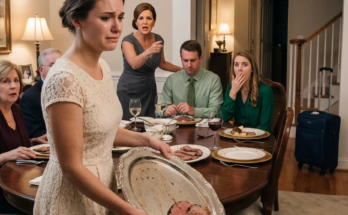
“The flight is twenty-five hundred each,” my mother said, swirling her wine like she was auditioning for a reality show. “Business class. Qatar. Real luxury.”
We were wedged into a leather booth at a downtown steakhouse that smelled like truffle butter and expensive cologne. My father sat upright, shoulders squared, scanning the room like he expected someone to recognize him. My brother, Trayvon, lounged beside his wife, Jessica, as if the booth belonged to him. Jessica’s smile stayed fixed, bright and empty, the way a ring light looks when it’s turned on.
My mother leaned toward me. “We covered Trayvon and Jessica. You know… because he’s reinvesting.” She said the word reinvesting like it was holy. “But you’ll need to cover yourself. And your share of the villa. If you can’t afford it, stay behind.”
The sentence landed soft and sharp at the same time. Like a feathered dart.
I took a sip of water. I let my face stay calm. I let silence do the work I used to do with begging.
There was a time, years ago, when I would’ve tried to prove myself right there at the table. I would’ve offered to pay, or defended my job, or explained my budget. I learned the hard way that explanations were just invitations. In my family, anything I had was automatically theirs, and anything I didn’t have was proof I wasn’t worth much.
Trayvon’s mouth twitched, like he was holding back laughter. Jessica reached across the table and patted my hand with the kind of pity that felt like spit.
“Oh, Jada,” she said. “Don’t feel bad. Maybe next year.”
Next year, I thought, I might be living on Mars. I might be running for office. I might be anywhere but trapped under my mother’s stare.
“I can’t swing it,” I said, soft and pleasant. “So I’ll stay behind. Have fun.”
My father nodded, satisfied. “That’s maturity. Knowing your place.”
Knowing your place. I repeated it in my head as they went back to discussing overwater bungalows and lounge access. The whole dinner felt like a performance I’d seen too many times: my parents pretending they were wealthy, my brother pretending he was brilliant, Jessica pretending she came from some glittering dynasty. Meanwhile, I played the role they wrote for me years ago: the quiet daughter who never quite made it.
They didn’t know my real title. They didn’t know my bonus. They didn’t know my apartment looked out over the Chicago skyline like a postcard. They didn’t know my “plain” watch was simple on purpose because I had no interest in wearing my net worth on my wrist.
I left early, paid for my salad, tipped the valet, and drove home in my perfectly unexciting Honda Civic. I liked my car because it was invisible. It didn’t invite questions. It didn’t invite hands reaching into my pockets.
My apartment, though, was another story. Floor-to-ceiling windows. Clean lines. Quiet. My sanctuary.
I kicked off my heels and poured a glass of water. I was halfway to the couch when my phone lit up. Then it lit up again.
Fraud alert.
My banking app wasn’t dramatic. It didn’t scream. It simply displayed the facts in neat, cold lines: a charge for ten thousand dollars. Pending. Qatar Airways. Four business-class tickets.
Four. Not one. Not mine.
I stared at the last four digits of the card and felt my stomach drop, not with panic, but with recognition. Years ago, when I first got promoted, I’d applied for a premium travel card and used my parents’ address because I was between leases. The card arrived around the same time I moved out after a blowout fight with my father. I’d left a box of paperwork in my old closet and never thought about it again.
Apparently, someone had.
I opened the transaction. My thumb hovered. A call wouldn’t help. A family conversation wouldn’t help. They’d deny, deflect, cry, accuse. They’d turn it into my fault for having a card at their house in the first place. I had spent years learning how fraud works. I knew the biggest mistake victims make is warning the thief.
I tapped Dispute Transaction.
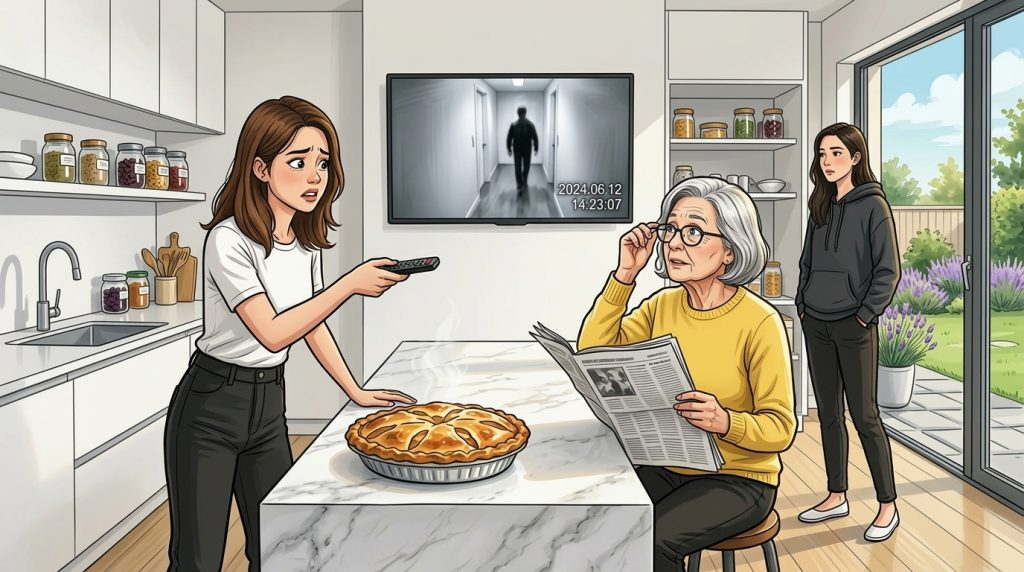
Reason: Fraud. Stolen card. Authorized? No. In possession? No. Lock account? Yes.
A warning popped up: by submitting, I was declaring under penalty of law that the charge was unauthorized. The bank might investigate. The card would be shut down immediately. Future charges would be declined.
I thought about my mother’s voice: stay behind.
I pressed Submit.
A green check mark appeared. Dispute filed. Account locked.
I set my phone down, face down, and breathed like I’d been holding my lungs hostage for years. The city outside my windows glittered, indifferent. Somewhere, my family was probably celebrating. Somewhere, they thought they’d pulled it off.
I poured myself a glass of wine, slow and steady, and waited for the consequences to arrive at their door.
Part 2: Terminal Decline
The next afternoon, I sat on my couch with a clay mask drying tight across my cheeks and watched Jessica’s life the way you watch a car wreck: horrified, unable to look away.
Jessica went live on Instagram at JFK like she was hosting her own travel show. The camera bobbed as she walked—oversized sunglasses indoors, white cashmere set, glossy lips. Behind her, Trayvon pushed a cart stacked with designer luggage like he was moving a museum exhibit.
“Hey guys,” she chirped. “We’re finally headed to the Maldives. Dream trip. You know how it is. Work hard, play hard.”
She angled the camera toward the Qatar Airways business-class counter, the one with the little velvet ropes and the soft lighting. My mother floated forward, chin lifted, scarf arranged just so. My father handed over passports like he was granting an audience.
The airline agent typed. Click-click-click.
Then she stopped. Her smile tightened. She tried again. Click-click.
My mother leaned in. “Is there a problem?”
“Yes, ma’am,” the agent said, voice polite but cool. “The payment method used for these tickets has been declined. There is a note from the issuer. The card has been reported stolen and used fraudulently.”
Jessica’s live ended so fast the screen snapped to black like someone slammed a door.
I didn’t need to see the rest. I could picture it: the confusion turning to panic, the panic turning to anger, the anger turning toward me like a spotlight.
My phone started ringing within minutes. Trayvon first. I ignored it. Then again. Then again. On the fourth call, I answered and put it on speaker, letting my voice stay mild.
“Hello?”
“Jada!” Trayvon’s voice cracked, sharp with fear. Airport noise hissed behind him. “What did you do?”
“What are you talking about?”
“The card,” he snapped. “The travel card. Mom found it in your old room. We used it for the tickets. They’re saying it’s stolen. The police are coming over here. You need to call the bank and fix this. Tell them you authorized it.”
I let the silence stretch long enough to make him sweat.
“Just so I’m clear,” I said. “You went into my things, took a card in my name, and spent ten thousand dollars without asking me.”
“We’re family!” he shouted. “We were going to pay you back when the investors—”
“There are no investors,” I said, still calm. “And you’re not family when you’re stealing.”
My father grabbed the phone. I could hear his breathing, heavy and furious. “This is your father speaking. You are humiliating us. Call the bank. Now.”
“You humiliated yourselves,” I replied. “And you stole from me.”
“You ungrateful—” he began.
I hung up. Not dramatically. Not with shaking hands. Just a clean, deliberate tap.
Then I blocked Trayvon. Then my father. Then my mother. Then Jessica. One by one, like locking doors in a hallway.
Part 3: The Midnight Confrontation
That night, the pounding came at 2 a.m. Not on my phone. On my apartment door.
My building had a doorman, cameras, and a security intercom. Still, my father’s voice thundered down the hall like he owned the floor.
“Open this door, Jada!”
I checked the monitor by my bed. The lobby camera showed him arguing with Earl, the night doorman. Trayvon was pacing behind him like a caged animal. Jessica leaned against the wall, phone out, fixing her hair as if she could filter reality.
I pressed the intercom. “Earl, send them up.”
“Miss Jada,” Earl said cautiously, “they’re really heated. I can call the police.”
“Let them come,” I said. “I want this on record.”
I slipped on a robe, turned off the main lights, and stood in the shadows of my living room. The city glowed behind the windows. My small bookshelf camera blinked a soft red dot—quiet and patient.
When the elevator dinged, my father didn’t knock. He kicked. I opened the door before he could damage it again.
He stormed inside, suit wrinkled, tie loose, sweat on his forehead. “You little witch,” he spat, scanning my apartment like he was looking for something he could break.
Trayvon followed, eyes bloodshot. Jessica dragged her carry-on over my hardwood, leaving a black scuff mark like a signature.
“You did this,” my father yelled. “We were detained. Detained. Do you know what that does to a man’s reputation?”
“A man who commits fraud?” I said. “It makes it accurate.”
He lunged toward me, hand lifting. In my childhood, that raised hand meant I shrank. It meant I apologized for things I didn’t do.
Now it meant I stepped aside.
His palm cut through the air and his momentum slammed him into my countertop. He grunted, clutching his ribs, shock flickering across his face.
“Don’t touch me,” I said, voice low. “If you try again, you’ll leave in handcuffs.”
Trayvon sneered. “Look at you. You’re enjoying this.”
Jessica wandered my living room like she was inspecting a rental. “Sad,” she murmured, brushing my sofa with her fingertips. “So cold in here. I get why you’re bitter.” Then she tilted her head at me and said, softly, “Things are different for you people.”
The words didn’t just insult me. They clarified everything. Trayvon let her say it. My parents stood there, letting it hang in my apartment like smoke.
“Get out,” I said.
My father puffed himself up again, trying to reclaim authority. “Not until you call the bank.”
I pointed to the camera. The blinking red light. His face drained.
“It’s been recording since you walked in,” I said. “Including you admitting you used my card. Including you trying to hit me.”
He stared at the lens like it was a gun.
“Now leave,” I said. “Before I send this to your school board with a note that says ‘principal behavior at 2 a.m.’”
They backed out, suddenly quiet, suddenly cautious. Jessica avoided my eyes. Trayvon muttered curses. My father paused at the threshold, searching my face for the daughter who used to fold.
He didn’t find her.
When the door shut, I locked it, saved the footage, and backed it up twice. If they wanted war, I wasn’t bringing feelings. I was bringing evidence.
Part 4: The Paper Trail
The next morning brought a long Facebook post from my mother. It featured a photo of her holding a Bible, accompanied by a caption about betrayal, the devil, and “malicious banking errors.” Dozens of comments flooded in from church ladies and cousins—people who hadn’t paid me back for loans they’d begged for, and people who hadn’t asked for my side because my side didn’t fit the version of me they enjoyed: the struggling daughter who needed lessons.
I scrolled without reacting. Anger is a fire. In my line of work, you either use it to forge steel or you let it burn your house down.
At 9 a.m., my work email pinged with an urgent message: Come to Mr. Sterling’s office immediately.
Sterling wasn’t a man who wasted words. Senior partner. Legend. The kind of forensic accountant other forensic accountants quoted like scripture. When I walked in, he held a printed email in his hand.
“Sit,” he said.
The subject line was misspelled and loud: Fraud alert employee Jada. The body accused me of stealing from my family, being mentally unstable, abusing my elderly father, and being under police investigation. The sender claimed to be a “concerned citizen” and urged the firm to fire me.
My throat tightened, but I kept my face still. “It’s them,” I said quietly.
Sterling lifted a second page. “We traced the IP. The email came from your parents’ home internet.”
The room went very quiet.
Then Sterling fed the printed complaint into the shredder without ceremony. Paper screamed as it disappeared.
“We don’t make career decisions based on anonymous emails written by idiots,” he said, and it was the closest thing to comfort I’d ever heard from him. “But you have a problem. A real one.”
“I can handle it,” I said.
“I know you can,” Sterling replied. “That’s why I’m putting you on mandatory leave. Paid. Effective immediately.”
I started to protest, but he cut me off with a look.
“Your family just tried to weaponize your reputation,” he said. “People don’t do that unless they’re desperate. Desperate people hide receipts.” He slid a folder toward me. “Use your time. Follow the money. And if you need legal teeth, I know sharks.”
When I left the building, the air felt sharper, like Chicago itself had woken up and chosen violence with me.
Part 5: The Discovery
I went straight to the Cook County Recorder of Deeds. Most people think secrets live in diaries. I’ve learned they live in public records, buried under stamps and signatures.
At the clerk’s window, I requested the full property history for my parents’ home: deeds, mortgages, liens, and releases. I paid for certified copies. The file they handed me was thick enough to bruise.
I sat at a table under fluorescent lights and started flipping.
- Original deed.
- Paid-off mortgage.
- Normal.
Then I hit a document dated three years ago: a home equity loan for one hundred fifty thousand dollars.
My stomach tightened. My parents had never mentioned it. I scanned down to the signature block:
Vernon Washington Lorraine Washington
And then, in blue ink:
Jada Washington
My vision tunneled for a second. I knew exactly where I was on that date: London, auditing a hedge fund. I had passport stamps and hotel receipts. I had an Uber history. I had an entire life that proved I wasn’t in Illinois signing anything.
They had forged my signature.
Worse, the disbursement statement showed exactly where the money went:
Pay to: Trev Solutions LLC.
My brother’s “startup.” The startup with no product. No customers. No revenue. The startup that somehow always had money for luxury clothes, weekend trips, and “networking dinners.”
I flipped again and found the notary stamp: Marcus D. Henderson.
I actually laughed, once, under my breath. Marcus was Trayvon’s friend. A loan officer. The guy who always slapped my brother on the back at family barbecues and called me “little sis” like that gave him permission to talk down to me.
I photographed every page, bought the certified copies, and carried the envelope outside like it was radioactive.
On the courthouse steps, the wind off the lake cut through my coat, but my hands were steady. Now I had the shape of their scheme: forged documents, stolen identity, and money funneled to Trayvon. The credit card wasn’t the beginning; it was just the first thing they thought I wouldn’t notice.
I got in a cab and gave the driver the address of the bank branch where Marcus worked.
The impulse to go to the police was loud. But arrests without context turn into sob stories, and my family had a talent for sob stories. I needed more than outrage. I needed a paper trail so clean a jury could follow it with their finger.
The cab pulled up to the bank. I stepped out, clutching my envelope, and walked in with the quiet confidence of someone who spends her life dismantling lies.
Marcus looked up when I approached his desk and smiled like we were old friends.
That smile was about to die…