PART 1
Julian had always hated needles. His older brother had died in a hospital several years earlier, making that fear all too real. He had never liked doctors.
So when he walked into my kitchen and said, “Mom, I’m giving away one of my kidneys,” I thought I had misheard him.
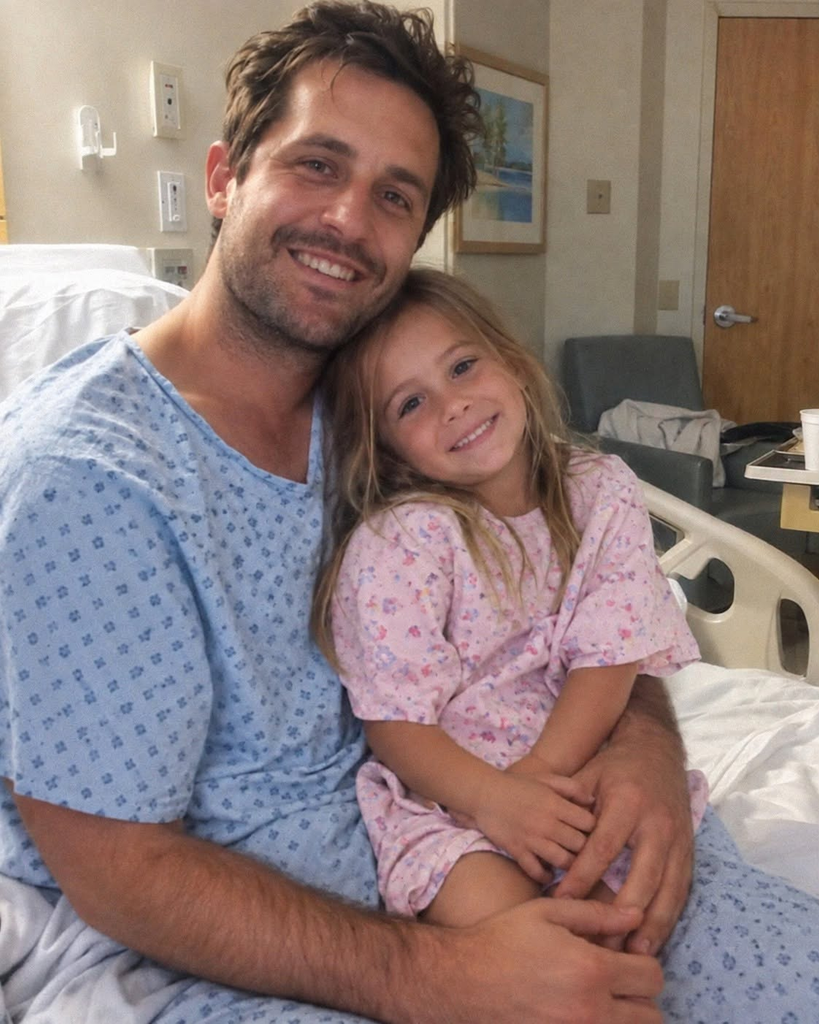
The recipient was 5-year-old Nora, the daughter of his former classmate. Her kidneys were failing, and no relative had been a match.
“She should be learning to ride a bike, not counting hospital ceiling tiles,” Julian said, sliding her photo across the table.
I was terrified, but how could I ask my son to walk away from a child he could save?
The transplant worked. Nora’s cheeks regained their color, and Julian said she was getting better every day.
But my son never came home.
Four days after surgery, he developed a rare complication. I sat beside him as alarms shrieked and nurses rushed in. His palm was cold, yet he still tried to comfort me.
“Whatever happens,” he breathed, “please don’t blame Nora or her mother.”
He died before sunrise.
Thirty years old.
My child.
Everyone called him a hero, but I would have traded every kind word to hear him call me “Mom” one more time.
The morning after I buried him, someone knocked.
I recognized Chloe, Julian’s former classmate. Beside her was Nora, freshly discharged, clutching a stuffed rabbit.
I forced myself to smile.
“Hi, girls. I’m sorry, but I’m not up for visitors. Julian just passed away.”
Chloe covered her mouth, but a sob escaped.
“I never wanted to tell you this, but… after what Julian did, I can’t let you keep living a lie.”
My fingers tightened around the doorframe.
She pulled a creased paper from an inside pocket and looked me in the eye.
“Your son never told you the truth about why he saved Nora, did he?”
PART 2: THE PAPER IN THE ENVELOPE
The porch air felt suddenly thin.
I stared at Chloe. The world seemed to wobble beneath my feet, the grey sky blurring into the faded blue paint of the front porch. Inside my house, Julian’s jacket still hung on the hall coat rack. His coffee mug sat half-drained on the kitchen counter from the morning he drove himself to the hospital.
“What are you talking about?” My voice came out as a raspy, papery thread. “Julian saved her because he had a good heart. He couldn’t watch a child suffer.”
“He did have a good heart,” Chloe whispered, tears spilling over her eyelashes and running down her pale cheeks. She didn’t offer the paper right away. She held it close to her chest, her knuckles white. “He was the best man I ever knew. But he didn’t donate a kidney out of generic charity, Mrs. Vance. He did it because he owed her.”
“Owed her?” I echoed, my chest tightening until it felt as though my ribs were cracking. “She was five years old! How could my son owe a child anything?!”
Chloe looked down at little Nora. The girl was holding her stuffed rabbit tightly by its floppy ear, her brown eyes wide and dark, looking at me with that quiet, intense curiosity unique to children who have spent too much time around doctors. She had Julian’s dark hair. The realization hit me like a physical blow—a sudden, dizzying drop into an abyss I hadn’t known was beneath my feet.
“Nora,” Chloe said softly, kneeling beside her daughter. “Honey, go sit on the swing for a minute, okay? Mommy needs to talk to Julian’s mom.”
The little girl nodded obediently and walked toward the porch swing, her light pink sneakers squeaking softly against the floorboards.
Chloe stood up, her jaw trembling. She unfolded the creased paper with slow, deliberate hands. It wasn’t a medical document. It was a certified court order dated six years prior, alongside a private DNA paternity test printed on heavy hospital letterhead.
“Six years ago, right before Julian left for his master’s program in Boston, we spent a weekend together,” Chloe said, her voice dropping to a raw, painful whisper. “When I found out I was pregnant, I panicked. I knew how terrified he was of hospitals, of sickness, of anything that reminded him of his brother’s death. I knew he was building his career. When I told him, he… he froze.”
I couldn’t move. I couldn’t breathe.
“He didn’t walk away because he didn’t care,” Chloe continued, fresh tears flooding her eyes. “He walked away because he was terrified. He told me he was broken. He said that after watching his older brother die in an ICU, he believed any family he tried to build would just end up in tragedy. He gave me money. He signed a private agreement guaranteeing monthly financial support, but he begged me never to put his name on the birth certificate. He begged me to let him stay a stranger.”
She handed me the paper.
My hands shook so violently the paper rattled like dry leaves in the wind. There, at the bottom of the lab report, printed in bold black ink, were the results: Probability of Paternity: 99.98%. Father: Julian Vance.
“For five years, he paid every cent of child support through a third-party attorney,” Chloe choked out. “He never missed a payment. But he never came to see her. He was too afraid to love her, because loving someone meant he could lose them.”
“Until she got sick,” I breathed, my tears finally breaking through, hot and stinging against my cold skin.
“Until six months ago,” Chloe agreed, her voice breaking completely. “When Nora’s kidneys began failing, I reached out to his lawyer in absolute desperation. None of my family matched. The public registry had a three-year waitlist, and the doctors told me Nora wouldn’t survive eight months. Two days later, Julian showed up at my apartment. He didn’t say a word about the past. He just looked at Nora, sat on the floor, and played blocks with her for three hours.”
Chloe looked toward the porch swing, where the little girl was gently swaying back and forth, hugging her rabbit.
“He called me that night,” Chloe whispered. “He told me, ‘I failed her for five years because I was a coward. I am not going to let my fear kill my daughter.’ He went to the clinic the next morning under an alias to get tested. When he found out he was an exact match, he wept on my living room sofa. He told me it was the first time in his life he felt like his existence actually mattered.”
I sank down onto the wooden porch bench, clutching the paper to my chest.
The pieces of the last few months began falling into place with devastating, terrifying clarity. The way Julian had suddenly started coming over to my house every Sunday, sitting at the kitchen table, staring at old childhood photo albums of his deceased brother. The way he had held my hand in the hospital corridor before his surgery, his voice trembling as he said, “Mom, if anything happens to me, I need you to know that I finally fixed the biggest mistake I ever made.”
I had thought he was talking about an old career choice. I had thought he was talking about leaving his high-paying job to work for a non-profit.
He was talking about his daughter.
“He made me promise never to tell you unless the surgery went wrong,” Chloe said, kneeling on the cold floorboards in front of me, taking my shaking hands in hers. “He didn’t want you to carry the weight of his secret if he lived. He wanted to earn the right to tell you himself. He was planning to bring Nora to your house next Sunday for dinner to introduce her as your granddaughter.”
I covered my face with my hands and wept—raw, agonizing, ragged sobs that tore through my throat. My son was gone. My sweet, terrified boy, who had carried the silent trauma of his brother’s death for a decade, had stepped into the very nightmare he feared most to save his child.
And in doing so, he had left me with the piece of him I thought I had lost forever.
PART 3: THE LIVING LEGACY
The house felt different that evening.
The suffocating, heavy stillness that usually accompanies a funeral had shifted into something else—a delicate, trembling quiet.
I sat at the kitchen table with a cup of tea that had long gone cold. Beside my mug lay the DNA report, a stack of Julian’s old baby photos, and a small wooden box he had left in his bedroom closet.
I had opened that box an hour after Chloe left. Inside were dozens of printed photographs he had quietly saved over the last five years—photos Chloe’s lawyer had forwarded to him every month. Photos of a baby girl taking her first steps, a toddler wearing a yellow raincoat, a young girl smiling with a gap in her front teeth.
Beneath the photos was a handwritten letter addressed to me, sealed in a white envelope bearing my name in his familiar, hasty cursive.
My fingers trembled as I broke the wax seal.
Mom,
If you’re reading this, it means my luck finally ran out, and the thing I’ve been running from my entire life caught up with me.
I am so sorry. I know the pain of losing a child—I watched you survive it when we lost Thomas, and it broke something inside me that I never knew how to fix. For years, I believed that love was just a setup for unbearable grief. When Chloe told me she was pregnant six years ago, I panicked. I let my fear make a coward out of me. I thought that if I kept my distance, if I stayed a stranger, I could protect myself from ever feeling that crushing loss again.
I was wrong. Staying away didn’t protect me; it just made me empty.
When I saw Nora six months ago, I saw Thomas in her eyes. I saw you in her smile. I realized that fear isn’t a reason to run away—it’s the tax we pay for loving someone deeply. She needed me, Mom. For the first time in my life, my fear didn’t matter.
If I don’t make it off that operating table, please don’t let my mistake define her life. She doesn’t know what a father is, but she deserves to know what a grandmother’s love feels like. Show her the garden. Teach her how to bake those cinnamon rolls Thomas and I used to fight over. Tell her about her dad, but don’t tell her I was a hero.
Tell her I was just a man who finally found his way home.
I love you, Mom.
Julian.
I pressed the letter to my lips, my tears soaking into the paper.
He hadn’t died in vain. He hadn’t died as a tragic victim of a cruel fate. He had died in an act of absolute, triumphant redemption. He had faced his darkest, most suffocating terror, walked straight into the hospital operating room that had haunted his nightmares for fifteen years, and traded his life so his daughter could have hers.
The doorbell rang softly.
I stood up, wiped my face with the back of my hand, and walked to the front door.
Chloe stood on the porch under the warm yellow light, holding a small overnight bag. Beside her, little Nora was yawning, rubbing her eyes with her small fist, still clutching her stuffed rabbit.
“I know it’s late,” Chloe said nervously, her voice hesitant. “We were staying at a hotel near the clinic, but… I didn’t know where else to go. I can leave if you need space—”
“Don’t you dare,” I interrupted softly.
I stepped across the threshold, pulled Chloe into my arms, and held her tightly. She froze for a second before collapsing against my shoulder, letting out a long, quiet breath she felt like she had been holding for years.
Then I dropped to my knees on the porch floor, looking directly into the dark, almond-shaped eyes of the five-year-old girl standing before me.
She looked at me shyly, pulling her rabbit closer to her chest.
“Hi, Nora,” I whispered, my voice thick with emotion.
“Hi,” she murmured in a sweet, tiny voice. “Are you Julian’s mommy?”
“I am,” I smiled through my tears, gently reaching out to brush a stray lock of dark hair from her forehead. “And I’m your grandma.”
The little girl studied my face for a long moment. Then, with the effortless trust of a child who recognizes love, she took a step forward and wrapped her small, warm arms around my neck.
Holding her against my chest, feeling the steady, strong rhythm of her heartbeat—a heart sustained by the blood and kidney of my brave, beautiful boy—the crushing weight in my chest finally began to lift.
FINAL PART: THE GARDEN IN SPRING
Eight months later, the cold, bleak winter had finally dissolved into the soft, sunlit warmth of a early Virginia spring.
My backyard garden, which had lain dormant and overgrown for years after Thomas passed, was once again bursting with life. Bright yellow daffodils lined the brick walkway, and the old wooden bench beneath the white oak tree had been freshly painted.
I sat on the bench with a cup of hot tea, watching little Nora run through the grass.
She wore a bright yellow sundress and blue sneakers, her cheeks rosy with health, her laughter echoing clearly through the afternoon air. Her recovery had been miraculous. The new kidney was functioning perfectly, and the pale, fragile girl who had walked onto my porch eight months ago was now a vibrant, energetic force of nature.
Chloe walked out from the kitchen carrying a tray of fresh lemonade, setting it down on the patio table.
She had moved into the guest house on my property four months ago. We had built a quiet, supportive rhythm together—a household bound not by tragedy, but by a shared devotion to the little girl who connected us all.
“Look, Grandma! Look what I found!” Nora shouted, sprinting across the lawn toward me.
She stopped right in front of my knees, her hands cupped carefully around a small, shiny brown acorn.
“It’s a baby oak tree,” she announced proudly, holding it up for my inspection. “If we plant it, it’s gonna grow huge!”
I took the acorn gently, looking into her bright brown eyes—eyes that held the exact same spark of wonder my son had possessed when he was five years old.
“Then let’s plant it right here,” I smiled, pulling a small hand trowel from my garden basket.
We knelt together in the rich, dark soil near the base of the old oak tree. Nora dug a small hole with her tiny hands, carefully set the acorn inside, and patted the dirt down flat with her palms.
“Do you think Daddy can see it from heaven?” she asked casually, wiping her dirt-smudged forehead with her sleeve.
My heart swelled, a warm, bittersweet ache blooming in my chest.
We talked about Julian every day. We didn’t speak of him with heavy, suffocating grief; we spoke of his laughter, his terrible singing voice in the car, his love for blueberry pancakes, and the incredible bravery that had given her a second chance at life.
“I know he can,” I said softly, wrapping my arm around her small shoulders and pulling her close against my side. “He’s watching you right now, sweetheart. And he is so, so proud of you.”
Nora smiled, leaning her head against my arm for a moment before spotting a yellow butterfly near the rose bushes and darting off across the grass once more.
I stood up slowly, brushing the soil from my knees, and looked up at the clear, boundless blue sky above the trees.
For fifteen years, I had believed that grief was a permanent sentence—that losing my eldest son had defined the rest of my existence. And when Julian died, I thought the darkness would swallow me whole.
But sitting in the warm spring sunlight, listening to my granddaughter’s laughter echo across the yard, I finally understood the truth my son had discovered before he died.
Love isn’t the absence of fear or the avoidance of pain. Love is the willingness to walk straight through the dark, knowing that what we leave behind for others is greater than anything we could ever lose.
Julian had hated needles. He had been terrified of hospitals. He had spent years running from the pain of his past.
But in the end, he hadn’t been defined by his fear. He had been defined by the life he saved, the daughter he loved, and the home he had given back to us all.
I took a deep, full breath of the sweet spring air, offered a quiet thank-you to the sky, and walked across the grass to join my family.