1. The Curve of Ghosts
The grand foyer of the sprawling, ancestral Hart estate buzzed with a low, chaotic energy. Twenty members of my extended family—aunts, uncles, and second cousins I hadn’t seen in years—milled about beneath the massive crystal chandelier, sipping coffee from delicate porcelain cups and speaking in hushed, greedy murmurs. They were waiting for the arrival of Mr. Sterling, the formidable estate attorney.
Today was the reading of the Last Will and Testament of my grandmother, Eleanor Hart.
But I was not standing in the sunlit foyer, sharing memories or offering condolences.
I was at the bottom of a steep, terrifyingly narrow flight of concrete stairs. The air down here was freezing, thick with the smell of damp earth, old stone, and decades of neglect.
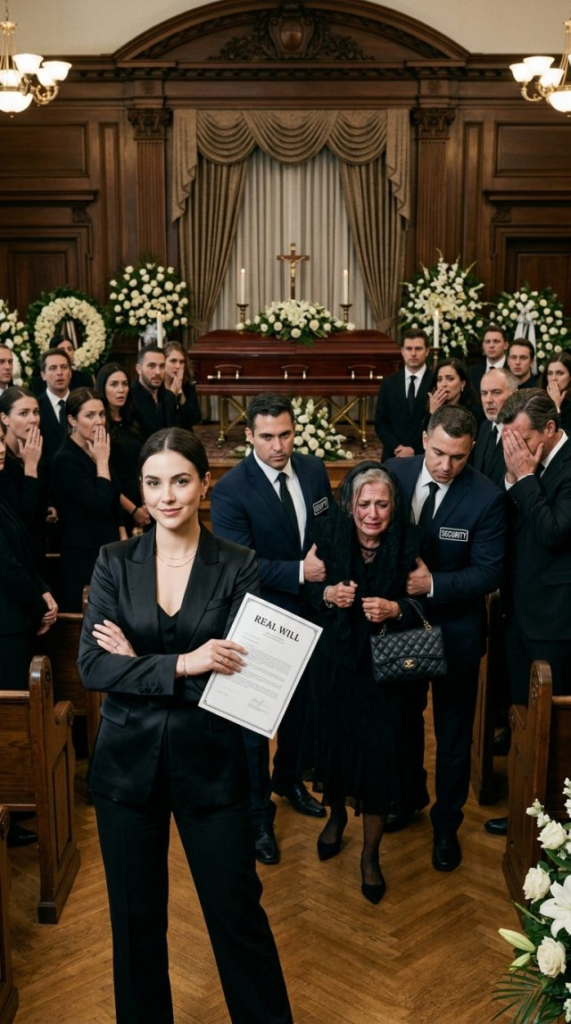
I rubbed my left shoulder, wincing as a sharp spike of pain radiated down my arm. A dark, ugly bruise was already forming where my mother, Sylvia, had violently, aggressively shoved me against the exposed brick wall just moments ago.
I looked up the long, dark staircase.
Sylvia stood at the very top, her silhouette framed by the opulent, warm light of the mansion’s hallway. She was wearing a tailored, expensive black mourning dress, a string of pearls resting against her collarbone. She looked every inch the grieving, aristocratic daughter.
But her face, staring down at me in the gloom, was twisted into a mask of pure, unadulterated, sociopathic malice.
“Listen to me very carefully, you ungrateful, pathetic little parasite,” Sylvia hissed. Her voice didn’t echo; it slithered down the concrete steps, dripping with a venom I had grown accustomed to over twenty-two years of being her designated punching bag. “Mother’s mind was going at the end. She was weak, sentimental, and easily manipulated by your pathetic, wide-eyed act.”
She gripped the heavy iron handle of the basement door.
“I am the sole surviving daughter,” Sylvia spat, her eyes glittering with a ravenous, blinding greed. “This estate, this house, the accounts—they belong to me. If she left you even a single cent, Elara, if you even attempt to contest my claim to a fraction of a percentage, I swear to God I will destroy you. I will ruin your life.”
I stared up at the monster who had raised me. I didn’t scream. I didn’t cry. I didn’t beg her to let me up. I had learned long ago that showing fear to Sylvia was like bleeding in front of a shark.
“You can’t hide me down here forever, Mother,” I whispered, my voice incredibly calm, echoing softly in the cavernous space. “Mr. Sterling will ask for me. The family will notice I’m gone.”
Sylvia let out a short, cold, incredibly sharp laugh that sent a shiver down my spine.
“I don’t need to hide you forever, you stupid girl,” Sylvia sneered, her hand tightening on the iron door. “Just until the ink dries on the transfer documents. I am going to walk into that library, look Mr. Sterling in the eye, and tell him, with tears on my face, that you couldn’t bear the profound grief of losing your beloved grandmother, had a complete mental breakdown this morning, and ran off into the city.”
She smiled a terrifying, triumphant smile.
“They all know how ‘fragile’ and ‘unstable’ you are, Elara. I’ve made sure of that for years. They will believe me without a second thought. Enjoy the dark.”
The heavy, solid iron door slammed shut with a deafening, metallic CLANG.
I heard the heavy, sliding thud of the exterior deadbolt sliding into place.
I was plunged into absolute, suffocating, pitch-black darkness.
The silence of the subterranean basement pressed in on me, heavy and claustrophobic. I was twenty-two years old, locked in a freezing cellar by my own mother so she could steal the only legacy I had left of the only person who had ever truly loved me.
But as I sat on the cold concrete floor, shivering in my thin black dress, I didn’t panic.
I reached my hand out in the darkness, trailing my fingers along the rough, freezing surface of the brick wall, moving toward the very bottom stair.
My fingers brushed against the cold concrete of the riser. I felt along the underside of the lip of the stair.
My breath hitched.
My fingertips grazed a small, soft, velvet pouch, securely taped to the underside of the stone.
It was exactly where Grandmother Eleanor had secretly, urgently whispered for me to look, during one of her final, lucid moments in her hospice bed three days ago. She had gripped my hand with surprising, desperate strength, her sharp eyes clear despite the morphine.
“When the time comes, Elara,” she had rasped. “When she shows you exactly who she is… look beneath the last step. I have prepared for her.”
My grandmother, a brilliant, ruthless matriarch who had built a financial empire from the ground up, had seen entirely through Sylvia’s fake, sycophantic devotion. She had remained silent for years, playing the role of the declining old woman, specifically to protect me from Sylvia’s wrath while she meticulously laid the groundwork for her final, masterful act of retribution.
I pulled the velvet pouch free from the tape.
I was locked in the dark. But I was no longer afraid.
2. The Paper of Destiny
In the sunlit, opulent drawing room two floors above my head, I knew exactly the performance Sylvia was currently delivering.
She would be sitting on the edge of the antique velvet sofa, dabbing her completely dry, perfectly mascaraed eyes with a delicate lace handkerchief.
“I am so, so sorry my Elara isn’t here with us today,” Sylvia would be lying flawlessly, her voice trembling with manufactured, maternal sorrow as she addressed the murmuring aunts, uncles, and cousins holding their coffee cups. “The poor darling had a complete, hysterical mental breakdown this morning. She just couldn’t handle the grief of losing Mother. She packed a bag and ran off. You all know how incredibly fragile and emotionally unstable she has always been.”
The relatives, people who only saw us on major holidays and had been fed Sylvia’s toxic, gaslighting narrative about my “mental health issues” for a decade, would nod in sympathetic, gullible agreement. They would offer her comforting pats on the shoulder, completely unaware that the “fragile” girl was currently trapped in a freezing cellar beneath their expensive leather shoes.
“It breaks my heart,” Sylvia would sigh, accepting a glass of water from a cousin. “But it is just me now to carry Mother’s heavy legacy.”
I sat in the pitch-black basement, pulling my smartphone from the pocket of my dress. I turned on the flashlight function, the harsh, white LED beam cutting through the oppressive darkness, illuminating the dusty, cobweb-covered stone walls and the rows of heavy wooden wine racks spanning the length of the cellar.
I unzipped the small, dusty velvet pouch.
Inside lay a heavy, antique brass key, intricate and cold to the touch.
Folded neatly beside it was a piece of thick, expensive parchment paper bearing my grandmother’s elegant, unmistakable, looping handwriting.
I unfolded the letter, my hands shaking slightly not from fear, but from the overwhelming, visceral presence of the woman I had just buried.
“My dearest, bravest Elara,” the note read.
“If you are reading this in the dark, it means your mother, Sylvia, did exactly what I mathematically calculated she would do. It means she has shown her true, ugly face, and attempted to bury you to steal what is not hers.
Do not weep for me, and do not weep for her betrayal. I have spent the last three years watching her treat you like a servant in my own home. I remained silent because I knew if I confronted her while I was alive, she would simply take her revenge out on you when I was not looking.
I could not protect you from her fists while I lived. But I have ensured, with absolute legal certainty, that I will protect you from the grave.
Use the brass key on the rusted iron grate located behind the third wine rack on the north wall. It leads to the original, 19th-century servant ventilation shaft that connects directly to the study behind the main library. It is narrow, and it will be dirty. But it is your path to the light.
Be quiet, my brave girl. Move like a shadow. Let her talk. Let her lie to the family. Let her hang herself with her own arrogance before you step out and cut the rope.”
A fierce, hot tear slipped down my cheek, landing on the parchment. It was a tear of profound, overwhelming gratitude. She hadn’t abandoned me. She had armed me.
I folded the letter and slipped it, along with the brass key, into my pocket.
I stood up. The frightened, abused twenty-two-year-old girl who had been shoved down the stairs died on that cold concrete floor.
I walked purposefully toward the north wall, the beam of my phone flashlight illuminating the towering, dusty wine racks. I counted. One, two, three.
I squeezed behind the heavy wooden structure. The space was tight, smelling strongly of old cork and damp stone. Hidden in the shadows, nearly flush with the floor, was a heavy, rusted iron grate covering a dark, square ventilation shaft.
I knelt down, inserted the heavy brass key into the ancient, stiff lock, and turned it with all my might.
With a loud, protesting, metallic CLACK, the lock disengaged. I pulled the heavy iron grate open, revealing a dark, narrow, upward-sloping tunnel.
Directly above me, I heard the heavy, muffled thud of the front doors opening, followed by a sudden, respectful hush falling over the chaotic chatter in the drawing room.
Mr. Sterling had arrived.
I turned off my flashlight, plunged myself into absolute darkness, and began to crawl into the walls of the estate.
3. The Final Straw
The journey up the servant shaft was agonizing, claustrophobic, and physically brutal.
The tunnel, designed over a century ago for airflow and discreet servant movement between the cellar and the upper floors, was lined with rough, unpolished brick and jagged mortar. It was incredibly narrow, forcing me to crawl on my elbows and knees, my dress tearing against the stone, my bare skin scraping painfully against the walls.
The air was thick with decades of undisturbed dust, making it difficult to breathe without coughing. Spiderwebs clung to my hair and face. But I didn’t stop. The burning, white-hot fire of my grandmother’s letter propelled me upward, yard by agonizing yard.
As I climbed higher, the muffled sounds of the mansion above began to clarify. The thick stone of the walls acted as a bizarre acoustic conduit.
I reached a small, horizontal landing where the shaft leveled out, running directly behind the mahogany bookshelves of the grand library. A faint, rectangular sliver of light pierced the darkness ahead of me.
It was an ornate, brass ventilation grate, positioned near the floorboards, looking directly out into the library.
I dragged myself silently toward the light, my breathing shallow, my muscles burning with lactic acid.
I pressed my face close to the brass slits, peering out into the room.
The library was packed. The twenty extended relatives were seated in a semi-circle of antique chairs, their faces a mixture of solemn respect and barely concealed, ravenous greed.
Sitting front and center, in a plush, high-backed leather chair, was my mother, Sylvia. She was dabbing her eyes with her lace handkerchief, playing the role of the devastated, primary heir to perfection.
Sitting behind the massive, carved oak desk at the front of the room was Mr. Sterling. He was an older, fiercely loyal, sharp-eyed attorney who had managed my grandmother’s vast corporate empire for thirty years. He placed a heavy, thick leather briefcase on the desk, the loud snap of the brass latches echoing like a gunshot in the silent room.
He extracted a thick, sealed document.
“We are gathered today to execute the final wishes and read the Last Will and Testament of Eleanor Hart,” Mr. Sterling announced, his voice grave, resonant, and commanding absolute attention.
I bit my lip hard to stifle a gasp of pain as I shifted my weight in the cramped, dusty shaft, a rogue, rusted nail slicing a shallow, stinging cut across my forearm. I ignored the blood welling on my skin, keeping my eyes glued to the scene unfolding just inches away through the brass grate.
Mr. Sterling adjusted his spectacles. He spent the first twenty minutes painstakingly reading through the minor bequests. He listed substantial, generous donations to various children’s charities, animal shelters, and a significant sum left to the estate’s long-serving staff. He bequeathed minor, token sums and specific pieces of jewelry to the aunts and uncles sitting in the room.
With every minor bequest read, I watched Sylvia’s foot tap impatiently against the Persian rug. Her eyes were practically vibrating with a naked, ugly greed. She didn’t care about the charities or the cousins. She was waiting for the main event. She was waiting for the crown.
Finally, Mr. Sterling paused. He turned a heavy, parchment page.
“We now come to the primary assets of the Eleanor Hart Estate,” Mr. Sterling announced, his voice dropping slightly, ensuring every person in the room heard the gravity of the statement. “These assets, comprising the entirety of the Vanguard Corporate Holdings, the various real estate portfolios, and the liquid capital accounts, are valued at approximately forty-two million dollars.”
A collective, audible gasp ripped through the library. Several aunts muttered in shock.
Sylvia leaned forward so far she nearly fell out of her chair. Her manicured hands gripped her knees, her knuckles turning white. Forty-two million dollars. I could practically see the dollar signs reflecting in her wide, dilated eyes.
“Regarding my daughter, Sylvia,” Mr. Sterling read smoothly from the heavy parchment, his tone entirely devoid of emotion.
Sylvia sat up incredibly straight, a triumphant, smug smile beginning to form on her lips. She looked around at the relatives, ready to accept their jealousy and congratulations.
“Sylvia has stated to many, for many years, that she is my sole, devoted caretaker and my rightful, primary heir,” Mr. Sterling read, quoting my grandmother’s exact, cutting words. “However, throughout her life, Sylvia has consistently, repeatedly proven that her love is entirely transactional, and her cruelty is boundless.”
Sylvia’s smug smile faltered instantly. A flicker of deep irritation and sudden, cold panic crossed her meticulously powdered face. The relatives exchanged uncomfortable, wide-eyed glances.
“But,” Mr. Sterling continued, his voice rising slightly to cut off the rising murmurs in the room.
Sylvia let out a breath she had been holding, relaxing slightly, assuming this was just her mother’s final, petty insult from the grave before handing over the money.
“I am willing to leave the entirety of this forty-two-million-dollar estate, the properties, and the corporate holdings to my daughter, Sylvia,” Mr. Sterling read, his eyes scanning the document.
Sylvia let out a breathless, greedy, high-pitched laugh of absolute triumph. She had won. She had buried me in the basement, lied to the family, and secured her massive fortune. She was entirely ready to sign whatever minor, insignificant condition was required to claim her millions.
She was completely, blissfully unaware that Mr. Sterling was about to read a clause that would instantly, violently turn her blood to ice.
4. The Eviction Begins
“However,” Mr. Sterling said, looking up from the parchment, his eyes cold and unblinking, locking directly onto my mother’s triumphant face.
He didn’t read the next line. He recited it from memory, delivering the fatal, highly specific condition of the inheritance to the room with the devastating impact of a falling anvil.
“The transfer of this estate to Sylvia Hart,” Mr. Sterling boomed, his voice echoing off the mahogany bookshelves, “is contingent upon one absolute, irrevocable, and non-negotiable condition.”
The room went graveyard silent. You could hear a pin drop on the thick carpets.
“Sylvia shall inherit the estate in full,” Mr. Sterling continued, “provided that my granddaughter, Elara Hart, is physically present in this room, completely unharmed, and verbally confirms to the executor that she is safe and present of her own free will.”
The smile on Sylvia’s face didn’t just fade; it shattered into a million, jagged pieces.
“If Elara is absent,” Mr. Sterling read, his voice rising in volume, drowning out the sudden, panicked gasp that escaped my mother’s lips, “if she is hindered from attending, or if she has been harmed in any way on the day of this reading, Sylvia Hart immediately, permanently forfeits all claims to the estate.”
“What?!” Sylvia shrieked, the aristocratic facade entirely disintegrating.
“In the event of Elara’s absence or harm,” Mr. Sterling concluded, slamming the heavy leather folder shut with a resounding, thunderous THUD, “the entirety of the forty-two-million-dollar estate passes solely, immediately, and irrevocably to my granddaughter, Elara Hart.”
The absolute silence that followed was heavy enough to crush bone.
The color drained from Sylvia’s face with terrifying speed, leaving her skin a sickly, ashen grey. She looked exactly like a corpse. Her hands began to tremble violently, shaking so hard her pearl necklace rattled against her chest.
She realized, in that horrifying, freezing moment, that the trap she had dug for me was actually her own meticulously designed grave. By locking me in the basement to ensure I couldn’t claim the money, she had triggered the exact, specific clause required to completely disinherit herself.
“That… that’s impossible!” Sylvia screamed, jumping to her feet, her voice cracking with sheer, unadulterated, psychotic panic. She pointed a shaking finger at Mr. Sterling. “You can’t do this! I told you, she ran away! She had a severe mental breakdown this morning! She forfeited her right to be here! I am the only heir!”
“Did she run away, Sylvia?” Mr. Sterling asked quietly. He didn’t look surprised by her outburst. He looked at her with profound, professional disgust.
“Yes!” Sylvia wailed, turning to the shocked relatives, desperate to maintain her lie. “She’s crazy! She’s unstable! She abandoned us! Give me the papers, Sterling! I will sign them right now!”
“I’m afraid I cannot do that, Sylvia,” Mr. Sterling said smoothly.
Before Sylvia could scream another desperate lie, before she could lunge across the desk and attempt to physically tear the documents from the lawyer’s hands, I made my move.
I braced my hands against the stone floor of the ventilation shaft. I drew both my knees up to my chest.
With every ounce of strength, rage, and adrenaline I possessed, I kicked both my boots as hard as I could into the back of the heavy, ornate brass grate covering the exit.
CRASH!
The heavy brass grate exploded out of the wall, flying through the air and smashing violently onto the hardwood floor of the library, right behind Sylvia’s chair.
The twenty relatives shrieked in terror, jumping out of their seats.
I crawled out of the dark, suffocating hole in the wall and stood up in the brilliant sunlight of the grand library.
I was covered from head to toe in thick, grey dust and cobwebs. My expensive black dress was torn at the knees and elbows. A thin, bright red line of fresh blood from the nail scratch trickled down my left forearm, dripping onto the pristine Persian rug.
But I didn’t look like a victim. I didn’t look like a fragile, mentally unstable girl.
I stood tall, my spine straight, my eyes blazing with the cold, absolute fury of a reigning, vindicated queen.
I looked directly at my mother, who was staring at me with a look of pure, paralyzing, apocalyptic horror.
“I didn’t run away, Mr. Sterling,” I said, my voice deep, resonant, and echoing like thunder in the silent room. “My mother dragged me down the stairs, violently assaulted me, and locked me in the pitch-black basement.”
5. The Severance
The chaotic, horrified uproar in the library was deafening.
Aunts and uncles gasped, backing away from Sylvia as if she were suddenly radioactive. The illusion of the grieving, devoted daughter was violently ripped away, revealing the sociopathic, greedy monster underneath.
“You liar!” Sylvia screeched, her face contorting into an ugly, feral mask of pure, psychotic rage. The realization that forty-two million dollars had just slipped through her fingers permanently snapped the last fragile threads of her sanity.
She lunged toward me, her hands curled into claws, fully intending to physically attack me in front of the entire family, desperate to silence me, to drag me back down into the dark.
She didn’t make it two steps.
Before she could even reach the edge of the mahogany desk, two massive, broad-shouldered men in sharp black suits stepped seemingly out of nowhere. Mr. Sterling, anticipating exactly this kind of violent, desperate reaction, had quietly stationed private, armed security guards just outside the library doors.
They moved with terrifying, professional speed. One guard grabbed Sylvia’s outstretched arm, twisting it expertly behind her back, while the second grabbed her shoulder, slamming her face-first, hard, onto the polished surface of Mr. Sterling’s desk.
Sylvia screamed, a horrific, animalistic wail of pain and thwarted greed, as the guard pinned her down.
“Call the police,” Mr. Sterling instructed the second guard calmly, adjusting his spectacles. “We have a case of false imprisonment, assault, and attempted fraud against the primary heir of this estate.”
“Elara! Please!” Sylvia shrieked, her voice muffled against the wood of the desk, completely abandoning her rage for desperate, pathetic begging. “I’m your mother! You can’t let them do this! I was just stressed! I was trying to protect you from the pressure of the money! Please, tell them to let me go!”
I stood in my torn, dusty dress, bleeding onto the rug. I looked down at the woman who had spent twenty-two years treating me like a servant, a punching bag, and a shameful secret. I looked at the woman who had happily, maliciously locked me in a freezing, dark cellar to steal my future.
I didn’t feel a single shred of pity. I didn’t feel an ounce of daughterly obligation.
“You made it very clear, Sylvia,” I said, my voice as cold and hard as the concrete stairs she had shoved me down. “You told me you were going to destroy me if I got a single cent. You locked me in the dark. You are not my mother. You are a criminal. And I am treating you exactly like a hostile trespasser on my property.”
I turned my attention to the twenty terrified, silent relatives huddled near the library doors.
“Where she sleeps tonight is the business of the state penitentiary,” I announced to the room, my voice ringing with absolute, uncompromising authority. I looked at my mother’s sister, Aunt Clara, who had always eagerly participated in Sylvia’s gossip about my “fragility.”
“Aunt Clara,” I said, locking eyes with her. She physically shrank back against the wall. “You are the ‘blood family.’ Surely you have room in your home to store whatever pathetic belongings my mother has left in this house before I have them thrown into a dumpster?”
Clara stammered, her face pale with terror. “I… I don’t want any involvement in this, Elara. We had no idea she was capable of this.”
I let out a short, bitter laugh. “Of course you didn’t. You only craved the proximity to her supposed wealth, but you run like cowards when it comes to shouldering the consequences of her actions.”
I looked back down at Sylvia, who was weeping hysterically, her expensive pearls scattering across the desk as the security guard held her firmly in place.
“For twenty-two years, I was the quiet, invisible punching bag in this house,” I said, my voice echoing with finality. “I absorbed your cruelty. I absorbed your lies. But the heavy iron door you slammed in my face this morning was a beautiful, clarifying gift. It woke me up.”
I turned my back on her and walked toward Mr. Sterling.
“The temporary time is up,” I told the room at large. “The police are on their way. Anyone who is not off my property in fifteen minutes will be formally charged with trespassing.”
6. A Life Without Parasites
Six months later.
The contrast between my reality and the reality of the woman who had tried to bury me was absolute, stark, and brutally poetic.
In a harsh, aggressively fluorescent-lit criminal courtroom downtown, Sylvia—stripped of her designer mourning dresses, her pearls, and her arrogant superiority—sat at the defendant’s table wearing a shapeless, state-issued orange jumpsuit.
I had read the transcripts provided by Mr. Sterling’s legal team.
Sylvia had sobbed hysterically, begging the judge for mercy, claiming temporary insanity brought on by grief. The judge, disgusted by the sheer, calculating, sociopathic cruelty of a mother physically locking her own daughter in a subterranean basement to steal her inheritance, was completely unmoved.
Sylvia was sentenced to five years in a state penitentiary for false imprisonment, felony assault, and attempted estate fraud. She was denied bail.
The relatives she had spent her entire life trying to impress, the aunts and uncles she had gossiped with, completely abandoned her. Not a single member of the “blood family” showed up to her sentencing. They were terrified of angering the newly minted, forty-two-million-dollar heiress who held the strings to their various, minor trust funds.
Sylvia was entirely, permanently alone in a concrete cell, drowning in the exact, inescapable misery she had so casually inflicted upon me.
Miles away from that bleak courtroom, brilliant, golden afternoon sunlight streamed through the massive, two-story bay windows of the grand library in my estate.
I sat behind my grandmother’s massive, antique carved oak desk. I wasn’t wearing a torn, dusty dress. I was wearing a sharp, elegantly tailored, bone-white designer suit that radiated a fierce, untouchable beauty born of absolute freedom.
I didn’t look like a victim. I looked like a CEO.
I was working closely with Mr. Sterling, reviewing the finalized paperwork for a massive, multi-million-dollar philanthropic trust I had established in my grandmother’s name. The trust was designed to provide fully funded, secure, and permanent housing for young women escaping abusive, controlling domestic environments.
I was using my immense wealth and power to ensure that no one else would ever have to sit shivering in the dark, waiting for a monster to unlock the door.
The dark, terrifying, freezing basement where Sylvia had locked me away had been entirely, ruthlessly gutted. I had hired a team of contractors to rip out the damp concrete, tear down the brick walls, and transform the space into a beautiful, climate-controlled, state-of-the-art home theater and wine tasting room.
There was no tension in the air of my home. There were no threats. There was no one telling me I was fragile, unstable, or worthless.
There was only the immense, empowering, beautiful weightlessness of absolute physical safety and generational wealth secured by truth and profound resilience.
I signed the final legal document on the desk, officially transferring the initial ten million dollars into the charity holding account.
My assistant knocked softly on the open library door.
“Excuse me, Ms. Hart,” the assistant said politely, holding a small stack of mail. “A certified letter just arrived from the state penitentiary. The return address lists Sylvia Hart. Would you like me to open it?”
I didn’t even look up from the documents. I felt a brief, strange echo in my chest—a ghost of the terrified girl who had sat on the freezing stairs. But the echo faded instantly, washed away completely by the warm sunlight pouring through the windows.
“No, Sarah,” I replied, my voice calm, resolute, and entirely unbothered. “You know the protocol for unsolicited correspondence from hostile parties. Drop it directly into the shredder. Unopened.”
Exactly one year later.
It was a bright, warm, incredibly vibrant autumn afternoon.
I was hosting a joyous, loud, beautifully chaotic garden party on the sprawling, manicured lawns of my estate. The air smelled of roasted food, blooming late-season flowers, and the crisp scent of turning leaves.
I was surrounded by my chosen family. I had invited my brilliant colleagues, the women from the foundation I supported, and the friends who had stood by me when I had nothing. There was no performative, toxic blood family present. There was only genuine respect, loud laughter, and unconditional love.
I stood on the wraparound stone patio, holding a delicate crystal flute of vintage champagne.
I looked up at the towering, brick foundation of the massive mansion I now owned. I thought back to that pitch-black basement. I remembered the smell of the damp earth, the biting cold of the concrete, and the sound of my mother’s vicious, venomous threat echoing down the stairs as the heavy iron door slammed shut.
Sylvia had thought she was burying a terrified, fragile child in the dark. She thought she was throwing away a piece of trash.
She was entirely, blissfully unaware that she hadn’t buried me at all. She had simply planted a seed in incredibly fertile soil. And she had provided the exact, dark, pressurized environment required for that seed to violently, explosively shatter its shell and grow into a titan that would ultimately tear her entire life apart from the roots.
I smiled, raising my glass of champagne to the clear, brilliantly blue sky, offering a silent, profound toast to Grandmother Eleanor.
I had spent twenty-two years acting as a silent, invisible servant in a house of cruelty.
But it took only one locked door, and the brilliant, protective foresight of a woman who truly loved me, to teach me exactly how to be a queen.
As the garden erupted into laughter and soft music began to play into the evening, I took a sip of champagne. I turned my back on the past, leaving the dark, pathetic ghost of my mother permanently locked in a concrete cell, while I stepped fearlessly, powerfully, into a limitless and unshakeable future.


