“You can’t sit there.”
My son-in-law said it quietly. Quiet enough that my grandchildren playing in the living room wouldn’t hear.
But every single person at that Christmas dinner table heard it.
The chair he was pointing at was mine.
It didn’t have a nameplate on it. It didn’t need one. It had been my place at the head of that dining room table for thirty-one years. In the house in Dayton, Ohio, that my late husband Henry and I bought together when our daughter was six years old.
I’d served birthday cakes from that chair. Thanksgiving turkeys. Graduation dinners. Every single Christmas meal for thirty-one years.
I looked at Ryan’s pointing finger. Then up at his face.
He was wearing the navy cashmere sweater I bought him last Christmas.
And behind him, sitting comfortably in my chair, was his mother, Linda Caldwell. Her red fingernails wrapped around a glass of my good cabernet.
“Excuse me?” I said.
Ryan smiled. A cold, thin smile.
“My mother’s sitting there. She’s the guest of honor this year.”
My daughter Emily was standing in the kitchen doorway holding a big bowl of mashed potatoes. Her face had gone pale.
She met my eyes for one second.
Then she looked down at the floor.
And that’s when I understood.
This had been planned.
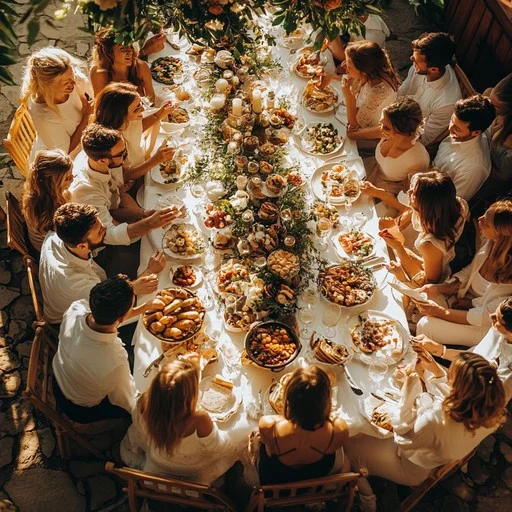
The table was crowded with Ryan’s relatives. His brother. His brother’s wife. Two cousins I’d met once at the wedding. My grandchildren, Ava and Noah, had been squeezed in at the far end between cousins they barely knew.
And Linda sat at the head of my table like she owned the house.
I’d spent two full days cooking that meal.
I paid for the prime rib. Two hundred and forty dollars from the butcher on Far Hills Avenue. I paid for the wine. The three pies. The poinsettias. The candles. And every expensive present sitting under that tree in the front window.
I opened my home that Christmas because Emily called me in November and quietly begged me.
“Mom, please. Just one peaceful Christmas. Ryan’s mom wants to come. Can we do it at your house? It’s bigger. It’d mean so much.”
So I said yes.
And now her husband was standing in my dining room telling me I had no place at my own table.
“Ryan,” Emily said softly.
He turned on her so fast she flinched.
“Don’t start, Emily. Your mother always makes everything about herself.”
Something inside me went completely still.
My name is Joan Whitfield. I’m sixty-four years old. I taught high school chemistry in the Dayton public schools for thirty-three years.
And standing there with a silver gravy boat in my hand, I finally saw my family clearly.
I set the gravy boat down on the table.
I untied my apron. The red one with the little holly leaves that Henry gave me the Christmas before he died. I folded it neatly and laid it next to the plate where I’d been told I couldn’t sit.
“You’re right,” I said.
Ryan blinked.
“What?”
“I cannot sit here.”
I walked into the front hallway and took my coat off the hook. I picked up my purse from the little table by the door.
“Mom?” Emily called after me. Her voice was thin.
I stopped at the front door with my hand on the knob.
I looked back once. At my dining room. At the candles I’d lit. At Linda in my chair with my wine.
At my daughter, holding a bowl of mashed potatoes she’d stopped noticing.
“The meal is finished,” I said. “The house is not.”
And I stepped out into the snowy Christmas evening, and closed the door behind me, and left them all sitting at my table.
I didn’t know where I was going. I just drove.
The streets were empty. Everybody was home with their families. Christmas lights blinked in every window I passed.
Six blocks from my house, near the Oakwood public library, there’s a little café called Chai and Chapter. It’s run by a widow named Mrs. Priya Rao. She’s seventy-two. She lost her husband the same year I lost Henry.
She stays open on Christmas Day. Every year. From noon till nine.
She told me once why.
“Loneliness doesn’t take holidays, Joan,” she said. “So neither do I.”
The bell over the door jingled when I walked in. There were only two other people inside. An elderly man reading a newspaper. A young nurse in scrubs eating soup alone.
Mrs. Rao looked up from behind the counter. She took one look at my face.
She didn’t ask any questions.
She just poured a cup of coffee, added cream the way I like it, and walked me to the quiet booth in the back corner by the bookshelves.
“Sit,” she said. “I’ll bring you pie.”
My phone started ringing before the pie even got there.
Emily. Twice.
Then Ryan.
I let Ryan go to voicemail.
When Emily called the third time, I answered.
“Mom,” she whispered. “Please come back.”
I could hear voices behind her. Silverware clinking. Somebody laughing. They’d kept eating.
“Are you asking because you want me there, Emily?” I said. “Or because Ryan is embarrassed?”
She didn’t say anything.
And in that silence, I heard ten years of excuses.
Ryan doesn’t like it when you just drop by, Mom. Call first.
Ryan thinks you spoil the kids.
Ryan gets upset when I disagree with him in front of people.
Every year, my daughter’s voice had gotten a little smaller. And every year, I’d told myself it wasn’t my place to say anything.
“He didn’t mean it like that,” Emily finally said.
“Yes,” I said. “He did.”
“The kids are upset.”
“So am I.”
“I know, Mom.”
“No,” I said gently. “You don’t understand yet.”
After Henry died four years ago, I made a promise at his graveside. I promised him I’d keep our family together.
But somewhere along the way, keeping everybody together had turned into letting Ryan decide where I belonged.
“I’m not coming back tonight,” I said. “Tomorrow morning, you and the children are welcome to come talk to me. Ryan is not invited.”
“He’s my husband, Mom.”
“And I’m your mother. I also own that house. I’ve been paying your bills when your family couldn’t. And I’ve stayed quiet for years because I thought my silence was helping you.”
Emily’s voice broke.
“I don’t know what to do.”
“Feed the children,” I said. “Put them to bed. And then ask yourself why your husband felt so comfortable humiliating me in my own home.”
I hung up.
Mrs. Rao set a slice of warm apple pie in front of me. Then she sat down across from me in the booth with her own cup of tea.
“Family?” she asked.
“Son-in-law.”
She nodded slowly.
“Mine told me once I didn’t belong at my own grandson’s birthday party,” she said. “Because I wasn’t ‘fun.’”
“What did you do?”
“I went home. I cried for a week. And then I stopped giving him money.”
She sipped her tea.
“He calls me Auntie now. Very respectful.”
I laughed for the first time all day.
I need you to understand how we got here.
Emily married Ryan Caldwell eleven years ago. He was charming back then. A pharmaceutical sales rep with a big smile and good manners. He called me Joan and laughed at Henry’s terrible jokes.
Henry never liked him.
“There’s something about the way he talks to her when he thinks nobody’s listening,” Henry told me after the engagement party. “Like she’s an employee.”
I told Henry he was being an overprotective father.
I wish I’d listened.
Six years ago, Ryan lost his sales job. He started his own consulting business. It never really took off.
Emily works part-time as a medical receptionist. They have two kids. Ava is nine. Noah is six.
The money got tight. Then it got very tight.
Henry and I started helping. Just a little at first. Ava’s preschool tuition. A car repair.
After Henry died, I kept helping. More and more.
By that Christmas, I was paying eleven hundred dollars a month toward the mortgage on their house in Kettering. I paid Ava’s tuition at the Montessori school. I paid the insurance on both their cars. I paid for Noah’s speech therapy.
Almost two thousand five hundred dollars a month.
And I never once asked for anything back.
Not money. Not gratitude. Not even a seat at my own table.
I just wanted my daughter and my grandchildren to be okay.
But here’s what I didn’t let myself see.
The more I helped, the more Ryan resented me.
He started making little comments. Joan’s here to inspect the house again. Better check with the bank of Mom first. Must be nice to buy your way into everything.
He stopped letting me pick the kids up from school without asking him first. He told Emily I was “undermining” him by buying Noah new shoes.
And Emily just got quieter. And quieter.
Sitting in that café on Christmas night, I finally understood what had been happening.
Ryan didn’t hate my money.
He hated that he needed it.
At ten o’clock, Mrs. Rao turned the sign on the door to CLOSED. She didn’t ask me to leave. She just refilled my coffee and started wiping down tables.
My phone buzzed. A text from Ryan.
You overreacted. You ruined Christmas for everyone. Hope you’re happy.
I read it twice.
Then I typed back.
No, Ryan. I ended a performance.
I turned my phone off.
I went home the next morning at seven.
Ryan’s SUV was gone from the driveway. The house was dark and quiet.
I unlocked the front door and stepped inside.
The dining room looked worse than when I left it.
Dirty plates were stacked everywhere. A red wine stain was spreading across Henry’s mother’s linen tablecloth. Half-eaten pie dried on the dessert plates. Somebody had stubbed out a cigarette on one of my good saucers.
And Linda’s wine glass was still sitting right there. In front of my chair. A ring of red lipstick on the rim.
Nobody had cleaned up a single thing.
I stood there in my coat for a long time.
Then I rolled up my sleeves and started cleaning.
Slowly. One plate at a time.
Not because they deserved it.
Because I did. Because it was my house. And I wanted it back.
I soaked the tablecloth in cold water and salt. I scrubbed the roasting pan. I washed every wine glass by hand and dried it and put it back in the cabinet Henry built.
I picked up Linda’s glass last.
I looked at that lipstick ring for a long moment.
Then I washed it too. And put it away.
At ten o’clock, there was a knock at the front door.
Emily was standing on my porch with Ava and Noah. Both kids were bundled up in their winter coats. Noah was holding the stuffed reindeer I’d put in his stocking.
Emily had knocked.
She’d had a key to that house since she was twelve years old. She’d never once knocked.
That one small thing told me something had changed.
I opened the door.
The kids rushed into my arms before I could say a word.
“Grandma!”
I knelt down in the hallway and held them both.
“Grandma,” Ava said into my shoulder. “Why did Dad say you couldn’t sit in your chair?”
I pulled back and looked at her. My granddaughter. Nine years old. Henry’s eyes.
“Sometimes grown-ups forget what respect looks like, sweetheart.”
“Did you leave because you were mad?” Noah asked.
“No, honey. I left because I was hurt. And if I’d stayed, everybody would have learned that it’s okay to hurt me.”
Noah thought about that.
“That makes sense,” he said seriously.
I sent the kids upstairs to the guest room with a plate of Christmas cookies and the old Nintendo that used to be Emily’s.
Then Emily and I sat down at the kitchen table. The same table where she did her homework every night growing up.
She held a cup of coffee in both hands. She didn’t drink it.
“I’m sorry, Mom,” she whispered.
“For what?”
She looked up, surprised.
“Say it clearly, Emily,” I said. “Not to punish yourself. But because you need to hear yourself say what happened.”
She took a shaky breath.
“I’m sorry I didn’t defend you. I’m sorry I let Ryan talk to you that way. In your own house. In front of everybody.”
She swallowed.
“And I’m sorry I expected you to just accept being humiliated. So Christmas would stay peaceful.”
“Thank you,” I said.
And then my daughter started to cry.
“He isn’t always like that, Mom.”
I didn’t say anything.
She laughed. A broken little laugh.
“I know how that sounds.”
“Tell me how it sounds to you,” I said.
She wiped her eyes.
“Like every woman on every TV show who says her husband isn’t always like that.”
“Yes,” I said. “It does.”
She told me things then. Things she’d never told anybody.
How Ryan checked her phone. How he controlled every dollar she earned at the clinic. How he decided which friends she could see. How he told her, over and over, that her mother used money to control them.
“He says you’re trying to buy our kids,” she said. “He says every time you pay for something, it’s so you can hold it over him.”
“Emily. Have I ever once demanded anything from you two? For all that money?”
“No.”
“Have I ever told you how to raise your children?”
“No.”
“Have I ever asked you to choose me over him?”
She shook her head.
“No, Mom. Never.”
“Then Ryan doesn’t hate control,” I said. “He hates proof. Proof that the woman he looks down on is the one person keeping his whole life from falling apart.”
Emily finally looked me in the eye.
“He told me to choose,” she said quietly. “This morning. He said if I came here, I shouldn’t bother coming home.”
“And yet you came.”
“I didn’t know where else to go.”
I got up and went around the table and sat down next to my daughter. And I put my arms around her, the way I did when she was six years old and had a nightmare.
“You and the children can stay here as long as you need,” I said. “Your old room is right upstairs. It’s always been yours.”
She cried into my shoulder for a long time.
At 12:40 that afternoon, Ryan came.
I heard his SUV pull into the driveway too fast. A car door slammed.
Then he started pounding on my front door. Hard. With his fist.
“Emily! Open this door!”
Upstairs, a door opened. Ava appeared at the top of the staircase in her pajamas. Her face was white.
Emily ran to the bottom of the stairs.
“Go back in the room, baby. Close the door. Turn the TV up. It’s okay.”
Ava hesitated. Then she went.
The pounding started again.
“Emily! I know you’re in there!”
I walked to the front door. I checked that the deadbolt was locked. And I stood right behind it.
“You may speak from the porch, Ryan,” I said through the door.
“My wife and my children are coming home. Right now.”
“They’re safe here. And you will not come into this house while you’re shouting.”
“You’ve always wanted to turn her against me! From day one!”
“No, Ryan,” I said. “You did that all by yourself.”
He slammed his fist against the door so hard the little window beside it rattled.
Emily jumped.
And then something changed in my daughter’s face.
I watched it happen. Like a light coming on in a dark window.
She walked up beside me. She stood right next to the door.
“Ryan,” she said. “Go home.”
Silence on the other side.
“What did you just say?”
“I said go home.”
“Open this door, Emily.”
“No.”
That one word was very quiet.
But it was the beginning of my daughter taking her life back.
Ryan’s voice turned ugly.
“Fine. You want to play it like this? I’ll cancel every card you have. You won’t have a dime. Let’s see how long you last on your mommy’s charity.”
I took my phone out of my cardigan pocket. I opened the voice recorder app. I pressed the red button.
“Ryan,” I said clearly. “Would you please repeat that?”
Silence.
Then I heard his footsteps going down the porch steps. His car door slamming. His tires spinning on the icy driveway.
He was gone.
Emily sank down onto the bottom stair. She put her head in her hands.
“I can’t believe this is my life,” she said.
I sat down next to her.
“It’s your life today, honey,” I said. “It doesn’t have to stay that way.”
The next week, we focused on practical things. One step at a time.
On December twenty-seventh, I called my old friend from church, Denise Holloway. She’s been a family law attorney in Dayton for twenty-five years. She came over that same afternoon.
She sat at my kitchen table with Emily for three hours.
“Do you have documentation?” Denise asked. “Of how he treats you?”
Emily hesitated.
Then she went upstairs. She came back down with her laptop.
She’d been saving things. For years. Quietly. Without telling anybody.
Text messages. Hundreds of them.
You’re useless without me.
If you leave, you’ll never see those kids again.
Your mother is a manipulative old witch and you’re turning into her.
Emails where Ryan told her exactly how much she was allowed to spend each week on groceries. Screenshots of him tracking her location on her phone.
I’d had no idea.
I sat there reading those messages over Denise’s shoulder, and I had to get up and go stand at the kitchen sink for a while.
“Emily,” Denise said gently. “This is a lot. This is very good documentation. You did the right thing saving all this.”
“I didn’t know why I was doing it,” Emily said. “I just knew I should.”
“Your instincts were protecting you,” Denise said. “Even when you couldn’t.”
The next day, Emily drove to a different bank and opened her own checking account. In her name only. For the first time in eleven years.
I drove her to Kettering while Ryan was at work. With a police officer standing by. We picked up the kids’ clothes. Their school records. Their birth certificates. Noah’s speech therapy binder. Emily’s insurance cards.
Emily stood in her own bedroom closet for a long time, holding a sweater.
“I don’t recognize anything in here,” she said. “Everything in this closet is something Ryan picked out.”
She left most of it.
And I made three phone calls that week.
One to my bank. I stopped the eleven-hundred-dollar mortgage payment on their house in Kettering.
One to the car insurance company. I took my name off Ryan’s policy.
And one to my accountant, to stop every other automatic payment I’d been making for the Caldwell family.
Everything except the kids’ school tuition and Noah’s therapy. Those I paid directly. In my grandchildren’s names. Not Ryan’s.
Every day that week, I watched my daughter come back to herself.
Little by little.
The first few nights, she couldn’t sleep. I’d hear her walking around downstairs at two in the morning. Checking the locks.
By the end of the week, she was sleeping through the night.
She started laughing again. With the kids. At dinner. At something silly on TV.
But she kept apologizing.
For everything.
She apologized for using a towel. For eating the last yogurt in the refrigerator. For crying in front of me. For leaving a coffee cup in the sink.
Every single time, I told her the same thing.
“Emily. You live here. You are not a guest.”
On the fifth night, she was standing at the refrigerator. She reached for the orange juice. And she stopped.
“Mom, is it okay if I—”
She caught herself.
She looked at me.
Then she poured the orange juice. Without finishing the question.
I didn’t say anything. I just smiled.
Ryan tried everything.
First he tried anger. Furious voicemails. Long texts at midnight.
Then he tried blame. It was my fault. It was Emily’s fault. It was the stress of the holidays.
Then he tried flowers. A huge arrangement of red roses delivered to my front door, with a card that said, I’m sorry, baby. Come home. Let’s be a family.
Then he tried tears. A long voicemail where he cried and said he couldn’t live without her.
Emily saved every single one of them. She forwarded them all to Denise.
On January third, Linda Caldwell called my house phone.
“You interfered in their marriage, Joan,” she said. No hello. “You’ve always been jealous of what Ryan and Emily have.”
“No, Linda,” I said. “I opened my door.”
“He never meant any of the things he said. Ryan’s a good man. He was just stressed out about money.”
“Your son told me I couldn’t sit at my own table,” I said. “In my own house. While you sat in my chair drinking my wine. And you didn’t say one word.”
“He didn’t mean it like that.”
“Hmm,” I said. “That seems to run in your family.”
She hung up on me.
Mrs. Rao laughed so hard when I told her that story that she had to sit down behind her counter.
On January twentieth, Emily filed for legal separation in Montgomery County.
Ryan hired a lawyer. He told everyone who would listen that his mother-in-law had stolen his family.
But the court didn’t care about Ryan’s wounded pride.
The court cared about stability. About documentation. About who had been paying for the children’s needs. About the children’s routines. About school, and doctors, and who answered the phone at three in the morning when Noah had a fever.
And the court cared about hundreds of text messages.
The judge granted Emily temporary custody of both children. Ryan got supervised visitation every other weekend.
Ryan was furious.
But for the first time in eleven years, his fury didn’t decide anything.
Spring came slowly that year. It always does in Ohio.
In March, Emily got a full-time job as an office coordinator at a pediatric clinic in Oakwood. Good benefits. A real salary.
In April, she bought a used Honda Civic. With money from her own bank account. In her own name.
She drove it into my driveway and honked the horn three times. Ava and Noah were waving from the back seat.
“Mom! Come look!”
I came out on the porch. My daughter was standing next to that little blue car, grinning like she was sixteen years old.
“It’s got a hundred and twelve thousand miles on it,” she said. “And a dent in the bumper. And it’s the most beautiful car I’ve ever seen.”
One Saturday afternoon in May, Emily carried all eight dining room chairs out onto the back patio.
“They need refinishing,” she said. “They’re all scratched up.”
She spent the whole afternoon sanding them down in the sunshine. The kids helped. Noah mostly got sawdust in his hair.
When she got to the chair at the head of the table, she stopped. She ran her hand over the wood.
“Mom. What stain did Daddy use on these? When he built them?”
“Cherry,” I said. “Minwax cherry.”
Emily smiled.
“He always liked everything warmer than it needed to be.”
I laughed.
“He did. He kept the thermostat at seventy-four all winter. I used to say it was like living inside a muffin.”
Emily laughed so hard she had to sit down in the grass.
And I stood there on that patio and laughed with my daughter.
It was the first time in months.
Maybe years.
By the next Christmas, the house felt completely different.
Nothing had really changed. The same furniture. The same old blue spruce standing in the front window. The same long dining room table with Henry’s eight chairs. Freshly stained in Minwax cherry.
But nobody whispered in corners anymore.
Nobody watched Ryan’s face before deciding whether they were allowed to be happy.
Emily and the kids were still living with me. We’d turned the attic into a bedroom for Ava, with a window seat and fairy lights. Emily was saving up for a place of her own. A little house close by. Close enough to walk.
“No rush,” I told her every time she brought it up. “No rush at all.”
That Christmas, Emily made the mashed potatoes. My recipe. Heavy cream and too much butter.
Noah set the table. He put the forks on the wrong side of every plate, and I didn’t fix a single one.
Ava made place cards by hand. Each one decorated with a different snowflake in silver glitter pen.
And Mrs. Rao joined us. She claimed she was only coming to inspect the pies.
She brought two of her own. Just in case mine weren’t up to standard.
When dinner was finally ready, I walked toward the head of the table.
Out of thirty-two years of habit.
And then I stopped.
For a whole year, that chair had meant so many things to me.
Humiliation. Dignity. Survival.
But standing there that Christmas, I finally understood something.
The chair was never really the problem.
The problem was whether I believed I deserved a place at my own table.
I did.
And now, so did Emily.
I pulled out the chair.
“Sit here tonight, honey,” I told her.
Emily’s eyes went wide.
“Mom. That’s your seat.”
“It’s my table,” I said. “And I decide where everybody belongs.”
Emily stood there for a long moment.
Then she sat down slowly. In her father’s chair. At the head of her father’s table.
She covered her mouth with her hand. Her eyes filled up.
I sat down in the chair right next to her. Ava had made my place card. It said GRANDMA in big silver letters, with a snowflake and a heart.
Before anybody picked up a fork, Ava stood up with her glass of sparkling apple cider.
“I want to make a toast,” she announced. “To Grandma.”
Everybody raised their glasses.
I shook my head.
“No, sweetheart,” I said. “To all of us.”
“To all of us!” Noah shouted. And knocked over his cider.
Nobody yelled at him.
We just mopped it up with napkins and laughed.