Part 1: The $5,000 My Mother Was Told She Did Not Need
My mother was seventy years old, widowed, retired, and careful with money. Over the years, she had managed to save about five thousand dollars for emergencies because she understood how quickly an unexpected expense could become a serious problem when you were living on a fixed income.
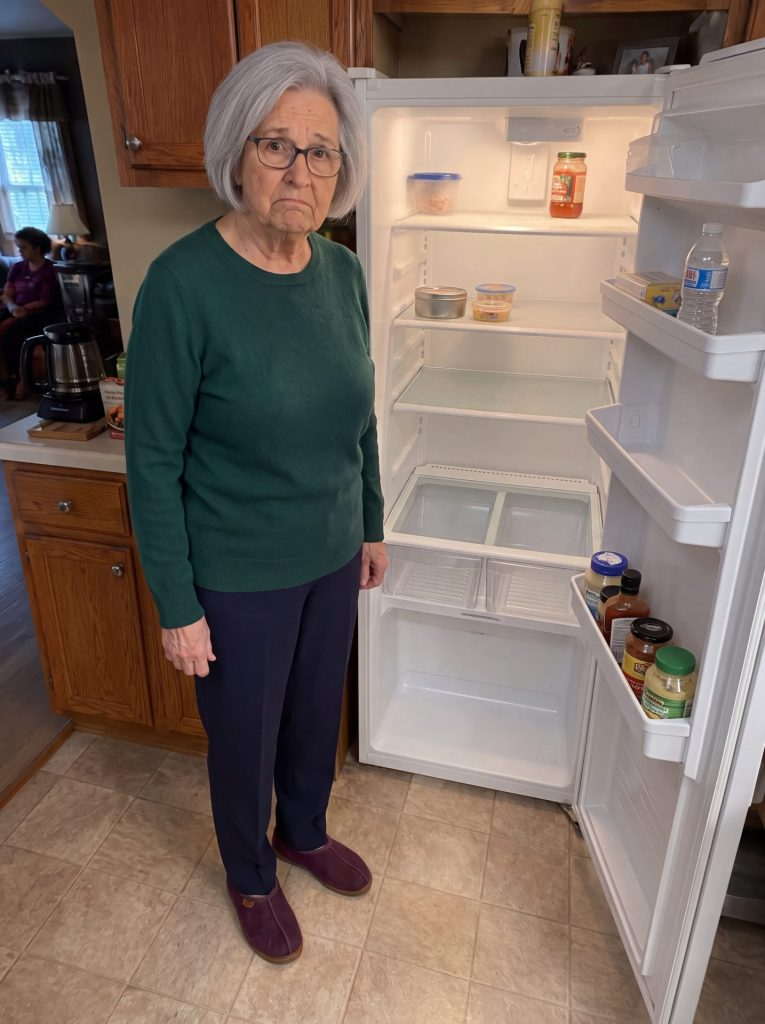
One Saturday, I stopped by her house and discovered that her refrigerator had finally broken beyond repair. I offered to take her shopping for a replacement, but instead of agreeing, she shook her head and looked embarrassed.
“Honey, I don’t have my savings right now.”
I stared at her because I knew exactly how carefully she had protected that money.
“Where did it go?”
“I lent it to Lauren. She said her car needed repairs and promised she would pay me back.”
Lauren was my brother Tyler’s wife, and she had never made much effort to build a real relationship with Mom. Yet the moment she needed money, she had apparently known exactly where to go because my mother had always struggled to say no when someone asked for help.
The problem was that Lauren had always been irresponsible with money. She could spend thousands on designer clothes and accessories while somehow failing to cover basic expenses, and six months earlier she had damaged her SUV while carrying only liability insurance, which meant she was responsible for paying for her own repairs.
I called Lauren immediately and asked when she planned to repay Mom because half a year had already passed.
“When are you planning to pay Mom back? It’s already been six months.”
Lauren laughed into the phone as though the question itself were ridiculous.
“Yeah, I borrowed it. I obviously needed it more than she did.”
I felt my temper rise, but I forced myself to stay calm and reminded her that the money had been my mother’s emergency savings.
“That was her emergency fund.”
Lauren sighed as though I were the one being unreasonable.
“Why does your mom even need five thousand dollars? She’s retired. She sits at home and doesn’t do anything. What exactly is she spending money on?”
That sentence told me everything I needed to know. Lauren had not simply fallen behind on repayment; she had decided that because my mother was older and retired, her savings somehow mattered less than Lauren’s own spending.
So instead of arguing with her, I changed my approach and invited her over for dinner the following evening.
“You know what? You’re right. Come over tomorrow. We’re having a family dinner.”
Lauren arrived the next night smiling, clearly expecting nothing more than an ordinary meal. Tyler and Mom were already there, but the person Lauren had not expected was sitting at the table waiting for her.
His name was Marcus Webb, a financial forensics consultant I had contacted immediately after my phone call with Lauren. He specialized in reviewing publicly available financial records, business filings, spending patterns, and information families could lawfully provide, and I made it clear from the beginning that I wanted nothing illegal.
“I don’t want anyone’s accounts hacked. I want the truth laid out clearly.”
Marcus agreed, and by the time Lauren sat down beside him, the confidence she had carried into my house had noticeably faded. Tyler looked around the table, confused by the unusually formal atmosphere.
“Sarah, who is this?”
“This is Marcus. I asked him to help me understand what’s been happening with Lauren’s finances, especially since she borrowed five thousand dollars from Mom and apparently decided she doesn’t need to repay it.”
Lauren immediately became defensive and accused me of invading her privacy.
“You had no right to dig into my private finances.”
Marcus remained calm and explained that everything he had reviewed came from public records or information voluntarily available within the family. His purpose was not to humiliate her, he said, but to clarify where the money in Tyler and Lauren’s household had actually been going.
“Everything I reviewed came from public records and information voluntarily available within your family. I’m here to explain what those records show.”
Marcus opened his folder and began laying out what he had found. The unpaid five thousand dollars was only one part of a much larger problem because Lauren had been hiding roughly eighteen thousand dollars in debt across several credit accounts for nearly two years.
Tyler stared at her, clearly struggling to understand how such a large amount could have existed without his knowledge.
“Eighteen thousand?”
Marcus explained that roughly six thousand dollars appeared connected to luxury clothing and accessories, another four thousand to cosmetic procedures, while the remaining debt covered dining, entertainment, smaller purchases, and a substantial cash advance. Tyler had believed their finances were strained because of Lauren’s supposed medical expenses, but the records showed a very different story.
“You told me we were struggling because of medical expenses.”
Lauren’s face went pale as Tyler looked at her for an explanation. Marcus then turned toward her and calmly gave her the opportunity to explain the cash advance before he revealed what the available records suggested.
“Would you like to explain the cash advance yourself?”
For the first time that evening, Lauren had no easy answer.
Part 2: The Debt Was Only the Beginning
Lauren sat silently for several seconds before finally admitting that the large cash advance had gone to her sister, who was dealing with a legal problem. She claimed she had taken the money because she did not want to involve anyone else, but Tyler’s expression changed as he realized she had secretly been supporting someone else while telling him their own household could barely afford basic expenses.
“I gave the money to my sister. She needed help with a legal situation, and I didn’t want to bother anyone.”
Tyler stared at her in disbelief.
“You were secretly giving money to your sister while telling me we couldn’t afford things, and at the same time you borrowed five thousand dollars from my mother?”
Lauren insisted that she had always intended to repay Mom eventually, but the excuse sounded weak after everything Marcus had already revealed. Tyler reminded her that she had openly laughed about the debt and claimed his retired mother had no real use for her own emergency savings.
“You told Sarah that Mom didn’t even need the money because she’s retired. You said that while hiding eighteen thousand dollars in debt from me.”
Until that point, Mom had remained quiet at the far end of the table. When she finally spoke, she did not sound angry; she sounded deeply disappointed, which seemed to affect Lauren far more than shouting would have.
“I gave you that money because you came into my kitchen crying. You told me you were desperate, that you couldn’t get to work without your car, and that you were ashamed to ask Tyler because you didn’t want him thinking you couldn’t manage your finances.”
Mom explained that she had also hoped the request meant Lauren finally trusted her enough to build a closer relationship. Instead, she now understood that Lauren had been hiding thousands of dollars in spending while asking a seventy-year-old widow to surrender her entire emergency fund.
Lauren began crying openly and admitted that her spending had started with a few purchases before gradually becoming impossible to control. The more debt she accumulated, the more embarrassed she became, and instead of telling Tyler the truth, she continued hiding it until deception became easier than admitting what she had done.
“I’m sorry. I don’t know how it became this bad. At first it was just a few things, and then I was too ashamed to tell Tyler how much debt there really was.”
I could understand shame, but it still did not explain the cruelty toward Mom. I reminded Lauren that feeling embarrassed about her own mistakes did not justify dismissing someone else’s needs simply because that person was retired.
“That still doesn’t explain why you laughed at Mom or why you decided she didn’t deserve her own savings.”
Lauren had no response. Tyler abruptly pushed his chair away from the table and walked outside to my patio, and after giving him a few minutes alone, I followed.
He stood near the edge of the yard staring into the distance. When he finally spoke, his anger sounded less explosive than exhausted.
“I had no idea, Sarah. I thought we were struggling because I took that pay cut when I changed jobs.”
He told me he had been eating peanut butter sandwiches for lunch every day because he believed every small sacrifice helped their budget. Meanwhile, Lauren had been buying expensive clothes, paying for cosmetic treatments, and secretly helping her sister.
“I keep thinking about all the things I stopped buying because I thought we couldn’t afford them.”
I apologized for the way the truth had come out, but Tyler shook his head. He said he understood why I had hired Marcus and was not angry with me; what bothered him was realizing how completely he had trusted Lauren to handle their finances without ever questioning what she told him.
“She always handled the bills and the banking apps. I thought it was just convenient. I never realized she was using that arrangement to hide an entire financial life from me.”
We stood outside for a long time while the dinner continued in uneasy silence behind us. By the end of that night, I understood that getting Mom’s five thousand dollars back was no longer the only problem because Tyler had just discovered that the marriage he thought he understood had been operating on years of financial deception.
A week later, he moved out.
Part 3: The Marriage Started Coming Apart
About a week after the dinner, Tyler moved out of the house he shared with Lauren and stayed with a friend while he tried to decide what he wanted to do about the marriage. He still loved her, but that love was now tangled with anger, humiliation, and the knowledge that the financial life he thought they shared had been partly invented.
During the first few weeks of their separation, Tyler called me often. He kept revisiting old memories and noticing details that had once seemed harmless but now looked very different.
“I found pictures from our anniversary trip two years ago. We stayed at the cheapest motel we could find because Lauren said we needed to save money.”
He paused before continuing.
“Now I keep wondering if she was buying designer bags that same month while I thought we were being responsible together.”
Another time, he remembered delaying new tires even though his old ones were becoming unsafe because Lauren insisted their budget could not handle the expense. The hardest part was not simply discovering the debt; it was realizing how many sacrifices he had made based on financial information that was never true.
“I keep thinking about all the times she said we couldn’t afford something. I trusted her completely.”
Lauren repeatedly asked to meet with him, but Tyler resisted because he was afraid that his remaining love for her would make him forgive too quickly. He wanted to understand whether trust could actually be rebuilt before allowing emotion to make that decision for him.
About two weeks after the dinner, Lauren called me directly. I nearly ignored the call, but eventually answered.
“I want to apologize to you. Not just about the money, but for the way I talked about your mom.”
I asked why she had been so cruel when I first confronted her. Her answer was uncomfortable but more honest than anything she had said at dinner.
“Because admitting the truth meant admitting how badly I had messed everything up. It was easier to convince myself your mom didn’t really need the money than to admit I had no good reason for not paying her back.”
I told her that explaining the behavior was not the same as repairing the damage. If she wanted anyone in the family to believe she had changed, she needed to repay Mom and understand why secrecy had become such a normal part of her relationship with money.
Lauren surprised me by saying she had already started therapy. Tyler had suggested it before moving out, and she said she was beginning to realize that apologizing without understanding the pattern would only make another disaster inevitable.
“I don’t want to say sorry and then do the same thing again.”
Over the following months, therapy revealed that Lauren’s spending was more complicated than I had originally assumed. Her anxiety about aging and appearance had been shaped by years of criticism from her own mother, and buying expensive clothes or cosmetic procedures had become a temporary way to quiet feelings of insecurity.
Tyler was careful not to treat that explanation as an excuse.
“Understanding why she did it doesn’t erase the lying. But it helps me decide whether this is something she can actually change.”
That distinction mattered. Lauren’s behavior had caused real damage, but if the secrecy came from patterns she was finally willing to confront, Tyler could at least evaluate the marriage based on who she was becoming rather than only who she had been.
Four months after the dinner, Tyler moved back home, but they did not return to the old financial arrangement. They created separate personal accounts, a shared household account with full visibility, and one rule that neither of them was allowed to break again.
No hidden debt. No secret accounts. No financial story that the other person could not verify.
For the first time since Marcus opened that folder at my dinner table, Tyler was not simply reacting to betrayal. He and Lauren were beginning the much harder work of deciding whether trust could be rebuilt at all.
Part 4: Lauren Finally Repaid What She Owed
As the months passed, Lauren continued therapy and slowly began showing changes that went beyond simply following Tyler’s new financial rules. She started speaking more honestly about money, stopped becoming defensive whenever someone questioned her spending, and made a deliberate effort to repair the relationship she had damaged most deeply, the one with my mother.
The first concrete step was repaying the five thousand dollars. Lauren proposed using money from a personal savings account, but Mom immediately became cautious when she learned the account itself had also been kept secret from Tyler.
“I don’t want my money back if repaying me means creating another secret problem. I want to know exactly where this money is coming from.”
To Lauren’s credit, she did not become defensive. She explained that the account contained money from a small inheritance her grandmother had left her when she was twenty-three, and she had kept that money separate throughout her adult life.
“My grandmother left me about eight thousand dollars. I never told Tyler because I’ve always felt like I needed some money that belonged only to me, something nobody else could touch.”
Mom asked where that instinct came from, and Lauren admitted that therapy had helped her connect it to her childhood. Her parents had fought constantly about money, and during one particularly ugly argument, Lauren had heard her mother say she wished she had kept enough private savings to leave if the marriage ever became unbearable.
“I think I absorbed that without realizing it. Somewhere along the way, having secret money started feeling like safety.”
That explanation did not erase the deception, but it helped all of us understand how deeply secrecy had become connected to Lauren’s sense of security. She had not merely hidden designer purchases and debt; she had spent years treating financial concealment as something normal and protective.
Mom eventually accepted the repayment once Lauren showed exactly where the money came from and confirmed that Tyler now knew about the account. Within a month, the full five thousand dollars was back where it belonged.
Around that same period, I had a conversation with Mom that changed how I understood her role in the entire situation. She admitted that she had spent weeks asking herself why she had given Lauren nearly all of her emergency savings without asking more questions.
“I think I was lonely.”
I looked at her.
“Since your father died, Lauren never really tried to become close to me. When she came into my kitchen crying and asking for help, part of me was happy that she finally seemed to trust me.”
Mom said she had wanted the loan to mean more than money. She had hoped it was the beginning of the kind of mother-and-daughter relationship she had always quietly wanted with Lauren.
“I wanted to believe she needed me for something real.”
Hearing that made Lauren’s original behavior feel even crueler. Mom had not simply lost access to five thousand dollars; her desire for connection had been used against her.
Eight months after the original dinner, Lauren invited Mom to lunch alone. I expected the meeting to be uncomfortable, but Mom later told me Lauren had apologized without minimizing what she had done and explained what therapy had helped her understand about her relationship with money.
“She didn’t ask me to forget it. She just told me she understood why I might never trust her the same way again.”
I asked whether Mom believed her.
“I think I do, but not blindly. There’s a difference.”
Mom explained that Lauren had started showing interest in her life without needing anything in return. She called to ask how Mom was doing, remembered small details from previous conversations, and gradually began building the relationship she had once tried to obtain through manipulation.
Meanwhile, Tyler continued moving cautiously. He loved Lauren and could see genuine progress, but some days the memory of eighteen thousand dollars in secret debt still made him question everything she told him.
“I don’t know if we’ll make it. Some days I think we can, and other days I wonder whether I’ll ever completely trust her again.”
I told him he did not owe anyone a quick answer. Forgiveness, reconciliation, and trust were three different things, and he was allowed to decide each of them at his own pace.
About a year after Marcus opened that folder at my dinner table, Tyler and Lauren chose to renew their vows in a small ceremony with immediate family. Watching them stand together again did not erase what had happened, but it represented something more meaningful than pretending nothing had gone wrong.
Afterward, Lauren approached me privately.
“I know you still have doubts about me.”
“I do.”
“That’s fair. I guess all I can do is keep showing you that the change is real for as long as it takes.”
For the first time, I believed she finally understood that accountability was not something she could finish with one apology or one repayment. It was something she would have to keep choosing long after everyone stopped talking about the five thousand dollars.
Part 5: The Money Came Back, but Something More Important Changed
Nearly two years after that dinner, I still sometimes think about how much changed because of one unpaid loan. I had hired Marcus because I was furious that Lauren had borrowed my mother’s emergency savings and then dismissed her needs so casually, but the confrontation ended up exposing problems that had been quietly damaging several relationships for years.
Tyler and Lauren’s marriage survived, although not because anyone pretended the deception had been minor. They rebuilt their finances around complete transparency, continued therapy, and learned to separate explanation from excuse, which became important whenever old resentment resurfaced.
Lauren’s relationship with Mom also changed in ways I had not expected. What had once been mostly distant and transactional gradually became more genuine, and over time Mom began believing that Lauren’s interest in her life was no longer connected only to needing something.
I remained cautious.
One evening, Lauren acknowledged that directly.
“I know you probably still don’t completely trust me.”
“I don’t.”
“I understand. I think the only thing I can do is keep being honest long enough that eventually you won’t have to wonder.”
That answer mattered more to me than any dramatic apology. She was no longer asking to be forgiven quickly; she seemed to understand that trust had to be rebuilt through repetition.
I also called Marcus several months after the original dinner to tell him what had happened. He said families sometimes contacted him afterward, although genuine repair was less common than people simply becoming defensive once their secrets were exposed.
“The families that recover are usually the ones where the person who caused the damage accepts responsibility instead of focusing only on the humiliation of being caught.”
That described Lauren better than I would have expected during our first angry phone call. She had done real damage, but eventually she stopped trying to argue that the damage should not count.
Mom’s five thousand dollars was safely back in her account by then, which meant we could finally replace the refrigerator that had started everything. About two weeks after the repayment, I took her to an appliance store and watched her compare models with the careful attention she gave every practical purchase.
Standing between two stainless-steel refrigerators, Mom suddenly laughed.
“I never thought I’d have to defend why a seventy-year-old woman might need emergency savings.”
“You never should have.”
“For a while, I actually wondered whether Lauren was right. Maybe I had too much money sitting there because I’m retired.”
I looked at her.
“Mom, being retired doesn’t mean your needs stopped mattering.”
She nodded.
“I know that now.”
Then she smiled in a way I had not seen during the months after the loan disappeared.
“I think I understand it better than I did before all this happened. My life didn’t become less valuable because I got older.”
We eventually chose a refrigerator she genuinely liked instead of the cheapest acceptable option. For once, Mom did not calculate whether wanting something slightly nicer required an apology.
As the salesperson processed the order, he casually asked whether the appliance was for her or another family member.
“For me.”
Mom smiled.
“I’m seventy, and I’ve decided I’m allowed to have a nice refrigerator without explaining why I deserve one.”
The salesperson nodded and continued with the paperwork, probably unaware of what that sentence meant.
I understood.
The five thousand dollars mattered because Mom had spent decades saving it carefully, and Lauren had no right to decide she needed it more. But watching Mom stand there confidently choosing something for herself made me realize the larger damage had never been purely financial.
Lauren’s comment had suggested that age and retirement somehow made Mom’s needs less important.
That idea was gone now.
Mom had her emergency fund back, Tyler had stopped living inside a financial reality he did not understand, and Lauren had finally begun confronting the patterns that allowed her to hurt people she claimed to love.
I had wanted Lauren to regret taking the money.
In the end, something better happened.
She learned why what she had done mattered, and Mom learned that she never needed anyone’s permission to protect her own dignity, her own money, or the life she had worked so hard to build.