On Christmas, I heard my daughter-in-law mumble: “This tacky old lady! She was only invited to pay for everything.”
I just smiled.
She wanted to feel superior?
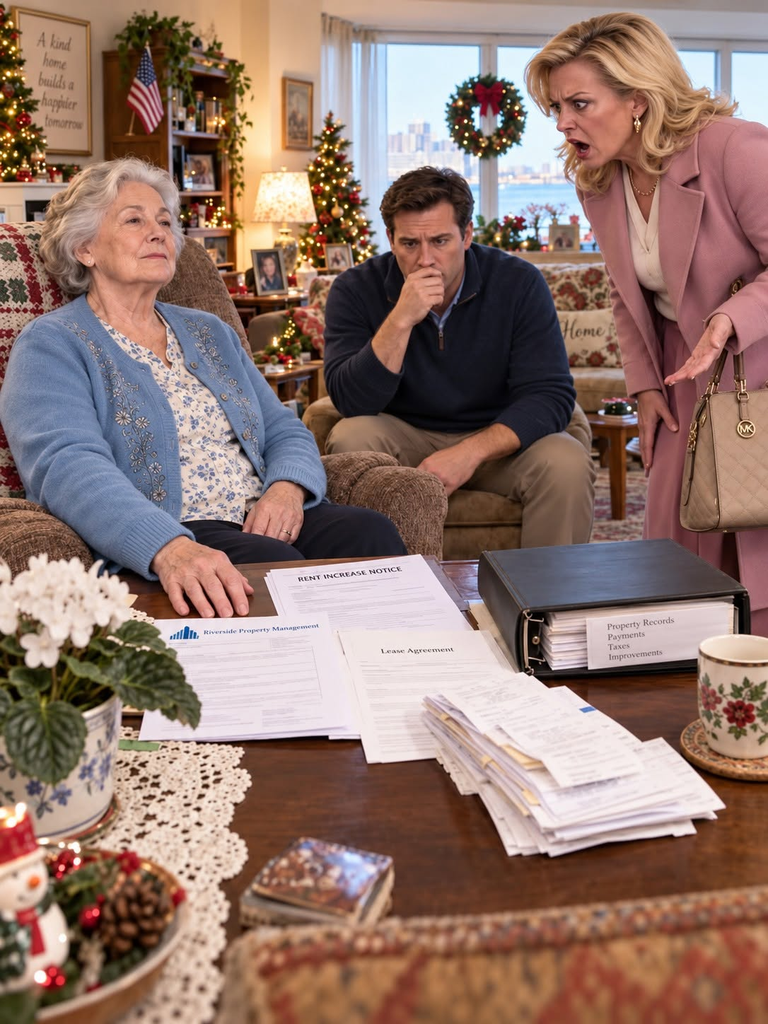
On Monday… I tripled her rent!
“This tacky old lady was only invited to pay for everything.”
I heard my daughter-in-law say it from the dining room while I stood at her kitchen sink, washing the crystal glasses she had insisted we use for Christmas dinner.
The faucet kept running.
The wine glass in my hand stopped moving.
Oilia was on the phone with her sister, laughing because she thought no one could hear her.
“Honestly, Diane, she shows up in those awful cardigans and acts like she belongs here. David feels sorry for her, but between you and me, she’s just embarrassing.”
I was sixty-nine years old.
For fifteen years, I had paid for the prime rib, the wine, the decorations, birthday dinners, car repairs, vacations, and emergencies.
I had never kept score because David was my only son, and I told myself helping his family was what mothers did.
Then I heard Oilia laugh again.
“The worst part is she tries to give advice about decorating. Like, honey, look at your own apartment.”
I set the glass down before my hand could shake hard enough to break it.
A few minutes later, she walked into the kitchen wearing the designer dress I had helped pay for and barely looked at me.
“David, your mother left her purse in the living room again.”
The tone was worse than the words.
Like I was confused.
Old.
A problem to manage.
I retrieved my eight-year-old leather purse and felt the weight of my checkbook inside it.
That same checkbook had made their life easier more times than either of them could count.
“Well,” I said quietly, “I should head home.”
David hugged me.
“Thanks for dinner, Mom. And for… everything.”
For one second, I saw the little boy who used to crawl into my lap during thunderstorms.
Then Oilia gave me a mechanical smile.
“Drive safe, Mabel.”
I smiled back.
The twenty-minute drive home gave me plenty of time to think.
By the time I parked outside my small apartment building, the hurt had settled into something colder.
They thought I was a harmless old woman living modestly on whatever retirement income I had left.
They thought my cardigans meant I was struggling.
They thought my thrift-store clothes meant I had no options.
Most importantly, they thought the money I gave them was the most interesting thing about me.
What none of them understood was that I had spent decades learning the difference between looking wealthy and being secure.
After David’s father left me with debt and promises he never kept, I worked two jobs, saved quietly, and stopped caring whether anybody was impressed by what I wore or where I lived.
My three-room apartment was enough for me.
The old recliner was comfortable.
The green J. Penney cardigan was warm.
I had never needed a designer label to know what something was worth.
That habit of letting people underestimate me had served me better than any expensive handbag ever could.
Monday morning, I woke at 5:30, made black coffee, opened my laptop, and logged into software David had never seen.
Property management.
I scrolled past address after address until I found the one I wanted.
1247 Maple Street, Unit 4B.
David and Oilia’s luxury apartment.
Their rent was $2,800 a month.
They had bragged for years about what a steal it was.
They had no idea why.
I opened the lease, read the increase clause one more time, and changed the number.
$8,400.
Then I printed the formal notice, slipped it into an envelope from Hastings Property Management, and drove across town.
At 9:00 a.m., I slid it under their door.
Professional.
Impersonal.
Legal.
My phone rang at 11:47.
“Mom?”
David sounded panicked.
“Something weird happened. We got a notice saying our rent is being tripled.”
I sat in my old recliner and kept my voice soft.
“Oh my goodness. That sounds terrible.”
“It’s going from $2,800 to $8,400. We can’t afford that.”
“Have you called the management company?”
“Three times. They said it’s final.”
I could hear movement behind him, then Oilia crying.
The woman who had mocked my clothes forty-eight hours earlier was crying because her luxury apartment suddenly cost what luxury apartments actually cost.
Then David lowered his voice.
“Mom, I hate to ask, but could you help us cover the difference for a few months?”
There it was.
The familiar request.
Different crisis. Same assumption.
I paused.
“Sweetheart, my budget is pretty tight.”
That afternoon, Oilia called me herself.
Her voice was sweet again.
Smaller this time.
“Mabel, could you maybe co-sign a loan for us? The banks are being difficult.”
Two days earlier, I had been the tacky old lady.
Now I was useful again.
“Oh, Oilia,” I said. “I wish I could help, but my credit isn’t what it used to be.”
She went quiet.
My credit score was 812.
Three days later, David used the spare key I had given him years ago and walked into my apartment while I was watering my African violets.
He looked exhausted.
Wrinkled suit.
Dark circles.
Hair uncombed.
“Mom, I need you to be completely honest with me.”
I set down the watering can.
“Of course.”
He pulled out his phone.
“I’ve been researching Hastings Property Management.”
My fingers went still.
He scrolled through public property records.
“They own apartment buildings all over the city. Commercial property too. Even that strip mall where you get your prescriptions.”
I walked to the kitchen and started making his coffee exactly the way I had since he was twelve.
Black.
Two sugars.
“The strange thing,” he continued, “is I can’t figure out who actually owns the company.”
I handed him the mug.
“Maybe they value privacy.”
“That’s what I thought.”
He didn’t drink.
Instead, he stared directly at me.
“Our rent has been way below market for five years. Almost like somebody was giving us a family discount.”
The room went completely still.
Then he leaned forward.
“Mom… do you know Hastings Property Management?”
I looked at my son over the rim of my coffee cup.
“Yes.”
One word.
Nothing dramatic.
No smile.
No reveal.
Just yes.
David did not move.
The mug stayed halfway between the table and his mouth.
“You know them?”
“Yes.”
“How?”
I sat down across from him.
For a few seconds, I considered giving him another soft answer.
Something vague.
Something maternal.
Something that would let him remain comfortable.
Then I remembered Christmas.
The running faucet.
The crystal glass in my hand.
Oilia laughing.
This tacky old lady was only invited to pay for everything.
I had spent too many years making other people comfortable with truths that cost me.
So I said:
“I own Hastings Property Management.”
David stared at me.
Not confusion.
Blankness.
The kind that comes before the mind catches up with the sentence.
“You…”
He stopped.
I waited.
“You own the management company?”
“Yes.”
“All of it?”
“Most of it.”
His mouth opened.
Closed.
Then:
“What does that mean?”
“It means exactly what it sounds like.”
He pushed back in his chair.
The legs scraped against my old linoleum floor.
“How many buildings?”
“Seventeen residential.”
His face changed.
“And the commercial properties?”
“Six.”
“The strip mall?”
“Yes.”
“The medical plaza on East Warren?”
“Half interest.”
He stared at my cardigan.
Actually looked down at it.
Green.
Pilled at one elbow.
Twenty dollars on clearance probably eight years earlier.
Then back at me.
“How?”
I almost laughed.
Not because the question was insulting.
Because it was so completely David.
He knew almost everything about the money I gave him.
Very little about the money I kept.
“How?”
he repeated.
“By working.”
His face tightened.
“Mom.”
“I’m serious.”
I folded my hands.
“After your father left, I worked payroll at the insurance office during the day and did bookkeeping for small landlords at night.”
“You told me that.”
“Yes.”
“What I didn’t tell you was that one of those landlords eventually wanted out.”
I leaned back.
“He owned a four-unit building on Hastings Avenue. It needed repairs. He was tired. I had saved enough for a small down payment.”
David was listening now.
Really listening.
“I bought it.”
“When?”
“You were fourteen.”
His eyebrows shot up.
“You owned a building when I was in high school?”
“One.”
“And you never told me?”
“You were fourteen.”
“That’s not an answer.”
“It is exactly an answer.”
I smiled.
“You needed braces and rides to soccer practice. You did not need a balance sheet.”
He looked down.
I continued.
“The building cash-flowed modestly. I refinanced after six years. Bought another.”
Then another.
Then a small retail property.
Then, after the market dropped, two more buildings from an owner who needed liquidity.
Nothing happened overnight.
No lottery.
No inheritance.
No secret billionaire uncle.
Twenty-five years of boring decisions.
Maintenance.
Debt reduction.
Tax planning.
Tenant problems.
Roofs.
Furnaces.
Insurance.
Lawyers.
Patience.
By the time I retired from my day job, Hastings Property Management existed because managing the properties through one company made more sense.
David sat there as if I had told him I had another family.
“How much are you worth?”
I looked at him.
“No.”
His cheeks reddened.
“I didn’t mean—”
“Yes, you did.”
He swallowed.
“Okay.”
I softened slightly.
“But that is not the important question.”
“What is?”
“Why your rent was $2,800.”
His eyes lifted.
I reached into the drawer beside my chair and pulled out a folder.
Not because I had planned this conversation.
Because I kept paper copies of important things.
Old habit.
I opened the lease.
“Five years ago, when you and Oilia wanted that apartment, market rent was just over four thousand.”
David stared at me.
“You told me the owner liked long-term tenants.”
“I was the owner.”
His face went pale.
I tapped the page.
“You signed a standard lease with a separate concession rider.”
He frowned.
“I don’t remember that.”
“You didn’t read it carefully.”
That stung.
Good.
He had signed it.
Oilia too.
The rider provided a substantial owner-approved concession.
Renewable annually.
Discretionary.
Not permanent.
Every year, Hastings sent a renewal package showing the market rent and the concession.
Every year, David signed it.
Every year, he looked only at the number he was paying.
Not the number crossed out above it.
“You’ve been subsidizing our rent?”
“Yes.”
“For five years?”
“Yes.”
“How much?”
“I haven’t totaled it recently.”
I had.
Of course I had.
But I wanted him to ask himself what that meant first.
He did the math roughly in his head.
His face changed.
“More than seventy thousand?”
“Closer to ninety, depending on the year.”
He sat back.
“Oh my God.”
“And the notice you received does not triple rent tomorrow.”
I slid another page toward him.
“It gives you the full notice period required under your lease and the applicable rules because your current concession period is ending.”
He scanned it.
The new market figure was $8,400 because their apartment was not an ordinary apartment.
Three bedrooms.
Corner unit.
River view.
Concierge.
Two parking spaces.
Storage cage.
Amenities.
They had been living a luxury lifestyle at a deeply discounted rate and calling themselves financially savvy.
“You made it sound final.”
“The concession is final.”
“So the rent really becomes eighty-four hundred.”
“Yes.”
“At the end of the notice period.”
“Yes.”
He stared at me.
“Because of what Oilia said.”
I let that sit.
“No.”
His head came up.
“No?”
“What she said made me stop something I should have stopped earlier.”
“That sounds like the same thing.”
“It isn’t.”
I leaned forward.
“I am not charging you above-market rent.”
“You are charging me triple.”
“I am ending a private subsidy.”
He said nothing.
“The apartment has always been worth far more than you paid.”
I continued.
“You were able to save, travel, renovate, entertain, buy clothes, and talk about how clever you were for finding an underpriced unit because I quietly absorbed the difference.”
His jaw tightened.
“That feels punitive.”
“I understand why.”
“Isn’t it?”
“No.”
I looked directly at him.
“Punishment would be charging you more than everyone else.”
Silence.
“I am simply no longer charging you less.”
That landed.
Hard.
David looked around my apartment.
Three rooms.
Old recliner.
Basic cabinets.
A lamp I had owned since he was in college.
“You could live anywhere.”
“Yes.”
“Then why do you live here?”
“Because I like it.”
“That’s it?”
“Yes.”
“You own luxury apartments.”
“I don’t need to live in one.”
He ran both hands over his face.
“Does Oilia know?”
“No.”
“She’s going to lose her mind.”
“I suspect so.”
He stood.
Then sat back down.
“Why didn’t you tell us?”
“About owning Hastings?”
“Yes.”
“Because it was private.”
“I’m your son.”
“Yes.”
“I thought I knew your life.”
“You knew the parts I shared.”
That hurt him.
I could see it.
But adulthood includes discovering your parents have interior lives that do not belong to you.
He stared at his coffee.
Then asked:
“Did you hear her at Christmas?”
There it was.
I said nothing.
He looked at me.
“Mom.”
“Yes.”
His eyes closed.
“How much?”
“Enough.”
He winced.
“What did she say?”
I could have softened it.
I did not.
“She said I was a tacky old lady who had only been invited to pay for everything.”
David’s face drained.
“She said that?”
“Yes.”
“About you?”
I almost laughed.
“No, David, about Helen Mirren.”
“Mom.”
“Yes.”
“She really said that?”
“Yes.”
His hand covered his mouth.
I added:
“She also mocked my apartment.”
His eyes moved around the room again.
Now differently.
The recliner.
The curtains.
The old framed photographs.
Everything he had mistaken for evidence of limited means.
“What else?”
“That was enough.”
He stood abruptly.
“I need to talk to her.”
“No.”
He stopped.
“What?”
“You do not need to defend me.”
“She said that about you.”
“Yes.”
“She used you.”
“Yes.”
“And I let it happen.”
That sentence surprised both of us.
He sat again.
For a moment, he looked twenty years younger.
“I let it happen.”
he repeated.
“I kept asking you to pay for things.”
“Yes.”
“I told her you liked helping.”
“I did.”
“Did you?”
“At first.”
He looked sick.
“When did that change?”
I thought about it.
There was no single moment.
That was the problem.
Entitlement rarely arrives with a trumpet.
It seeps in.
One dinner.
One repair.
One emergency.
One vacation.
One “Mom, can you cover this?”
Then suddenly the person helping becomes part of the budget.
“I don’t know.”
I said.
“That is probably my fault.”
He looked up.
“No.”
“Partly.”
I raised a hand before he could interrupt.
“You and Oilia were wrong to expect.”
I said.
“But I was wrong to make expectation easy.”
I had paid.
Smiled.
Said:
Of course.
Happy to.
Anything for family.
Then gone home and occasionally resented them for believing me.
That was not completely fair either.
My responsibility was not their contempt.
My responsibility was my silence.
David asked:
“What happens now?”
“To what?”
“The apartment.”
“You decide.”
“We can’t afford eighty-four hundred.”
“Then move.”
He stared at me.
“You say that like it’s easy.”
“No.”
I said.
“I say it like it is an option.”
“But we love that apartment.”
“So do many people who cannot afford it.”
His mouth tightened.
“Mom.”
“What?”
“You’re enjoying this.”
That accusation hurt.
Because a small part of me had enjoyed the moment he discovered the truth.
I hated admitting that.
So I told him.
“For about thirty seconds, yes.”
His expression shifted.
“Really?”
“Yes.”
“I heard what your wife said about me, came home angry, and when I ended the concession I absolutely enjoyed imagining the shock.”
I took a breath.
“That was not my finest moment.”
He stared.
“But I did not invent the market rent.”
I continued.
“I did not falsify the lease.”
“I did not throw you out overnight.”
“And I will not apologize for ending a subsidy to people who regard me as embarrassing until a bill arrives.”
David looked down.
“That’s fair.”
It was the first thing he had said that morning that gave me hope.
He left an hour later.
No money.
No rescue.
No promise that I would reconsider.
At 2:13, Oilia called.
I let it ring.
2:17.
Again.
2:24.
Again.
At 2:31, a text arrived.
WE NEED TO TALK.
I almost replied:
Interesting.
Instead, I waited.
At four, David called.
“Mom?”
“Yes?”
“She knows.”
“I assumed.”
“She wants to come over.”
“No.”
Silence.
“She says you owe her an explanation.”
I laughed.
Actually laughed.
“What exactly does she believe I owe her?”
“I told her you don’t.”
“Good.”
He was quiet.
“She’s furious at me too.”
“Why?”
“Because I didn’t know.”
That was revealing.
Not furious because of what she had said.
Furious because her husband had failed to discover the source of the subsidy sooner.
I did not say that.
He would figure it out.
The next morning, Oilia came anyway.
She did not use a spare key.
She had never had one.
She knocked.
Hard.
I opened the door but did not invite her in.
She wore sunglasses despite the gray weather.
“Mabel.”
“Oilia.”
“We need to fix this.”
“What?”
“The rent.”
“No.”
She blinked.
“I know you heard me.”
“Yes.”
Her mouth tightened.
“I was venting.”
“You were mocking me.”
“I was frustrated.”
“With what?”
She removed the sunglasses.
Her eyes were red.
“You always make me feel judged.”
I stared at her.
“How?”
“You notice everything.”
“That is not the same as judging.”
“You comment.”
“About what?”
She searched.
“The flowers.”
“You asked what I thought.”
“The table.”
“You asked whether the centerpiece blocked people’s faces.”
“The apartment.”
“I once suggested moving a lamp.”
Her face hardened.
“That’s what I mean.”
I almost smiled.
“Oilia, I think you dislike being reminded that another person exists in the room unless that person is approving you.”
Her cheeks flushed.
“That’s cruel.”
“It may be.”
I said.
“But I’m tired of making every accurate sentence sound nicer than the behavior it describes.”
She crossed her arms.
“So you’re really going to force us out.”
“No.”
“The rent increase will force us out.”
“The end of the concession may mean you choose to leave.”
“That is the same thing.”
“No.”
I looked at her.
“You are not entitled to a luxury apartment at a price available only because I chose to subsidize it.”
Her eyes filled.
“We built our life there.”
“Yes.”
“Friends know us there.”
“Yes.”
“It’s close to David’s office.”
“Yes.”
“And you don’t care.”
“I care.”
I paused.
“I just no longer believe caring requires payment.”
She stared.
Then said:
“You’re doing this because I insulted your clothes.”
“No.”
“Your apartment.”
“No.”
“Then what?”
“Because your words showed me what my help had become to you.”
Silence.
“You did not say, ‘Mabel is generous.’”
I continued.
“You said I was only invited to pay.”
Her chin trembled.
“That was a stupid joke.”
“No.”
“It was an honest sentence spoken to the wrong audience.”
She looked away.
That hit.
I continued.
“You thought I had one function in your family.”
“Money.”
“When the person becomes less important than the function, the arrangement has already gone bad.”
For the first time, she had no answer.
Then:
“Could you at least keep the discount for another year?”
“No.”
“Six months?”
“No.”
“Three?”
“You have the full notice period already.”
She looked at me as though I had become someone else.
Maybe I had.
Or maybe she had finally met the version of me who existed when no one needed a check.
She left angry.
Two weeks later, David asked me to meet him for lunch.
He had spreadsheets.
That amused me.
“We found another apartment.”
he said.
“How much?”
“Thirty-six fifty.”
“Can you afford it?”
“Yes.”
“Comfortably?”
He hesitated.
“Yes, if we stop doing stupid things.”
“Promising.”
He slid a budget toward me.
They had cut:
Private car service.
Weekly cleaning.
Premium gym membership.
Wine club.
Dining out four nights a week.
Oilia’s monthly floral service.
I stared at that one.
“You had flowers delivered monthly?”
“She likes fresh arrangements.”
“How much?”
He looked embarrassed.
“Four hundred.”
“Every month?”
“Yes.”
I sat back.
“You have spent more on flowers annually than I spend on clothes.”
He rubbed his forehead.
“I know that now.”
“Good.”
Then he said:
“We had forty-two thousand dollars in credit-card debt.”
I went still.
“What?”
“Oilia had some I didn’t know about.”
I looked at him.
“How much did you have that she didn’t know about?”
He blinked.
Then looked down.
“About twelve.”
There it was.
Mutual blindness.
The apartment discount had done more than subsidize luxury.
It had concealed incompatibility.
As long as housing cost far less than it should have, both could overspend and still feel stable.
My money had been padding the floor underneath a marriage that needed to feel its own weight.
“What are you going to do?”
I asked.
“Move.”
“Good.”
“Sell one car.”
“Good.”
“Pay down the cards.”
“Good.”
“And…”
He hesitated.
“Counseling.”
I smiled.
“Very good.”
His eyes narrowed.
“Don’t sound so pleased.”
“I’m trying.”
He laughed despite himself.
That was the beginning of something better between us.
Not because he learned I was wealthy.
Because he began separating my resources from his adulthood.
They moved six weeks later.
No eviction.
No courtroom.
No screaming movers.
They returned the apartment clean.
Oilia cried on the final day.
David told me later.
She had loved that place.
I understood.
I loved things I had lost too.
Love does not create ownership.
That lesson applies beyond property.
The unit rented for $8,250 within nine days.
A physician and her husband.
No family concession.
No emotional accounting.
Just rent.
The first month that full payment arrived, I expected satisfaction.
Instead, I felt sad.
Not because I regretted the decision.
Because I realized how long I had been buying access to a version of family I thought I might lose otherwise.
Christmas invitations.
Sunday dinners.
Vacations.
Birthdays.
A grandmotherly role even though David and Oilia had no children.
I had told myself I gave because I could.
Partly true.
I also gave because being useful felt safer than asking:
Would they still want me if I stopped?
That question frightened me more than any property vacancy.
So I decided to find out.
I stopped paying for family dinners unless I invited everyone.
Stopped covering vacations I had not planned.
Stopped automatically picking up birthday tabs.
Stopped offering before anyone asked.
Then something fascinating happened.
For several months, invitations decreased.
Not completely.
Enough.
That hurt.
I let it hurt.
I did not fix it with money.
Eventually, David started calling for reasons unrelated to bills.
He would ask:
“Did you watch the game?”
Or:
“Do you remember Dad’s old chili recipe?”
Or:
“I’m near your place. Want coffee?”
The first few times, I almost asked what he needed.
Nothing.
He needed nothing.
That was healing.
Oilia took longer.
For nearly five months, we barely spoke.
Then on my seventieth birthday, she called.
Not David.
Her.
“Happy birthday.”
“Thank you.”
Silence.
Then:
“Can I take you to lunch?”
I was suspicious.
“Why?”
She laughed nervously.
“Because apparently I deserve that question.”
Fair.
We met at a small Italian restaurant.
Nothing expensive.
She arrived carrying no gift.
That pleased me more than flowers would have.
After we ordered, she said:
“I owe you an apology.”
I waited.
“I was ashamed.”
That was not what I expected.
“Of what?”
“Myself.”
She looked down.
“I grew up with people who treated appearances like safety.”
Her mother worked in luxury retail.
Her father lost a business when Oilia was sixteen.
Apparently the family spent years pretending nothing had changed.
New clothes.
Expensive dinners.
Debt.
Image became armor.
“If people thought we were doing well,”
she said,
“then I could believe we were.”
I listened.
“When David and I got the apartment, I thought we had made it.”
She laughed without humor.
“We hadn’t.”
“No.”
“I know.”
She looked at me.
“And you bothered me.”
“Because of my cardigan?”
A reluctant smile.
“Kind of.”
I waited.
“You had no interest in looking rich.”
she said.
“And I thought that meant you didn’t understand how important presentation was.”
She swallowed.
“Then I found out you owned the building.”
“That must have been annoying.”
She laughed.
“Extremely.”
Good.
Then her face became serious.
“What I said at Christmas was ugly.”
“Yes.”
“I wanted my sister to think I was above you.”
“Why?”
“Because I thought being above someone meant I was safe from becoming them.”
I frowned.
“Becoming what?”
“Old.”
The honesty surprised me.
“Ordinary.”
She continued.
“Someone nobody envies.”
There it was.
Not really about me.
Never completely.
Still cruel.
But understandable.
She looked at my hands.
“I’m sorry.”
I believed her.
That did not immediately restore closeness.
Forgiveness and access are different currencies.
People should stop spending them as though they are the same.
“I appreciate the apology.”
I said.
She nodded.
Then:
“Can I ask you something?”
“Yes.”
“How did you stop caring what people thought?”
I smiled.
“I didn’t.”
She looked surprised.
“I care.”
I said.
“I just care less than I care about being secure.”
That answer stayed between us.
Over the next few years, our relationship rebuilt.
Slowly.
No financial access.
No discounted apartment.
No emergency credit card.
No automatic rescue.
Just dinners.
Calls.
Birthdays.
Occasional disagreements.
Normal things.
David and Oilia paid off their credit cards in three years.
Their smaller apartment became home.
Oilia began decorating with fewer expensive things.
Not because I taught her a moral lesson about minimalism.
Because every purchase now had to compete with other priorities.
Reality is an excellent decorator.
David eventually asked whether I planned to leave Hastings Property Management to him.
We were walking through one of the commercial buildings during a roof inspection.
I looked at him.
He immediately raised his hands.
“Wrong question?”
“No.”
I said.
“Just a dangerous one.”
He smiled.
“I’m asking because I want to know whether I should learn the business.”
That was different.
“Do you want to?”
“I don’t know.”
“Then don’t learn it for inheritance.”
I continued walking.
“Learn it if you’re interested.”
He thought about that.
Six months later, he asked if he could sit in on a property-management meeting.
No title.
No ownership.
No assumptions.
I allowed it.
He discovered quickly that buildings are less glamorous when they involve sewer backups.
Good education.
He never joined the company.
He decided he preferred his own career.
I respected that.
He did not owe me continuation any more than I owed him transfer.
At seventy-four, I began succession planning.
Professional management remained in place.
Some properties would eventually be sold.
Some interests would go into trust.
David would inherit something substantial if he survived me.
But not automatic operational control.
Not because I distrusted him.
Because inheritance should not require a child to become qualified for a job he never wanted.
Oilia knows some of this.
Not amounts.
Not everything.
And to her credit, she no longer asks.
Last Christmas, six years after the crystal-glass Christmas, dinner was at David and Oilia’s apartment.
Still the smaller one.
They could afford a larger place now.
They stayed because they liked it.
That made me smile.
I wore the green cardigan.
Yes.
That cardigan.
Oilia opened the door.
She looked at it.
Then at me.
For one dangerous second, I thought history might repeat itself.
Instead, she said:
“You still own that thing?”
“I plan to be buried in it.”
She laughed and hugged me.
“Absolutely not. I’m hiding it before the funeral.”
“Touch it and you’re out of the will.”
David called from the kitchen:
“Finally, something specific about the will.”
We all laughed.
That was how I knew the old wound had scarred instead of remaining open.
After dinner, Oilia handed me a crystal glass.
Same pattern as the ones from that Christmas.
She had kept them.
I turned it in my hand.
“You remember?”
she asked.
“Yes.”
“So do I.”
Then quietly:
“I’m glad you heard me.”
I looked at her.
“That is an unusual thing to say.”
“I needed someone to stop making my behavior affordable.”
That sentence was worth the six years it took to hear.
I nodded.
“So did David.”
He raised his glass from across the table.
“Unfortunately true.”
I looked around their apartment.
Not luxurious.
Comfortable.
Paid for by them.
Decorated beautifully.
Not to impress a boss.
Not to prove anything to a sister.
Just lived in.
Then I thought about 1247 Maple Street.
Unit 4B.
The place they once believed was evidence of their success.
They had never known their cheap rent was my gift.
And because they did not recognize the gift, they eventually mistook it for something they had earned.
That was my mistake too.
Invisible generosity feels noble until it teaches the wrong lesson.
If you want someone to understand a gift, sometimes they need to know it is a gift.
Not so they owe you gratitude forever.
So they do not build permanent expectations around temporary kindness.
I never actually tripled my son’s rent as revenge.
That is how Oilia tells the story when she wants to make herself laugh.
“Mabel overheard me insulting her and tripled our rent.”
Technically dramatic.
Emotionally accurate.
Legally incomplete.
What I did was stop renewing a private family discount and let their apartment return to the price everyone else had to pay.
The distinction matters.
Because boundaries are not revenge simply because the other person dislikes what life costs without your subsidy.
That Christmas, Oilia thought I was a tacky old woman invited to finance everyone else’s comfort.
On Monday, she learned two things.
First:
The old woman owned the building.
Second:
Money had never been the reason I belonged at the table.
If someone believed it was, then perhaps the best gift I could give them was the chance to discover what remained once my checkbook stayed closed.
Thankfully, something remained.
My son.
A humbled daughter-in-law.
A smaller apartment.
A better marriage.
And me.
Still wearing the cardigan.