Every time my teenage daughter returned from her father’s house, she went straight to the bathroom and locked herself inside.
For weeks, I kept telling myself it was only the stress of the divorce—until I found a torn piece of her favorite blouse near the shower drain and finally asked what she was trying so hard to wash off.
My daughter always rushed to shower after visiting Lloyd, and for three weeks I forced myself not to overreact.
Then I found the fabric.
It was a small strip of pale blue cotton, the same blue blouse Hannah adored—the one with tiny stitched daisies along the seam. One edge carried a dry brown mark.
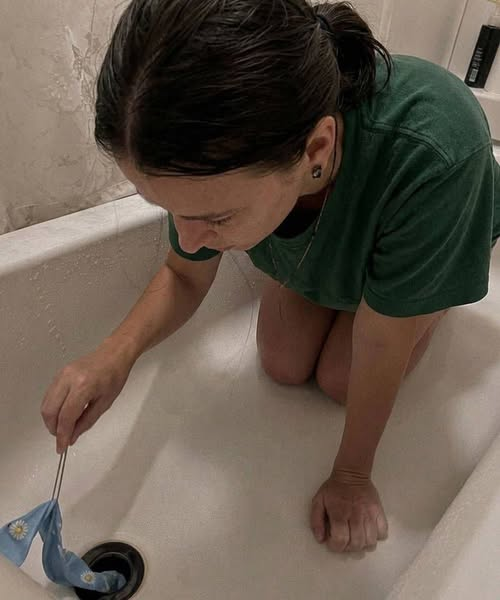
I stood in the bathroom with tweezers in my hand, staring at it while my stomach dropped.
That blouse mattered to her. We had found it at a thrift shop not long after the divorce was finalized. Hannah had held it against herself in front of a foggy mirror and smiled.
“It makes me look like I know what I’m doing,” she had said.
I bought it, even though money was tight.
Now a torn piece of it was lying in my palm.
I called Lloyd.
He picked up after several rings. “Hey, Mindy. Everything okay?”
“No,” I said. “Everything is not okay.”
His voice changed. “What happened?”
“You tell me.”
“I don’t know what you mean.”
“Don’t play innocent. Hannah came home from your place and went straight into the shower again.”
“She’s fifteen. Teenagers shower.”
“She doesn’t even say hello first. She runs in and locks the door.”
He sighed. “Maybe she just wants privacy.”
“I found part of her blue blouse in the drain.”
Silence.
“There’s a brown mark on it,” I said.
“It isn’t blood,” he answered too quickly.
My hand tightened around the sink. “Then you know what it is?”
Another pause.
“Lloyd.”
“It’s rust,” he said. “From the cabinet hinge in the guest bathroom. Hannah told me.”
“How does a blouse get ripped on a cabinet hinge?”
“Mindy, it’s not what you think.”
“Then stop letting me imagine the worst.”
His voice dropped. “Hannah begged me not to tell you, but you need to know what’s been going on.”
I went still. “Then tell me.”
“It started with Marissa.”
Of course it did.
“What did your wife do?”
“Not over the phone,” he said.
“Are you serious?”
“She asked me not to tell you. I already broke that promise. Meet me tomorrow. Nine o’clock. The park by the library.”
I looked toward Hannah’s room. Her light was still on.
“You have until nine,” I said. “And if I think you’re hiding anything that hurts her, I won’t wait for permission.”
Then I hung up.
The next morning, I made pancakes even though Hannah usually only wanted toast.
She stared at the plate. “What’s this?”
“A bribe.”
“For what?”
“The truth.”
Her fork froze.
“I found the blouse, Han.”
Her face lost color. “You went through my things?”
“I went into the bathroom after you locked yourself in there for forty minutes.”
“I just needed a shower.”
“Then why did you come home wearing someone else’s hoodie?”
She looked down. “It was nothing.”
“It ripped.”
“I caught it on something.”
“At Dad’s?”
Her eyes filled quickly. “Please don’t make this a big deal.”
“It already is.”
“No, Mom.” Her voice cracked. “If you and Dad fight, it gets worse there.”
“What gets worse?”
She shoved the plate away. “Nothing.”
“You just said worse.”
“I meant awkward.”
“That’s not what you meant.”
She grabbed her backpack. At the door, she stopped.
“I love Dad,” she said quietly.
“I know.”
“And sometimes I like being there. I like painting those ugly birdhouses he buys.”
“I know.”
Her shoulders tensed. “I just don’t like who I have to be there.”
Then she left.
At nine, Lloyd was sitting on a bench by the library, twisting his hands together.
“Talk,” I said.
He stared toward the playground. “Marissa thinks Hannah needs… refinement.”
“She’s a child, not furniture.”
“She says Hannah hides behind being messy.”
“Hannah gets paint on her sleeves because she’s happy when she paints. That isn’t mess. That’s a memory.”
“I know.”
“Do you?”
He looked ashamed.
I placed the torn fabric between us. “Tell me how this happened.”
He swallowed. “My mother and sister were coming for lunch. Marissa bought Hannah a lace dress.”
“Hannah hates lace.”
“I told her that.”
“But you didn’t stop her.”
“Hannah refused to change. Marissa said she needed to look presentable. Hannah backed into the bathroom cabinet and her blouse caught on the hinge.”
“And the stain?”
“Rust.”
Relief hit first.
Then anger.
“Why didn’t you call me?”
“Hannah begged me not to.”
“She is a child. She should not be carrying adult secrets because you’re scared of conflict.”
“I was trying to keep the peace.”
“For who?”
He didn’t answer.
I leaned closer. “Why does she shower every time she comes home?”
Lloyd rubbed his forehead.
“Say it.”
“Marissa sprays perfume before guests come.”
“She sprays Hannah?”
“She calls it a finishing touch.”
“She is not decoration, Lloyd.”
“I know.”
“No. You don’t. Not if you let it happen.”
His face tightened. “Marissa says Hannah smells like your house.”
I froze.
“Like that’s dirty?”
He said nothing.
I picked up the fabric. “You let another woman teach our daughter that she needs to wash me off.”
“Mindy—”
“No. You showed Hannah that Marissa’s comfort matters more than her dignity.”
His eyes reddened. “I messed up.”
“Yes,” I said. “You did.”
That Sunday, Lloyd texted and told me not to come over.
I went anyway.
I used the key he had never asked me to return and walked through the front door.
“Hannah?” I called.
No answer.
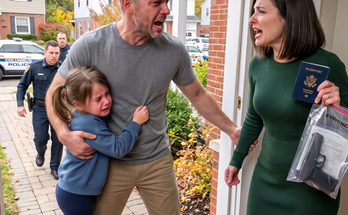
I found her upstairs in the guest room, standing in front of a stiff floral dress hanging from the closet door. Her torn blue blouse lay on the bed. Her hands were clenched.
“Mom?” Panic flashed across her face. “Why are you here?”
“To take you home, if that’s what you want.”
“Please don’t,” she whispered. “Everyone is downstairs.”
“That isn’t an answer.”
She looked at the dress. “Marissa says Grandma likes girls who make an effort.”
“You are not a centerpiece.”
“She says Dad gets embarrassed when I come over with paint under my nails.”
Before I could answer, Lloyd appeared in the doorway holding barbecue tongs.
“Mindy,” he said. “Not here.”
“Yes,” I said. “Here.”
“Hannah, go downstairs.”
Hannah didn’t move.
Then Marissa appeared behind him with her perfect smile.
“Mindy,” she said. “What a surprise.”
“I’m sure.”
“We were only helping Hannah get ready for lunch.”
“No,” I said. “You were trying to turn her into someone easier for you to approve of.”
Her smile hardened. “That is a cruel thing to say.”
“Then stop doing cruel things quietly.”
Marissa crossed her arms. “I bought her a nice dress. There is nothing wrong with teaching a young girl how to present herself.”
“Hannah needs respect.”
“I respect her enough to be honest.”
“Your honesty seems to come with perfume and shame.”
Hannah whispered, “Mom.”
I turned to her. “You don’t have to say anything.”
But she did.
“She sprays me.”
Lloyd shut his eyes.
Marissa laughed lightly. “It’s perfume.”
Hannah’s voice trembled. “You make me stand still for it.”
Lloyd said softly, “Han…”
I snapped, “Don’t warn her for telling the truth.”
Marissa lifted her chin. “Offering perfume is not cruelty.”
Hannah’s lips shook, but she stayed silent.
I looked at Lloyd. “And you watched?”
He stared at the floor.
That was answer enough.
I took Hannah’s hand. “We’re leaving.”
Downstairs, the backyard had gone quiet.
Lloyd’s mother sat at the patio table. His sister, Sarah, looked directly at Hannah.
“Hannah?” Sarah asked. “Sweetheart, what happened?”
Before Hannah could answer, Marissa stepped forward.
“Nothing happened,” she said smoothly. “Mindy came in upset, and now Hannah is overwhelmed.”
“No,” I said. “I came to get my daughter.”
Marissa glanced at the dress in Hannah’s hand.
“Hannah, sweetheart,” she said, “don’t you want to change? We talked about first impressions.”
Hannah gripped the dress tighter.
“She already made one,” I said.
Marissa blinked. “Excuse me?”
“She came as herself.”
Sarah set her glass down. “Marissa, why does she look scared to answer you?”
“She isn’t scared of me,” Marissa said. “She’s embarrassed because her mother lets her reject every rule.”
“With perfume?” I asked.
Lloyd’s mother looked up. “Perfume?”
Hannah let go of my hand.
Then she stepped forward.
“I shower when I get home,” she said, her voice shaking, “because I can still smell it.”
Marissa’s face tightened. “Hannah.”
“No,” Hannah said. “I’m saying it.”
The yard went silent.
“Every time I come here, something about me is wrong. My hair. My jeans. The paint on my clothes.”
Sarah looked at Lloyd. “You knew?”
Lloyd swallowed. “I knew Marissa wanted her to look more put together.”
Hannah turned to him. “She said Mom lets me look and smell like I come from a broken home.”
Lloyd’s mother gasped.
Marissa lifted her chin. “That isn’t what I meant.”
“But that’s what you said,” Hannah whispered.
Everyone looked at Lloyd.
He stared at the ground.
Then he said, “She said it. And I should have stopped it.”
Sarah folded her arms. “Yes. You should have.”
Hannah faced her father. “You don’t understand. I like visiting when it feels like your house. But Marissa looks at me like I’m something you forgot to clean.”
Lloyd flinched. “Han, I’m sorry.”
I stepped between them before he could reach for her. “Sorry starts after you stop making your daughter pay emotional rent in your home.”
Marissa scoffed. “That’s unfair.”
“No,” I said. “Unfair is spraying perfume on a child because she smells like her mother’s house. Unfair is calling control standards. Unfair is watching her disappear into herself and pretending it’s manners.”
Marissa opened her mouth, then closed it.
Lloyd’s mother stood slowly. “Hannah, come here, sweetheart.”
Hannah looked at me first.
I nodded.
“I’m not going to fix you,” Lloyd’s mother said gently. “I only want to show you something.”
She lifted one hand. A thin line of gray clay sat beneath her polished nails.
“I sculpt,” she said. “Badly. But I love it.”
Then she looked at Marissa.
“A little mess never made any girl less worthy of love. I’m sorry I haven’t been here enough, sweetheart. But I’m here now. I never asked Marissa to change you. I love you exactly as you are.”
Sarah looked straight at Marissa. “Some people confuse polish with character.”
Hannah turned back to Lloyd. “I’ll still visit you, Dad. But I’m not staying overnight until I can wear my own clothes and be myself.”
Lloyd nodded, broken. “Okay. I’ll earn that trust back.”
In the car, Hannah whispered, “I wanted him to choose me.”
“He should have,” I said, squeezing her hand. “And until he learns how, I will.”
That night, I sat at the kitchen table and stitched the blue blouse badly.
Hannah touched the crooked seam. “Thanks, Mom. But it’s ruined now, isn’t it?”
I looked at the uneven thread.
“No,” I said. “It’s honest.”
The next Sunday, Hannah came home from her father’s house, paused in the hallway, then walked into the kitchen instead of the bathroom.
“Baked ziti?” she asked.
And down the hall, the bathroom door stayed open.
Chapter 1: The Rhythmic Click of the Lock
For three consecutive Sundays, the sound that defined the end of my weekend was not the hum of the garage door or the chatter of small talk, but the sharp, definitive click of the bathroom lock.
Hannah would walk through the front door after her custody visits with Lloyd, her shoulders hunched forward as if she were trying to occupy as little physical space as possible. She wouldn’t look me in the eye. She wouldn’t drop her backpack on the bench by the entryway, nor would she kick off her sneakers the way she used to do when this house was her only home. Instead, she moved like a ghost through the hallway—swift, silent, and determined—straight into the guest bathroom. Then came the click.
A moment later, the pipes in the walls would groan as the hot water surged upward. The shower would run for forty, sometimes fifty minutes, long after the mirrors had fogged over and the drywall had grown damp with steam.
“It’s just the divorce,” I told myself every night while sitting alone at the kitchen table, watching my own reflection in a cold cup of chamomile tea. “She’s fifteen. The transition between two houses is hard. She’s just washing off the stress of moving between two completely different worlds.”
Divorce forces a mother into a strange kind of psychological gymnastics. You spend half your time analyzing every microscopic shift in your child’s demeanor, and the other half desperately convincing yourself that those shifts are entirely normal. If you acknowledge the cracks, you have to acknowledge who caused them, and that opens a floodgate of resentment that helps no one—least of all a teenage girl caught in the crossfire.
So, I chose to believe the stress narrative. I chose to ignore the fact that she was emerging from those marathons in the bathroom with her skin scrubbed raw, her cheeks flushed a violent, blotchy red, and her eyes glazed over with exhaustion.
Then came the fourth Sunday.
Hannah had hurried past me as usual, wearing an oversized, generic gray hooded sweatshirt that I had never seen before. It swallowed her frame entirely, the cuffs hanging limp past her knuckles. The bathroom door closed, the lock clicked, and the water began its familiar, heavy drone against the fiberglass tub.
I walked into the hallway a half-hour later to toss a load of dirty towels into the washing machine. The air outside the bathroom door was thick and smelled heavily of the industrial-strength lavender soap I kept stocked in the linen closet. But beneath the soap, there was something else—an underlying, pungent sweetness that didn’t belong in my house. It was a suffocating, artificial floral scent, like a department store perfume counter that had been set on fire.
As I reached down to gather a discarded bath mat near the base of the door, I noticed a tiny shred of fabric peeking out from the narrow gap between the floorboard and the doorframe. It must have caught on the metal transition strip when she hurried inside.
I knelt down, my knees pressing into the hardwood floor, and pulled it free.
It was a small, ragged strip of pale blue cotton. My heart did a slow, heavy roll in my chest. I didn’t need to see the rest of the garment to know exactly what it was. It was a fragment of the blue thrift-store blouse Hannah absolutely adored—the one with the tiny, hand-stitched white daisies along the seam of the left cuff.
We had found it together two months prior at a small, cluttered charity shop downtown. Money had been incredibly tight since the lawyers finished carving up our assets, and our weekend outings had been reduced to window shopping and shared grocery store pastries. But Hannah had pulled that blouse from a rack of old cardigans, her eyes lighting up in a way I hadn’t seen since her father packed his bags.
She had held it against her chest in front of a foggy, scratched mirror in the back of the shop, turning side to side. “It makes me look like I know what I’m doing, Mom,” she had whispered, a rare, genuine smile breaking through her usual guarded expression. “Like I’m an adult who has her life totally figured out.”
It cost seven dollars. I cut back on my own groceries that week to make sure she could have it. She wore it constantly, washing it by hand in her sink so it wouldn’t get ruined in our temperamental washing machine.
Now, a piece of it was torn away, jagged and frayed. I held the scrap up to the hallway light. Along one of the torn edges, the delicate blue cotton was stained with a hard, dark brown crust.
My breathing grew shallow. A cold, metallic taste flooded the back of my throat. In the quiet of the hallway, with the roar of the shower behind the door, the mind doesn’t jump to logical conclusions. It jumps straight to the dark. It jumps to violence. It jumps to the absolute worst thing a mother can imagine happening to her daughter when she isn’t there to protect her.
I went into my bedroom, retrieved a pair of fine-tipped tweezers from my vanity, and walked back to the kitchen table. I laid the blue scrap down on a clean paper towel under the harsh light of the overhead functional fixtures. My hands were shaking so violently I could barely orient the tweezers.
I turned the fabric over. The dark brown stain didn’t look like grease, and it didn’t look like paint. It was deeply embedded into the fibers, stiffening the fabric.
I didn’t think. I didn’t plan what I was going to say. I simply grabbed my phone off the kitchen counter and dialed Lloyd’s number.
Chapter 2: The Logic of Rust
The phone rang four times, the long, hollow tones vibrating against my ear like a countdown. When he finally answered, I could hear the muted background noise of a television—some home improvement show or a baseball game—and the distant, distinct sound of a woman’s laughter. Marissa.
“Hey, Mindy,” Lloyd said, his voice carrying that casual, practiced neutrality he always used when he wanted to remind me that we were no longer legally bound to care about each other’s inner lives. “Everything okay with Hannah?”
“No,” I said, my voice dropping an octave, steadying itself on pure adrenaline. “Everything is not okay, Lloyd.”
There was a brief rustle on the other end line, the sound of a door closing as he moved to a quieter room. The casual tone vanished, replaced by an immediate, defensive edge. “What happened? Did she leave something at the house?”
“You tell me what happened,” I countered, looking down at the tiny white daisies on the paper towel. “She just walked through my door. She didn’t say hello. She didn’t look at me. She went straight into the bathroom, locked the door, and she’s been scrubbing herself for thirty minutes.”
Lloyd let out a long, slow sigh through his nose—the kind of sigh that used to mean I was being hysterical during our marriage. “Mindy, come on. She’s fifteen. Teenagers shower. They spend hours in the bathroom. It’s completely normal developmental behavior.”
“She doesn’t even drop her bag, Lloyd! She runs from the car like she’s trying to escape her own skin. And she’s wearing a giant gray hoodie that doesn’t belong to her.” I tapped the tweezers against the table. “I found a piece of her favorite blue blouse trapped under the door. It’s torn to shreds. And there is a dark brown stain all over the edge of the tear.”
The silence that followed was absolute. The television noise was gone. For five agonizing seconds, all I could hear was the faint hiss of static on the line.
“It isn’t blood,” Lloyd said.
The words came out too fast, too rehearsed, like a man who had already memorized his alibi before the crime was even discovered.
My fingers clamped around the edge of the kitchen counter so hard my knuckles turned white. “How do you know it isn’t blood, Lloyd? Unless you already knew it was torn? Unless you were standing there when it happened?”
“It’s rust,” he muttered, his voice dropping into a hurried, hushed register. “It’s just rust, Mindy. From the old iron cabinet hinge in the guest bathroom upstairs. Hannah told me herself.”
“Rust?” I repeated, the word sounding absurdly small against the panic that had been building in my chest. “How does a girl tear her favorite blouse on a bathroom cabinet hinge badly enough to leave a strip of it behind? What was she doing?”
“Mindy, please. Just stop. It’s not what you’re thinking. It’s not what your brain is doing right now.”
“Then tell me what to think!” I shouted, the restraint finally snapping. “Stop letting me sit here in the dark imagining the absolute worst! If my daughter is coming home traumatized from your house every Sunday, I have a right to know why!”
“She begged me not to tell you,” Lloyd whispered, his voice cracking slightly. I could hear the genuine strain in it now, a layer of anxiety that didn’t sound like a cover-up for violence, but rather the deep, exhausting stress of a man trapped between two opposing forces. “She told me if I called you, you’d make a scene and the judge would get involved again, and she just wants the fighting to stop.”
I sat down slowly in the kitchen chair, the anger deflating into a heavy, suffocating dread. “Who is she protecting, Lloyd? You? Or Marissa?”
“It started with Marissa,” he admitted, his voice barely audible over the phone. “Marissa has… specific ideas about how things should be when we have company over. Look, I can’t do this over the phone. Marissa is in the next room and if she hears me talking to you about this, it’s going to turn into a whole thing.”
“I don’t give a damn about Marissa’s things,” I said coldly.
“Meet me tomorrow morning,” Lloyd pleaded. “Nine o’clock. The park by the public library. Hannah will be at school. We can talk without everyone screaming.”
I looked down the hallway. The shower had finally stopped running. The bathroom door unlocked with a soft click, and Hannah stepped out into the corridor, wrapped in the oversized gray hoodie, her damp hair clinging to her forehead like dark seaweed. She looked at me through the kitchen doorway, her eyes wide, defensive, and incredibly fragile.
“Nine o’clock,” I told Lloyd. “And if I find out you’re lying to me to protect that woman, I’m going straight to the courthouse.”
I hung up before he could respond.
Chapter 3: The Bribe at the Breakfast Table
The next morning, the kitchen smelled of butter and heated maple syrup. I had gone to the grocery store at six in the morning to buy real buttermilk and fresh berries—the kind of breakfast we used to make on Sunday mornings before our family structure collapsed into a series of court-mandated calendar squares.
Hannah sat at the table, her backpack already slung over one shoulder even though the school bus wasn’t due for another twenty minutes. She was staring at the stack of golden-brown pancakes on her plate as if they were a foreign object.
“What’s this?” she asked, her voice flat, devoid of the usual teenage morning grogginess.
“It’s a bribe,” I said gently, setting a glass of orange juice next to her hand.
“For what?”
“The truth, Han.”
Her fork, which she had just picked up, froze an inch above the food. She didn’t look up at me. She kept her eyes fixed on the melting square of butter in the center of her plate. “I don’t know what you’re talking about.”
I reached into my pocket and placed the paper towel on the table. I unfolded it to reveal the torn blue fabric with its dry, rusty edge. “I found this in the bathroom after you finished your shower last night.”
The color drained from her face so quickly it looked like a physical blow. She pulled her hands back from the table, tucking them into the sleeves of her school sweatshirt. “You went through my things? You were spying on me?”
“I didn’t go through your things, Hannah. The fabric was stuck under the door. It was practically calling out to me.” I leaned forward, trying to catch her gaze, but she kept her chin tucked low. “Hannah, look at me. You came home wearing a hoodie that belongs to a grown man. Your favorite blouse is ruined. You’ve spent the last four weeks locking yourself away the second you cross my threshold. Please talk to me. Did someone hurt you?”
“No!” she said, her voice rising in a sudden, sharp spike of panic. “No, Mom, nobody hurt me! God, why does everything have to be a massive production with you?”
“Then why are you hiding?”
“Because if I tell you, you’re going to call Dad, and then Dad is going to yell at Marissa, and then Marissa is going to spend the whole next weekend making passive-aggressive comments about how I’m a snitch who ruins their marriage!” Her eyes filled with tears, hot and fast, spilling over her lower lashes. “If you guys fight, it just gets worse for me over there. Don’t you get that? You get to stay here in your own house. I’m the one who has to live in the middle of it.”
The words struck me right in the sternum. The guilt of the divorce is a living thing; it sits in the corner of every room, waiting for a moment like this to remind you that no matter how amicable you tried to keep the separation, your child is still the one carrying the luggage between two battlefields.
“What gets worse, sweetie?” I asked, keeping my voice as soft as humanly possible. “What happens over there?”
She shoved the plate of pancakes away, the syrup smearing across the clean porcelain. “Nothing. It’s just… awkward.”
“You said ‘worse’ first, Hannah. Awkward is a bad dinner. Worse means something is changing how you feel about yourself.”
She grabbed her backpack, the nylon straps groaning as she hauled it over both shoulders. She stood up, her jaw set in that stubborn line she inherited directly from her father, but her lower lip was trembling. At the kitchen door, she stopped and turned back around.
“I love Dad,” she said, her voice barely a whisper. “I really do. And sometimes I genuinely like being there. I like painting those stupid, ugly wooden birdhouses he buys from the hardware store. He sits on the patio and holds the paint cans for me. It’s the only time he isn’t looking at his phone.”
“I know, baby. I know he loves you.”
Her shoulders tensed beneath the heavy backpack. “I just don’t like who I have to be when I’m there. I feel like I have to scrub myself clean the second I leave, just so I can remember who I am when I’m with you.”
Before I could answer, before I could process the immense, crushing weight of that statement, the horn of the school bus sounded from the street. Hannah turned and ran out the front door, leaving her breakfast to grow cold on the table.
Chapter 4: The Park by the Library
The park by the public library was old, surrounded by massive, weeping willow trees whose branches swept the ground like green curtains. At 9:00 AM, it was mostly empty, save for a young mother pushing a stroller near the duck pond and a flock of pigeons pecking at the gravel path.
Lloyd was sitting on a green wooden bench near the edge of the playground, his hands tucked tightly between his knees, twisting his fingers together in a frantic, repetitive motion. He looked older than thirty-six. The hair around his temples had gone completely gray in the twelve months since our separation, and there were dark, purple smudges beneath his eyes.
I walked up the path, the gravel crunching beneath my boots, and sat down on the opposite end of the bench. I didn’t say good morning. I didn’t offer a polite preamble. I reached into my bag, pulled out the paper towel containing the blue cotton, and placed it squarely on the wood between us.
“Talk,” I said.
Lloyd didn’t look at the fabric. He kept his eyes fixed on the empty swings across the lawn. “Marissa thinks Hannah needs… refinement, Mindy. That’s the word she uses. Refinement.”
“She’s fifteen years old, Lloyd,” I said, the anger rising in my throat like hot bile. “She is a child navigating the collapse of her nuclear family. She isn’t a piece of antique furniture that needs to be sanded down and varnished.”
“I know that,” he muttered, his head sagging forward. “Marissa says Hannah hides behind being messy. She thinks the oversized clothes, the paint stains, the unbrushed hair—she thinks it’s a defense mechanism. She told me we’re letting her grow up like a wild animal.”
“Hannah gets paint on her sleeves because she’s an artist, Lloyd! She’s happy when she paints. She’s focused. That isn’t a mess. That’s her processing her life. That’s a memory you’re supposed to be building with her.”
“Do you think I don’t know that?” Lloyd turned to look at me, his eyes wide and bloodshot. “I love those birdhouses she paints. I keep them on the shelf in my home office. But Marissa… Marissa can’t stand the clutter. She can’t stand the smell of the acrylics. She wants everything in that house to look like a spread from an interior design magazine.”
“I don’t care about Marissa’s aesthetic,” I said, pointing a finger at the blue scrap. “Tell me how this happened. Tell me why my daughter’s clothes are being ripped off her body.”
Lloyd swallowed hard, his adam’s apple bobbing against his collar. “My mother and my sister Sarah were coming over for a formal Sunday lunch last weekend. It was the first time my mom was visiting the new house since Marissa redecorated. Marissa wanted everything to be perfect. She went out and spent two hundred dollars on this stiff, white lace dress for Hannah to wear.”
“Hannah literally has a sensory aversion to lace,” I said, my teeth clenched. “She’s hated it since she was a toddler. It makes her skin itch until she bleeds. You know this, Lloyd. You were there when we had to leave your cousin’s wedding early because she was having a panic attack over a lace flower-girl dress.”
“I told Marissa that!” Lloyd’s voice cracked, a desperate note of self-defense entering his tone. “I swear to you, Mindy, I told her. I said, ‘Hannah’s not going to wear that. She’s going to be uncomfortable.’ But Marissa wouldn’t listen. She said Hannah needed to learn how to dress appropriately for formal family occasions. She said letting her wear a wrinkled, thrift-store shirt to lunch with her grandmother was a sign of disrespect.”
“And what did you do?”
“Hannah refused to change,” Lloyd whispered, looking back at his hands. “They got into an argument in the upstairs hallway. Marissa was holding the dress, trying to hand it to her, and Hannah was backing away. She was upset, she wasn’t looking where she was going, and she backed up against the old iron cabinet in the hallway bathroom. The latch hinge caught the sleeve of her blue blouse. When she pulled away in a panic, it ripped.”
“And the dark mark?”
“It’s rust from the hinge, Mindy. I swear to God. I cleaned the scratch on her arm myself. It didn’t even break the skin deeply, it was just a scrape, but the blouse was ruined. Hannah started crying, ran into the guest room, and locked herself inside. She wouldn’t come out until it was time for me to drive her back to your house. That’s why she was wearing my old gray hoodie. She didn’t want you to see her shirt was torn.”
The relief that washed over me was immense, a physical weight lifting off my chest so fast it made me dizzy. It wasn’t violence. It wasn’t what my darkest thoughts had conjured during the night.
But as the relief receded, it left behind a cold, hard shelf of pure fury.
“Why didn’t you call me when it happened, Lloyd?” I asked, my voice dangerously quiet. “Why did you let her sit in a locked room for four hours, feeling like a pariah in her own father’s house?”
“Hannah begged me not to!” he cried out, turning his whole body toward me. “She was terrified you’d storm over there and start an eviction-level fight with Marissa. She’s fifteen, Mindy. She shouldn’t have to be the referee in our post-divorce drama.”
“She is the referee because you are a coward!” I stood up from the bench, looking down at him. “You are letting an adult woman bully your daughter because you are too terrified of a domestic argument to stand up for your own blood. You are letting Hannah carry your marital secrets so you can keep the peace with a wife who doesn’t even respect your child.”
Lloyd didn’t look up. He sat there, taking the blows, his shoulders shaking slightly.
“But that doesn’t answer the main question,” I continued, the realization clicking into place like a puzzle piece. “The rust explains the tear last week. It doesn’t explain the three weeks before that. Why does she shower the absolute second she walks through my front door every single Sunday?”
Lloyd rubbed his forehead with both hands, his palms making a dry, scraping sound against his stubble. He wouldn’t look at me.
“Say it, Lloyd. What is Marissa doing to her?”
“Marissa… she has this routine,” he muttered into his hands. “Before guests arrive, or before we leave the house for dinners, she goes around with this heavy French perfume. She says she wants the house to have a ‘signature scent.’ And she… she sprays Hannah.”
“She sprays her?”
“She calls it a finishing touch,” Lloyd said, his voice laced with deep shame. “She stands in front of Hannah with the bottle and sprays her shoulders, her hair, her wrists. Hannah hates it. She tells her it makes her dizzy, that she can’t breathe. But Marissa tells her it’s part of becoming a proper young lady.”
“She is a human being, Lloyd! She isn’t an air freshener!”
“Marissa… Marissa says Hannah smells like your house,” Lloyd finally confessed, the words coming out in a rush, as if he were lancing a wound. “She told Hannah that your neighborhood smells like old grease from the local auto shops and cheap laundry detergent. She told her that every time she comes over, she brings that ‘broken-home smell’ with her, and she won’t have her guests smelling it.”
I froze. The world around me seemed to tilt slightly.
My house. My small, neat house three miles away, where I baked bread on Saturdays, where the windows were always open to let in the breeze from the community garden, where we used the lavender detergent we bought in bulk because it was the only thing that didn’t trigger Hannah’s eczema.
“Like that’s dirty?” I whispered, the words trembling with a toxic mix of humiliation and rage.
Lloyd didn’t answer.
I picked up the blue fabric from the bench, folding it carefully back into the paper towel. “You let another woman teach our daughter that her mother is dirty. You let her stand there and physically spray an industrial chemical onto our child to wash me off her skin before she’s allowed to sit at your table.”
“Mindy, I tried to tell her—”
“No, you didn’t,” I said, turning my back on him. “You showed Hannah that Marissa’s comfort, Marissa’s vanity, and Marissa’s country-club delusions matter more than her own daughter’s basic human dignity. You mess up a lot of things in a divorce, Lloyd. But this is the one you don’t get to walk away from.”
Chapter 5: Unannounced on a Sunday Afternoon
The following Sunday, the sky over our town was a heavy, bruised purple, threatening a summer thunderstorm that never quite arrived. At 1:30 PM, my phone buzzed on the kitchen counter. It was a text from Lloyd.
Lloyd: Hey. Things are a bit tense here with the family lunch. Better if you don’t come to pick up Hannah at 4. I’ll drive her back to your place around 6 instead. Let us finish here in peace.
I stared at the screen for thirty seconds. Then, I walked into the hallway, grabbed my car keys from the hook by the door, and took my old house key—the one to Lloyd’s new suburban townhouse, the key he had given me during the first month of our separation for “emergencies” and had never had the courage to ask back.
I didn’t reply to the text. I just drove.
The neighborhood where Lloyd lived now was beautiful in that sterile, aggressive way that wealth often produces. Every lawn was a perfect, uniform shade of emerald green; every driveway was laid with pristine gray pavers; every house had the exact same black shutters and white trim. It was a neighborhood designed to eliminate any trace of individuality or human error.
I pulled my old sedan into the driveway, parking right behind Marissa’s gleaming luxury SUV. Through the large double windows of the dining room, I could see the shapes of people moving around a long, candlelit table—the silhouettes of Lloyd’s mother, his sister Sarah, and several uncles I hadn’t seen since our wedding.
I didn’t knock. I didn’t ring the bell to give them time to prepare their faces. I put the key into the brass lock, turned it smoothly, and walked right through the front door.
The air inside the house was thick with the scent of roasted rosemary chicken, garlic, and that same suffocating, synthetic floral perfume that had been clinging to my daughter’s skin.
“Hannah?” I called out, my voice ringing clear and hard through the open-concept foyer.
No one answered from the kitchen. The chatter from the dining room dropped off instantly, replaced by the clatter of silver against porcelain.
I didn’t wait for them to come to me. I walked straight up the carpeted stairs, my boots sinking into the thick pile. I knew where the guest bedroom was—the small, north-facing room at the end of the hall that Lloyd had designated as “Hannah’s space,” though it looked more like a showroom for a bedding company than a bedroom for a teenage girl.
I pushed the door open.
Hannah was standing in the center of the room, completely motionless. In front of her, hanging from the white molding of the closet door, was the stiff, white lace dress Lloyd had described. It looked like a Victorian costume, rigid and uncomfortable. On the bed behind her lay her favorite blue blouse, the torn sleeve limp against the mattress.
Hannah’s hands were clenched into tight, white-knuckled fists at her sides. When she saw me, a look of absolute, unadulterated panic flashed across her features.
“Mom?” she whispered, taking a half-step back toward the bed. “What are you doing here? Dad said you weren’t coming until six.”
“I came to take you home, Han,” I said, walking into the room and standing next to her. “Right now. If that’s what you want.”
“Please don’t make a scene,” she begged, her eyes darting toward the open door. “Everyone is downstairs. Grandma is here. Aunt Sarah is here. If you start yelling, Dad is going to get that look on his face, and Marissa will…”
“I’m not here to yell at your father, Hannah. I’m here to ask you a question, and I want you to look at me when you answer it.” I reached down and took her small, cold hand in mine. “Do you want to stay here for this lunch? Genuinely?”
She looked at the stiff lace dress hanging on the door. “Marissa says Grandma likes girls who make an effort. She says if I show up at the table looking like I just rolled out of bed, it makes Dad look bad. She says… she says Dad gets embarrassed when I come over with paint under my nails because it looks like nobody is taking care of me.”
Before I could form a response through the wall of heat building in my chest, a heavy step sounded in the hallway. Lloyd appeared in the doorway, still holding a pair of stainless-steel barbecue tongs in his right hand. His face was flushed from the heat of the grill outside, but when he saw me standing next to our daughter, the color vanished completely.
“Mindy,” he said, his voice dropping into that warning, defensive register. “What the hell are you doing? Not here. We discussed this.”
“Yes, here,” I said, turning to face him. “Right here in the room where our daughter spends four hours every Sunday trying to figure out how to exist without offending your new wife.”
“Hannah, go downstairs,” Lloyd ordered, pointing the tongs toward the stairwell. “Go sit with your grandmother. Your mother and I need to have a private conversation.”
Hannah didn’t move. She stayed rooted to the carpet, her hand still clutched tightly in mine.
A second later, the sharp, rhythmic click of high heels sounded on the hardwood hall flooring outside the room. Marissa appeared behind Lloyd, her hair perfectly blown out, wearing a silk cream blouse that didn’t have a single wrinkle. She carried a small glass of white wine in one hand, her perfect, symmetrical smile firmly in place.
“Mindy,” she said, her voice dripping with artificial warmth. “What an unexpected surprise. We didn’t think we’d see you until this evening.”
“I’m sure you didn’t,” I said.
Marissa looked past me to the lace dress hanging on the closet door, then down to Hannah’s tear-stained face. Her smile didn’t falter, but her eyes hardened into two small chips of ice. “We were only helping Hannah get ready for the family lunch. It’s a very important day for Lloyd’s mother.”
“No,” I said, stepping forward so that I was standing between Marissa and my daughter. “You weren’t helping her get ready. You were trying to turn her into an ornament that’s easier for you to approve of.”
Marissa let out a short, incredulous laugh, looking at Lloyd as if expecting him to intervene. When he remained silent, she turned back to me, her chin lifting. “That is an incredibly cruel and dramatic thing to say, Mindy. I bought her a beautiful, expensive dress. There is absolutely nothing wrong with teaching a young girl basic manners and how to present herself properly to her extended family.”
“Hannah doesn’t need to be taught how to present herself,” I countered. “She needs to be respected. And your version of honesty seems to come with a heavy dose of perfume and shame.”
Hannah whispered from behind me, her voice trembling so hard it barely carried across the small room. “Mom…”
I turned my head slightly. “You don’t have to say anything, sweetie. You can just grab your bag.”
But she didn’t grab her bag. She took a deep breath, her chest rising sharply beneath her sweatshirt, and she stepped out from behind my shoulder to look directly at her father’s wife.
“She sprays me,” Hannah said.
The silence that followed that statement was heavy and absolute. Lloyd shut his eyes tight, his head dropping back against the doorframe as if he had just been hit by a physical blow.
Marissa’s smile finally cracked, her lips tightening into a thin, pale line. She set her wine glass down on the guest-room dresser with a sharp clink. “It’s high-end French perfume, Hannah. It’s a gift. Most girls your age would be thrilled to use it.”
“You make me stand still for it,” Hannah said, her voice gaining strength, the tears finally stopping as a cold, stubborn clarity took over. “You stand in front of the door so I can’t leave the room, and you spray it on my hair and my clothes. You told me I smelled like my mother’s kitchen, and that my mother’s kitchen smelled like poverty.”
Lloyd opened his eyes, looking at his wife with a sudden, panicked realization. “Marissa… you said that?”
Marissa scoffed, waving her hand dismissively, though a bright spot of red was beginning to flare on her neck. “Oh, please. It was a joke. I was simply making an observation about the difference in environments. Lloyd, are you really going to let them twist my words in our own home?”
I snapped around to face Lloyd before he could open his mouth. “Don’t you dare look at her for permission, Lloyd. You watched this happen for four weeks. You sat at that dining table down there while your daughter was upstairs scrubbing her skin raw in your shower, trying to wash your wife’s insults off her body before she came back to my house.”
He didn’t look at me. He looked at the floor, the steel tongs dangling uselessly at his side.
“I’m taking her home,” I said, grabbing Hannah’s backpack from the floor and tossing her blue blouse inside. “And we are going through the front door.”
Chapter 6: The Courtroom in the Backyard
When we reached the bottom of the stairs, the house was silent, but it wasn’t empty. The dining room table was abandoned, and through the glass French doors that led to the covered patio, I could see Lloyd’s entire extended family standing in a loose, uncomfortable circle around the outdoor dining area.
They had heard everything. The acoustics of the modern, open-concept townhouse meant that our voices had carried down the stairwell and directly out the open back windows.
Lloyd’s mother, a formidable woman named Eleanor who had spent forty years running a local charitable foundation, was sitting stiffly at the head of the patio table. His sister Sarah was standing near the screen door, her arms tightly crossed over her chest, her eyes fixed directly on the entryway as we walked through.
“Hannah?” Sarah asked, pushing the screen door open and stepping into the kitchen as we approached. “Sweetheart, what’s going on? Why are you carrying your bag?”
Before Hannah could open her mouth, Marissa came sweeping down the stairs behind us, her heels clicking like a countdown on the wood flooring. Her composure was completely back in place, her face smooth and her voice carrying that practiced, melodic authority.
“Nothing is going on, Sarah,” Marissa said smoothly, stepping past me to place a hand on the kitchen island. “Mindy simply arrived early, she’s clearly having an emotional day regarding the schedule, and now Hannah is feeling overwhelmed by the transition. It’s exactly what the mediator warned us about.”
“No,” I said, stopping in the middle of the kitchen, my hand firmly on Hannah’s shoulder. “I’m not early, and I’m not having an emotional day. I came to get my daughter because she is currently being treated like an unwanted tenant in her own father’s house.”
Marissa glanced down at the edge of the blue blouse peeking out from Hannah’s unzipped backpack. “Hannah, sweetheart,” she said, her voice dropping into a sweet, patronizing coo that made my skin crawl. “Don’t you want to change into the lovely dress I bought you? We talked about this on Friday. First impressions are so important when the family comes together.”
“She already made a first impression, Marissa,” I said.
Marissa blinked, her eyes narrowing slightly. “Excuse me?”
“She came as herself,” I said. “She came as the girl who paints birdhouses with her dad, who wears comfortable clothes, and who doesn’t need to be scented like a hotel lobby to be worthy of a seat at a dinner table.”
Sarah stepped further into the kitchen, her eyes moving between Marissa’s rigid posture and Hannah’s hunched shoulders. “Marissa… why does she look like she’s terrified to answer you?”
“She isn’t terrified of me, Sarah!” Marissa said, her voice finally losing its melodic quality, a sharp, defensive edge breaking through. “She’s embarrassed because her mother lets her reject every single boundary of polite society, and then she comes into our home and expects us to live in her chaos.”
“With perfume?” Lloyd’s mother asked from the doorway. Eleanor had stood up from the patio table and was now standing on the threshold, her sharp eyes fixed on her son, who had finally crept down the stairs and was lurking in the background behind his wife. “What is this about perfume, Lloyd?”
Hannah let go of my hand. She took two steps forward, standing in the bright sunlight that poured through the kitchen window.
“I shower the second I get home every Sunday,” Hannah said, her voice shaking but her gaze steady, fixed directly on her grandmother. “Because I can still smell it on my skin. I can smell the perfume she forces me to wear so your friends don’t know I live with my mom.”
Marissa’s face tightened into a mask of pure fury. “Hannah, that is an outright lie—”
“No, it’s not!” Hannah shouted, the volume of her voice surprising everyone in the room, including me. “I’m saying it! I’m tired of being quiet because everyone is scared of making you mad!”
The entire kitchen went completely dead silent. Outside, the rhythmic hum of a neighbor’s lawnmower seemed to amplify the quiet inside.
“Every single time I come here, something about me is wrong,” Hannah whispered, the tears finally starting to flow again, but her head stayed up. “My hair is too thick. My jeans are too loose. The paint under my fingernails is disgusting. You look at me like I’m a stain on your nice white carpets.”
Sarah turned around slowly to look at her brother. “Lloyd? You knew about this? You stood by and let this happen?”
Lloyd swallowed hard, his face turning a dark, mottled red. “Sarah, come on. It’s complicated. Marissa just wanted her to look more put together for Mom’s visit. She was trying to help.”
“She didn’t want me to look put together, Dad,” Hannah said, turning her eyes to him, a deep, profound disappointment in her expression that no father should ever have to see. “She told me that Mom lets me look and smell like I come from a broken home. She said it to my face while you were downstairs lighting the grill.”
Eleanor let out a sharp, audible gasp, her hand flying to her throat.
Marissa lifted her chin, her nostrils flaring. “That is completely taken out of context! I was explaining the concept of social presentation to her. If we are going to be a family, we have to have shared standards.”
“But that’s exactly what you said, wasn’t it?” Hannah whispered.
Marissa opened her mouth to defend herself, but she looked around the room and realized she had lost the floor. Sarah had her arms crossed, her expression utterly disgusted. Eleanor was staring at her son with a cold, terrifying disappointment.
Everyone looked at Lloyd.
He stood there between his past and his present, the barbecue tongs still clutched in his hand like a ridiculous prop. He looked at Hannah, then at me, then at his mother.
“She said it,” Lloyd finally muttered, his voice barely a breath. “She said it on Friday night, and she said it again this morning. And I should have stopped it.”
Marissa snapped her head around to look at him, her eyes wide with betrayal. “Lloyd!”
“No, Marissa,” Lloyd said, his head sagging forward. “She’s right. I sat there and I stayed quiet because I didn’t want to spend the whole weekend arguing with you about boundaries. I let my daughter feel like a stranger in my house because I was too lazy to fight for her.”
Hannah looked at her father for a long, silent moment. “You don’t get it, Dad. I like visiting you when it feels like your house. When we’re just sitting on the patio painting those stupid birdhouses. But the second the front door closes and she starts looking at me… I feel like something you forgot to clean before the guests arrived.”
Lloyd flinched as if he had been struck. “Han… I’m so sorry. I didn’t mean—”
I stepped between them before he could reach out to touch her arm. “Sorry starts after you stop making your daughter pay emotional rent to sit at your table, Lloyd. You don’t get to apologize for the environment you built with your silence.”
Marissa scoffed, her heels clicking as she took a step back toward the stairs. “This is completely unfair. This is a coordinated ambush to ruin our family gathering.”
“No,” I said, looking her dead in the eye. “Unfair is spraying chemicals on a fifteen-year-old girl because she smells like her mother’s life. Unfair is calling emotional abuse ‘standards.’ Unfair is watching a child disappear into herself every single week and pretending it’s just bad manners.”
Marissa opened her mouth to speak, but Eleanor stepped into the center of the kitchen, her presence immediately shutting down any further argument.
“Hannah,” Eleanor said softly, extending a hand toward her granddaughter. “Come here, sweetheart.”
Hannah looked at me first, her eyes asking for permission. I nodded.
Eleanor took Hannah’s hand in her own. She didn’t look at Marissa, and she didn’t look at Lloyd. She turned Hannah’s palm over, looking at the small, rough patches of skin near her knuckles and the faint, blue gray stains of acrylic paint that still lingered around her cuticles.
“I’m not going to fix you, Hannah,” Eleanor said, her voice carrying a deep, ancient authority that made Marissa look small. “And I’m certainly not going to spray you with anything. But I do want to show you something.”
Eleanor lifted her own right hand. She was wearing a massive, expensive diamond ring from her late husband, but beneath her manicured fingernails, there was a distinct, dark line of gray modeling clay.
“I sculpt,” Eleanor said, a small, genuine smile breaking through her stern expression. “I do it badly. My studio is a disaster area, and your grandfather used to complain that he found clay crumbs in the bedsheets for thirty years. But I love it. It’s the only time I feel entirely like myself.”
She turned her head to look directly at Marissa.
“A little bit of honest mess never made any girl less worthy of love, Marissa. I’m old, and I’ve seen a lot of people try to polish away their flaws with expensive things. It never works. The smell always gets through.”
She looked back at Hannah. “I’m sorry I haven’t been around enough this summer to see what was happening, sweetheart. But I am here now. I never asked Marissa to change you. I love you exactly as you are—paint, mess, and all.”
Sarah stood next to her mother, her eyes fixed on Lloyd. “Some people confuse polish with character, brother. It looks like you married someone who has a lot of the former and none of the latter.”
Hannah turned back to her father, her chin held high, her voice no longer shaking. “I’ll still visit you, Dad. Because I want to finish those birdhouses. But I’m not staying overnight, and I’m not eating at this table, until I can wear my own clothes, keep my own smell, and be myself without anyone looking at me like I’m dirty.”
Lloyd nodded, completely broken, his eyes wet. “Okay, Han. Whatever you need. I’ll earn that trust back. I promise.”
“Let’s go,” I said, taking Hannah’s bag.
We walked out the front door into the heavy, humid air of the afternoon, leaving the luxury townhouse and its suffocating scent far behind us.
Chapter 7: The Honest Seam
The drive back to our neighborhood was completely silent, but it wasn’t the tense, heavy silence of the previous weeks. It was the quiet of a storm that had finally broken, leaving the air clear and cool behind it.
When we pulled into our driveway, the smell of our neighborhood hit me as I opened the car door—the sharp, earthy scent of the damp grass from the community garden down the street, the distant smell of rain on hot asphalt, and the comforting hum of the local auto body shop two blocks away. It wasn’t perfect. It wasn’t pristine. But it was real.
Hannah stepped into the hallway, dropped her backpack on the bench by the entryway, and kicked her sneakers off into the corner. She didn’t look toward the bathroom. She didn’t run for the lock. She walked straight into the living room and threw herself onto the old, faded green sofa we had brought with us from the old house.
“In the car,” she whispered, looking up at the ceiling. “I kept waiting for him to choose me, Mom. I kept waiting for him to tell her to leave the room. But he just stood there with those stupid tongs.”
I sat down on the edge of the sofa, pulling her legs into my lap. “He should have chosen you, Hannah. Every single time. A father’s job is to be the shield, not the spectator. And until he remembers how to do that, I will be the shield for you. You never have to go back there if you don’t want to.”
“I want to see him,” she said quietly. “But only on the patio. Only where the paint is.”
“Then that’s exactly how we’ll set the schedule.”
That night, after Hannah had gone to bed—without locking her door, leaving her room open to the hallway light—I sat at the kitchen table with a needle and a spool of pale blue thread.
I had the ruined thrift-store blouse laid out under the lamp. The torn sleeve was ragged, missing the small strip of fabric I had found under the door, and the edges were frayed from its encounter with the iron hinge. I am not a seamstress. My mother had taught me a basic running stitch when I was a child, but my lines were always crooked, my knots too bulky.
I worked for two hours in the quiet of the kitchen, pulling the blue cotton together, overlapping the frayed edges to hide the missing piece. The resulting seam was thick, uneven, and completely visible against the delicate fabric. It looked like a scar running down the left sleeve of the shirt.
The next morning, Hannah came down the hall wearing her school clothes. I had left the blouse hanging over the back of her kitchen chair.
She walked up to it, her fingers reaching out to touch the heavy, crooked line of blue thread. She traced the uneven stitches for a long moment, her face serious.
“Thanks, Mom,” she whispered, her voice soft in the morning light. “But it’s kind of ruined now, isn’t it? Everyone will see the tear.”
I looked at her—at the faint trace of gray paint still lingering beneath her thumbnails, at her wild, unbrushed hair, at the absolute, beautiful clarity in her fifteen-year-old eyes.
“No, baby,” I said, reaching out to tuck a strand of hair behind her ear. “It’s not ruined. It’s just honest.”
Chapter 8: The Open Door
A month later, the summer heat had settled deep into the valley, turning the air thick and heavy with the scent of blooming jasmine and wet soil from the garden.
It was a Sunday afternoon, 4:15 PM. I was standing at the stove, stirring a massive pot of baked ziti—the kind with three layers of cheese and the spicy Italian sausage Hannah loved. The kitchen windows were wide open, letting in the sounds of the neighborhood kids playing street hockey two houses down and the distant clatter of a wrench from the auto shop.
The front door opened with its familiar, heavy thud.
Hannah walked into the hallway. She had a small cardboard box tucked under one arm—a brand-new birdhouse, painted a vibrant, chaotic mix of bright yellow and turquoise, with her father’s messy handwriting visible on the bottom edge where he had signed his name next to hers.
She stopped in the corridor. For a split second, her eyes flicked toward the guest bathroom door at the end of the hall. The white painted wood stood clean and still under the light.
Then, she turned her back on the bathroom.
She walked straight into the kitchen, her backpack dropping to the floor with a heavy, satisfying thud. She walked up to the stove, leaning over my shoulder to look into the steaming pot of pasta.
“Baked ziti?” she asked, a genuine, easy smile breaking across her face.
“Your favorite,” I said, handing her a wooden spoon so she could taste the sauce.
As she reached for the spoon, the left sleeve of her pale blue thrift-store blouse pulled back, revealing the thick, crooked scar of blue thread running along her wrist. It didn’t look like an ornament. It didn’t look like something from a magazine spreading.
It looked like a girl who had survived the fight for her own skin.
And down the hall, the bathroom door stayed wide open, the lock catching the afternoon sun, completely untouched.