My brother took my ATM card on a Thursday, but the truth was he had been reaching for my life long before he ever slid his hand into my coat pocket. By the time I understood what he had done, he wasn’t just stealing money. He was acting out the oldest family belief I had ever been taught: what was mine was negotiable, what was his was sacred, and if I objected loudly enough, I would be punished until I learned the shape of my place again.
That Thursday began like a hundred other days in my parents’ house in Columbus, Ohio. My alarm went off at 4:30 a.m. in the small, drafty bedroom at the back of the hall. I slapped the alarm silent, lay still in the dark, and tried to decide whether the weight in my chest was exhaustion or dread. Usually, it was both.

I was a Neonatal Intensive Care Unit (NICU) nurse. I spent my days and nights fighting for the lives of infants born too soon, babies who weighed less than a bag of sugar. I spent twelve to fourteen hours a shift monitoring fragile lungs, adjusting oxygen levels, and comforting terrified parents whose worlds had completely collapsed. I poured every ounce of my love and empathy into saving the lives of children who weren’t mine. Yet, the brutal irony was that the moment I clocked out and drove back to my own biological parents, I was treated with less warmth than a stranger.
I had moved back in two years ago to save money for a highly competitive Nurse Practitioner graduate program. Despite paying for my own groceries, covering the utility bills, and working grueling shifts, I was treated as the “useful disappointment” taking up borrowed space. Meanwhile, my older brother, Liam, was thirty-two, perpetually unemployed, and living in the massive basement rent-free. He was always “finding his footing” or “working on a business idea,” while my parents, Susan and Robert, catered to his every whim.
That evening, I clocked out after a brutal fourteen-hour shift. We had lost a fragile preemie that afternoon, and my soul felt like it had been scraped hollow. All I wanted in the entire world was a hot shower, silence, and my bed.
When I pulled into my parents’ driveway, the porch light was blazing. That should have warned me. Susan believed electricity existed to be wasted only by her.
I let myself in through the front door and immediately stopped dead in my tracks.
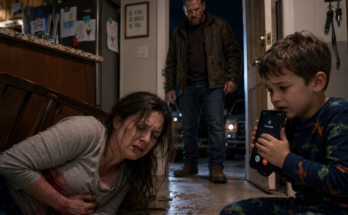
Sitting upright beside the door was my large suitcase, alongside three heavy black trash bags filled with my clothes. It was packed. Deliberately and completely.
Then, I heard the loud, obnoxious laughter echoing from the kitchen.
I zipped my coat tighter around my shivering body and walked toward the light, my pulse climbing into my throat.
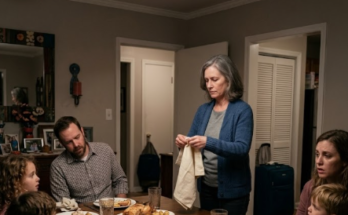
Liam was sitting at the kitchen table, leaning back in my father’s chair. Next to him sat Brittany, a girl he had been dating for exactly three weeks. She was chewing gum loudly, scrolling through her phone, her feet propped up on the table. My father sat across from them drinking a beer, while my mother was happily wiping down the counter.
“Oh, you’re finally home,” Susan said, offering a smile that I will remember better than some funerals I have attended.
“Why are my things in garbage bags by the door?” I asked, my voice trembling with exhaustion.
Liam smirked, pulling his arm around Brittany. “We need the space, Maya. Brittany is officially moving in. And since my streaming career is about to take off, we’re knocking down the wall between your room and the guest room to build a custom gaming and streaming studio.”
I stared at them, my exhausted brain misfiring. “You’re kicking me out? Tonight? Into the freezing rain so you can build a gaming room?”
Robert chuckled darkly. “Don’t act like a victim, Maya. You’ve overstayed your welcome. Liam has a real future ahead of him, and he needs the square footage.”
Then, Liam reached into his jeans pocket, pulled out my blue ATM card, and flicked it onto the table between us. It landed face up. Seeing it in his hand felt like a physical violation.
“And your work here is done,” Liam grinned, his eyes gleaming with malicious triumph. “I emptied it. Every last cent.”
Cliffhanger:
The kitchen tilted violently. I grabbed my phone from my scrub pocket and opened my banking app with clumsy, shaking fingers. I watched the loading wheel spin, a unique kind of terror gripping my throat. When the numbers finally appeared on the screen, the breath was knocked completely out of my lungs.
Savings: $0.43.
Checking: $12.11.
Total loss: $42,000. My entire graduate school fund. Gone.
“You stole my card?” I whispered, the words arriving in broken pieces.
“Borrowed,” Liam corrected lazily.
“That was my money for graduate school!” I screamed, stepping toward the table.
Robert stood up, his chest puffed out with injured authority. “You’ve been staying here for two years, Maya. We decided this evens things out for the rent you should have been paying. Now, take your trash bags and get out before I call the police for trespassing.”
The cruelty wasn’t incidental; it was administrative. They had packed my bags so Brittany could have a walk-in closet, and they had stolen my future to fund Liam’s delusions.
I grabbed my card, picked up my bags, and walked out into the freezing March rain. I drove to the back of a 24-hour grocery store parking lot, reclined my seat, and stared blankly through the windshield.
That money hadn’t come from my parents. It came from my Aunt Evelyn.
Evelyn had died three years earlier from ovarian cancer. For my entire life, Susan and Robert had viciously mocked Evelyn. They called her a “pathetic, lonely spinster” and a “failure” because she never married or had children. But they didn’t know the truth. Evelyn was quietly brilliant. She had independently built a highly successful boutique logistics company, sold her shares, and aggressively invested in the stock market. She was a self-made, fiercely independent millionaire.
When she was dying, I was the only one who showed up. I sat with her through chemo, held her hand, and listened to her stories. When she passed, she left me a private trust of $42,000. But Evelyn knew my family’s toxic, parasitic nature perfectly. She had set strict legal conditions on the trust: the money was severely restricted, legally earmarked only for educational tuition and verified living costs.
My phone rang at 10:34 p.m. It was the fraud prevention department at my bank, flagging suspicious cash withdrawals and a massive wire transfer to a high-end electronics and gaming retailer.
“Did you authorize these transfers, Ms. Maya?” the agent asked.
“No,” I choked out. “My brother stole my card.”
“Because these funds are tied to a restricted, court-monitored disbursement,” the agent said, her voice turning deadly serious, “this is no longer a simple family dispute. This is federal wire fraud and felony theft. I need you in the branch tomorrow morning.”
The next day, after washing my face in a grocery store bathroom, I met with the bank manager and then sat in the polished office of Thomas Kessler, the ruthless estate attorney who had handled Aunt Evelyn’s will.
“Did your family know about the strict legal restrictions on the account?” Thomas asked, his eyes narrowing as I explained the eviction.
“No,” I said. “They just thought it was a standard savings account.”
Thomas leaned back, tapping his pen. “Maya, unauthorized access to a restricted trust is a severe criminal offense. But family theft cases are notoriously difficult to prosecute. It often devolves into a ‘he-said, she-said’ over whether you gave him verbal permission to use the PIN. Your parents will undoubtedly lie to protect him. Do we have any hard, undeniable proof that this was a coordinated, non-consensual theft?”
I stared at the mahogany desk, despair threatening to swallow me whole. How could I prove they conspired against me? Then, a sudden, blinding memory struck me like a bolt of lightning. My parents were deeply paranoid, controlling people. Six months ago, claiming they were worried about “break-ins,” they had installed something in the house. Something they used exclusively to spy on my comings and goings.
“The living room,” I whispered, my eyes widening as I looked up at Thomas. “They installed a hidden 360-degree security camera on the bookshelf in the living room. It covers the entryway and the kitchen. They used it to monitor what time I came home from my night shifts.”
Thomas sat up straight. “Do you have access to the cloud account?”
My hands trembled as I pulled out my phone. Because Robert was notoriously terrible with technology, he had forced me to set up the Wi-Fi network and the camera’s administrative account. I still had the master login credentials saved in my password manager.
I opened the app, navigated to the cloud storage, and filtered the timestamps for Thursday morning, right after I had left for the hospital.
I pressed play. The audio was crystal clear.
On the screen, Liam walked into the living room, holding my winter coat. He dug into the pocket and pulled out my blue ATM card. Susan and Robert were sitting on the couch, drinking coffee.
“Did you get it?” Susan asked on the recording, her voice giddy.
“Yeah. I watched her type her PIN at the gas station last week,” Liam laughed. “I’m transferring the max limit to the gaming store now, and pulling the rest in cash.”
“Do it quickly, before she checks her app,” Robert commanded coldly. “Susan, go pack her bags. Throw them in trash bags for all I care. Brittany is bringing her furniture over at four o’clock, and I want Maya’s room completely emptied out by the time she gets off her shift. If she cries, just tell her she owed us rent.”
I sat in the lawyer’s office, listening to the people who were supposed to love me casually orchestrating my absolute ruin so a stranger could have a walk-in closet.
Thomas took a deep breath, a shark-like smile spreading across his face. “Maya,” he said softly. “This isn’t just evidence of theft. This is recorded evidence of a coordinated criminal conspiracy, premeditated fraud, and illegal eviction. I am sending this directly to the District Attorney.”
I spent the next two weeks sleeping on a pull-out couch offered by my incredible Head Charge Nurse, Sarah. Working in the NICU became my only sanctuary. Caring for those tiny, innocent, fighting lives kept my heart from turning completely black.
The investigation moved with terrifying speed. Because Liam was both greedy and stupid, the trail of evidence was glowing neon. He had wired restricted funds directly to a gaming company under his own name.
My family tried intimidation first. Once the police detectives showed up at their door, my phone blew up with blocked calls and vitriolic text messages.
Susan: How could you do this to your own flesh and blood? We were just teaching you a lesson! Drop the charges!
Robert: You are humiliating this family. You always thought you were better than us. You’re dead to me.
Liam: You think you’re so smart? If I go down, I’ll drag you with me. I’ll tell them you gave me the card to buy drugs!
I didn’t reply to a single one. I forwarded every message to Thomas. Shame thrives in vagueness, but it dies in the blinding light of documented facts.
Two months later, the criminal side of the case culminated in a packed courtroom. Liam had been formally charged with felony financial exploitation, wire fraud, and grand theft. Robert and Susan were named as co-conspirators in the civil suit. They walked into the courthouse presenting a united, defiant front, glaring at me as if I were the villain. But they were about to discover that a toxic ecosystem built on selfishness has absolutely no loyalty when the ship starts sinking.
I sat at the plaintiff’s table wearing a sharp navy blazer, my hands folded neatly in my lap. Across the aisle, Liam looked significantly smaller than I remembered. The swagger was entirely gone, replaced by the nervous, sweaty twitching of a man who realized the world was no longer bowing to his tantrums. Susan sat behind him in the gallery, dabbing her eyes with a tissue, playing the role of the heartbroken matriarch.
The prosecutor stood up and systematically laid out the facts without an ounce of drama. He played the audio from the hidden security camera. Hearing my parents’ cold, calculating voices echoing through the sterile courtroom was surreal.
When the prosecutor detailed the potential sentencing—up to five years in a state penitentiary for felony wire fraud involving a restricted trust—Liam’s face drained of all color. He looked back at our parents, sheer panic in his eyes.
His defense attorney called him to the stand. I expected Liam to play the victim, to cry and beg for leniency, to claim it was a “misunderstanding.”
Instead, Liam took the oath, grabbed the microphone, and immediately threw the people who had pampered him his entire life directly under the bus.
“I didn’t want to do it!” Liam blurted out, his voice cracking hysterically, pointing a trembling finger directly at Robert and Susan in the gallery. “It was their idea! My dad told me to take the card! My mom packed her bags! They said Maya owed them money and that I was legally entitled to it! They forced me to do it so I could move my girlfriend in!”
A collective gasp echoed through the courtroom. Susan dropped her tissue, her mouth falling open in utter, horrified shock. “Liam! How could you?” she shrieked from the benches, completely forgetting where she was.
“Order in the court!” the judge barked, slamming his gavel.
“They manipulated me!” Liam continued sobbing on the stand, completely cannibalizing his own parents to save his skin. “I’m the victim here! They set me up!”
I sat perfectly still, watching the toxic empire they had built completely implode. Their superficial loyalty shattered the second self-preservation kicked in. They were tearing each other apart, and I didn’t have to lift a single finger.
When the judge asked if I wished to make a statement before sentencing, I stood up. My voice was steady, anchored by the truth.
“I am a NICU nurse, Your Honor,” I said, looking directly at the judge. “Every day, I watch parents weep, pray, and sacrifice everything just to hear their premature babies take a single breath. And then I went home to parents who orchestrated my ruin, stole my future, and threw me into the freezing rain so a stranger could have my bedroom. I am not asking for revenge. I am asking for accountability, because they believed my silence was guaranteed. They were wrong.”
The judge’s face was a mask of pure disgust as he looked down at Liam, and then at my parents in the gallery. The criminal sentence he handed down to Liam was severe—probation, hundreds of hours of community service, and a permanent felony record. But it was the civil judgment Thomas filed against my parents that delivered the ultimate, fatal blow.
The civil matter concluded three weeks later. Because Robert and Susan were caught on tape conspiring to commit the fraud, and because they actively benefited from the illegal eviction, the judge held them financially liable for the unrecovered funds, punitive damages, and exorbitant legal fees.
The total judgment was staggering.
My parents had spent their entire lives obsessing over status, appearances, and the perceived “power” of owning their large suburban home. But they were cash-poor. To satisfy the court-ordered restitution they owed me, the bank forced Robert to heavily mortgage the house. When he couldn’t secure the loan due to his massive existing debts, the court forced the sale of the estate.
The irony was beautiful, sharp, and flawlessly just. They had kicked me out of my small bedroom to build a gaming studio. Now, they were losing the entire house to pay for the crime they committed to do it.
The day the “For Sale” sign went up on their pristine lawn, Chloe—Liam’s girlfriend—promptly dumped him, realizing the free ride was over and the money was gone. Liam, now a convicted felon, had his pending job offers instantly rescinded.
I received a final, handwritten letter from Susan a month before they had to vacate the property. I recognized her looping script and opened it while sitting at my kitchen counter.
There was no apology. Only the delusional martyrdom of a narcissist.
We are losing our home because of you. I hope one day, when you have children, you understand that parents act under pressures you cannot see. We always did more for you than you admit.
I laughed aloud in my empty apartment. What pressures? The pressure to clear out a closet for a lazy son’s girlfriend?
I didn’t reply. I folded the letter and placed it in a drawer next to a photo of Aunt Evelyn. I realized that some people rely on your longing for a family to blur your memory of their abuse. I was learning to love clarity far more than I loved false hope.
That fall, I officially began my Nurse Practitioner graduate program. The tuition was paid directly from the newly secured, iron-clad trust account. I was working, studying, and healing.
Then, Martin called me into his office one afternoon. He handed me a sealed envelope with my name on it in Aunt Evelyn’s slanted handwriting.
“I found it attached to her original trust instructions,” Martin said. “It was meant to be released if there was ever a dispute over the funds.”
I opened it with trembling fingers.
My dearest Maya, the letter began. If you are reading this, your parents have likely tried to take what is yours. Let me make one thing plain. I did not leave you this money because I pitied you. I left it to you because I watched you work without witness, love without applause, and maintain your beautiful, empathetic heart in a house entirely devoid of it. I built my business from the ground up while they mocked me. I know the shape of their greed. The point of this gift is not comfort. It is leverage toward freedom. Use it to get further than this family knows how to imagine. You do not owe people for the privilege of being mistreated by them.
I cried harder over that letter than I had the night I was thrown out into the rain. It was the ultimate validation. Evelyn had seen the truth, and she had built a bridge for me to escape it.
Two years later, my life was entirely unrecognizable. I had graduated at the top of my class and accepted a high-level position as a Lead Neonatal Nurse Practitioner at a massive research hospital in Seattle. I had bought a beautiful, sun-drenched craftsman house of my own. I was free. But the past has a funny way of echoing when you least expect it.
On a rainy Tuesday evening in Seattle, I was sitting on my wide balcony, drinking a cup of hot tea and watching the city lights flicker to life. My phone vibrated on the table. It was an unknown Columbus number.
I let it go to voicemail. A few minutes later, I listened to the recording.
It was Liam. His voice was older, flatter, entirely stripped of its former arrogance.
“Hey, Maya,” he said, clearing his throat awkwardly. “I… I heard you moved to the West Coast. Got a big promotion. Listen, Mom is sick. Dad’s struggling to pay the rent on their apartment. I can’t find decent work with this record. We really need some help. We’re family, Maya. It’s time to let the past go.”
It’s time to let the past go.
Language can still astonish me. As if greed had tripped and fallen into a felony by accident. As if throwing me out into the freezing rain was just an unfortunate spill someone meant to wipe up later. As if my trauma was just an inconvenience to their current financial struggles.
I didn’t feel rage. I didn’t feel sadness. I simply felt an overwhelming, peaceful distance.
I deleted the voicemail. I permanently blocked the number.
Freedom often arrives looking terrible. It looks like a packed suitcase by the door, a zeroed-out bank account, and the horrifying realization that the people who raised you don’t actually love you.
But what Susan, Robert, and Liam didn’t understand that Thursday night in the kitchen was that they were not ending me. They were only ending their access to me. They thought they had emptied my account; what they actually emptied was the place they held in my heart. They thought they were proving I had nowhere else to go; what they proved was that the place I needed to reach next could never include them.
Every tiny, fighting breath I helped a premature baby take in the NICU reminded me of the resilience of life. I had built a new family of chosen friends, colleagues, and the undeniable peace of my own independence.
My brother took my ATM card on a Thursday.
By the following Thursday, the law had the camera footage, the lawyer had the texts, and my family had discovered that the woman they threw out like trash was not the same daughter they had trained to endure in silence.
They planned their theft around the daughter they remembered.
The woman who walked away from their porch and into the cold rain was someone else already becoming. And she was never, ever looking back.
If you want more stories like this, or if you’d like to share your thoughts about what you would have done in my situation, I’d love to hear from you. Your perspective helps these stories reach more people, so don’t be shy about commenting or sharing.